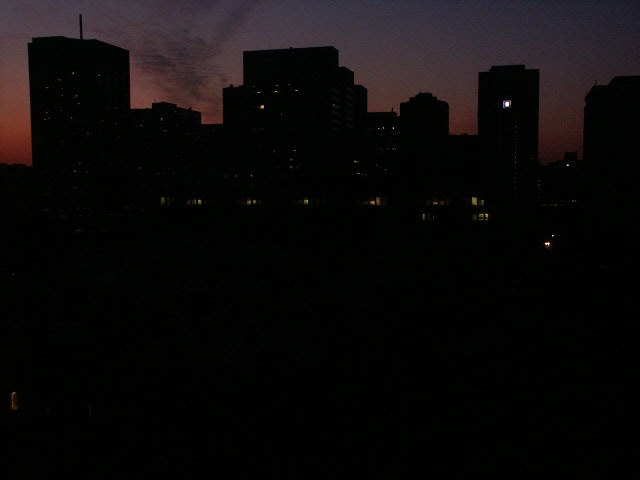
On Friday, June 20, in Turin, the power grid failed. Temperatures had been between 36 and 37 degrees for days without a break, a situation that Gianluca Riu, director of operations at Ireti, Iren’s local distributor, described as unusual.
That same weekend, a power outage occurred in Bergamo between 9:45 p.m. and 10:15 p.m., with outages at five points along the power lines. In San Giuliano Milanese, in the Milan suburbs, Duereti, the company that manages local distribution, reported a 38% increase in electricity consumption compared to the previous week. In Milan, the City Council’s servers shut down due to power fluctuations, and the session was adjourned early. Firefighters responded to about twenty elevators that were stuck in various neighborhoods.
Two causes, one network
The power outages of recent days have two distinct causes, which overlap. The first is demand: air conditioners consume large amounts of electricity, concentrated during peak hours and in densely populated areas. Emiliano Roggero, director of electricity distribution at Ireti, provided the figures: Turin’s city grid reached peaks of 500 MW, with 440 MW last Friday compared to 300 MW the previous week.
The second cause relates to infrastructure. Angelo Baggini, a professor of electrical engineering at the University of Bergamo, explained the physical mechanism to *Corriere della Sera*: “The rise in temperature reduces the cables’ ability to dissipate the heat generated by the Joule effect when an electric current flows through them. Failures therefore result from the breakdown of the insulation surrounding the copper or aluminum conductors.” When the insulation breaks down, the circuit automatically opens for safety reasons.
The two factors interact, amplifying the effect: higher temperatures mean more air conditioners running, more current flowing through the wires, more heat generated by the Joule effect, and more insulation failure. It’s a cycle that the power grids were not designed to withstand.
Infrastructure from the 1980s, climate of 2026
The distribution lines running beneath Italian cities were built decades ago, based on an energy consumption model that did not account for widespread air conditioning. Baggini is blunt: “It’s a problem we’ve been dealing with for over a decade. The solution cannot be immediate; there is no way to reinforce the insulation of the cables currently in service in the short term, not least because it would require working on underground lines and thus digging up the entire city. We must proceed gradually.”
Meanwhile, demand is growing. According to the Italian Society of Environmental Medicine, more than 60% of Italian homes are now equipped with air conditioning systems, a figure that has doubled since 2013. SIMA itself has noted that “in various areas of the peninsula, temperatures begin to exceed 30°C as early as May, with temperatures remaining above those levels until well into September.” Air conditioning has become a public health necessity, but the power grid has not been upgraded accordingly.
Italy on the European Risk Map
Data collected by the Compare the Market platform across 85 countries—which account for approximately 90% of global electricity consumption—rank Italy fifth worldwide in terms of demand growth during periods of extreme heat: +14.22%, behind Greece (+38.62%), Montenegro (+22.49%), Turkey (+21.91%), and Croatia (+17.76%).
In terms of costs, when applying the standard “value of lost load” metric—a tool used in energy economics to estimate the economic impact of power outages, which includes food spoilage, loss of cooling, and internet outages—Italy ranks as the European country with the highest total annual cost to households: approximately 154.7 million euros, ahead of Poland at 152.1 million. This top ranking is not due to the average duration of outages—which is shorter than in Greece and Slovenia—but rather to the size of its customer base.
Solar Power as a Partial Buffer
During the heat waves of the summer of 2025, record solar power generation helped alleviate the European energy crisis. According to the think tank Ember, on peak days in Germany, solar power provided up to 50 GW of capacity, covering between 33% and 39% of national demand. Combined with 14 GW of battery storage and 10 GW of pumped-storage hydroelectricity, this made it possible to store energy generated during the day for use after sunset, when evening demand for air conditioning remains high.
The mechanism works for power generation, but it does not address the vulnerability of local distribution networks. The problem is not just how much energy is produced, but how it is transmitted to homes.