On Tuesday, June 24, France recorded the hottest day in June in its history. Prime Minister Sébastien Lecornu stated that forty people have drowned since the start of the heat wave, indirect victims of the heat that drives people into the water without proper preparation. Schools are closed, events have been canceled, and travel is discouraged.
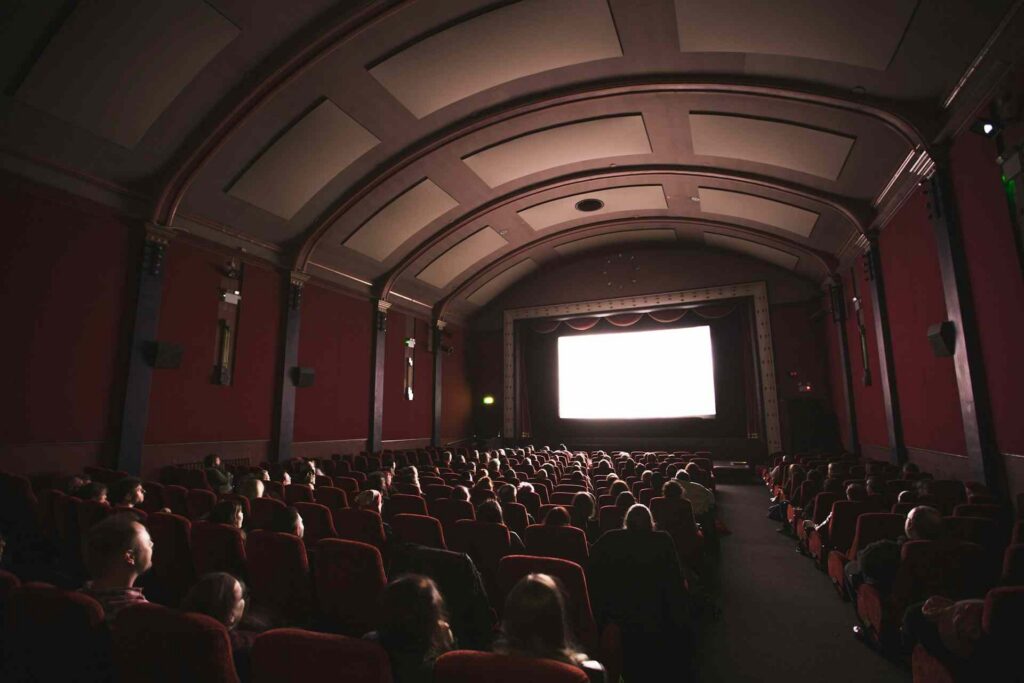
In Paris’s 10th arrondissement, three independent movie theaters (L’Archipel, Le Brady, and Le Louxor) , which have joined the “Ciné-clim” initiative: free afternoon screenings from 1:00 p.m. to 4:00 p.m., with priority given to those most at risk from heat-related issues. This includes people under 25, over 65, pregnant women, and people with limited mobility. To gain admission, simply present an ID at the box office.
🔴 FLASH — Dans le 10e arrondissement, la mairie propose le "Ciné-Clim" permettant de bénéficier de séances gratuites dans trois cinémas indépendants : le Brady, LArchipel et le Louxor et ainsi profiter d'un peu de fraîcheur. pic.twitter.com/ZttIoGPda5
— FranceUnie 🇫🇷 (@FranceSouvUnie) June 23, 2026
The city council has framed the initiative as a public health measure, part of a broader package that includes food stands, an air-conditioned room in City Hall, supervised swimming in the Canal Saint-Martin, and extended hours until midnight at the Villemin–Mahsa Jîna Amini Garden.
Three million tickets in one week
The initiative in the 10th arrondissement is small in scale but speaks to something bigger. According to Le Monde, between June 17 and 23, 2026, attendance at French movie theaters increased by 50% compared to the same week in 2025, and by 36% compared to the pre-COVID average from 2017–2019: a total of 3.12 million admissions, according to Marc-Olivier Sebbag, executive director of the National Federation of French Cinemas (FNCF).
Sebbag was careful to point out, however: “The heat wave acts as a catalyst, but it’s mainly the variety of movies that explains why people go to the movies. Cool air alone isn’t enough; it’s because the audience likes the movies. Otherwise, they’d go to shopping malls, which are just as air-conditioned.”
The lineup in theaters was indeed exceptional: *Toy Story 5*, released on June 17, surpassed one million viewers in its first week; Kane Parsons’ *Backrooms* debuted with 485,000 viewers; Antonin Baudry’s *De Gaulle: Tilting Iron* posted a 17% increase in its third week, surpassing 900,000 total viewers, according to Rentrak data compiled by Eric Marti, the France director of the audience analytics firm.
Chalk on windows and discounted pools: European DIY
The rest of Europe has responded to the heat emergency with solutions that vary from city to city and reveal the absence of any structured continental coordination.
In France, outside Paris, there was a rush to buy Blanc de Meudon: a traditional powder that, when mixed with water and applied to windows, reduces solar heat gain and lowers indoor temperatures. Home improvement stores were swamped with customers. In Nantes, some schools applied chalk directly to their windows. In Lyon, municipal museums have temporarily suspended admission fees.
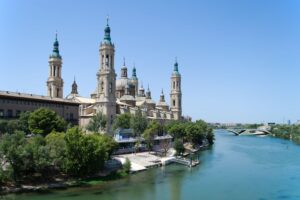
In Spain, Aragon—one of the hardest-hit regions— has lowered the price of admission to public swimming pools in Zaragoza and Huesca. In Logroño, where temperatures were expected to reach 40°C on Tuesday, admission was made free for the duration of the heat wave, and the decorative fountains remained on until 11 p.m. A 2024 law already requires Spanish employers to prohibit manual labor outdoors during peak hours.
In Amsterdam, the city government has set up twelve “cooling zones”—ranging from libraries, churches, theaters, and supermarkets to urban farms, which are also open to pets—concentrated in the Nieuw-West neighborhood, identified by urban simulations as the area most at risk from heat. Schools have adopted “tropical” schedules, with shorter school days and more breaks, in the absence of any national regulations on maximum permissible temperatures in classrooms.
In Belgium, some older commuter trains without air conditioning have been taken out of service. In Tervuren, a suburb of Brussels, students took their final exams in a church. In Germany, Deutsche Post mail carriers were given permission to wear Bermuda shorts; the German Life Saving Association (DLRG) warned of the risks of swimming in unsupervised areas; and the insurance company DAK set up a hotline to provide support during the heat wave.
Italy: Between Layoffs and Menu Suggestions
In Italy, with more than a dozen cities on red alert, the government has reinstated the temporary layoff program for the most vulnerable workers, such as farmers, construction workers, and employees in poorly ventilated warehouses, allowing companies to suspend operations during periods of extreme heat and access public funds to cover wages. In Palermo, horse-drawn carriages have been banned during midday hours. In Turin, some restaurant patios have closed.
What is still lacking are clear regulatory standards on maximum temperatures in indoor workplaces, systematic prevention campaigns targeting the elderly, and urban planning that reduces heat buildup in cities rather than merely managing its consequences summer after summer.
The “Ciné-clim” initiative is a good idea. The problem is that it remains a neighborhood-level idea within the context of a continental emergency. As long as the response to heat waves depends on the creativity of individual municipalities—some opening movie theaters, others applying chalk to windows, and still others allowing mail carriers to wear shorts—it means that a European policy for adapting to the heat does not yet exist. The problem is that the coming summers are unlikely to be any cooler.