Dominating the headlines during the knockout stages of the 2026 World Cup is a vast heat dome that has settled over much of the eastern and central United States and parts of Canada, with heat index readings reaching dangerous levels. This phenomenon brings to the forefront a question that has become inevitable: How prepared are major sporting events to cope with a climate that is changing faster than the infrastructure that hosts them?
Forecasts call for sweltering days from Toronto to New York, including Philadelphia, Kansas City, and New Jersey. According to AccuWeather meteorologist Alan Reppert, the heat will remain intense even after sunset, diminishing the appeal of evening games. This obviously affects the athletes, but also hundreds of thousands of spectators.
Cities That Amplify the Heat
The risk does not always correspond to the temperature shown by weather apps. Dallas is perhaps the most emblematic example: where there is asphalt, temperatures can easily reach nearly 50 °C. This is the urban heat island effect: concrete, parking lots, buildings, and roadways absorb energy during the day and release it slowly, turning even a walk of a few hundred meters to the stadium into a physically demanding ordeal. National Weather Service meteorologist Jennifer Dunn has urged fans to stop at the first signs of fatigue and seek out green spaces or air-conditioned buildings whenever possible—advice that can make all the difference in extreme heat.
A study by CAPA Strategies focusing specifically on the Dallas heat island effect shows that, within the same city, temperature differences of more than 5 degrees can occur depending on the presence of vegetation, impervious surfaces, and shade. Where parking lots and commercial areas predominate, heat builds up; in neighborhoods with more trees and in natural areas, temperatures are significantly lower.
Sports are fueling a debate that is already underway
FIFA has introduced mandatory hydration breaks during each half of a match, a measure aimed at protecting players’ health following the controversy that arose during last year’s Club World Cup.
Fans, too, are exposed to a risk that is often underestimated. Dr. Alina Mitina of Hackensack University Medical Center explained to Reuters that shade and access to water can literally save lives during periods of extreme heat.
A testing ground for the cities of the future
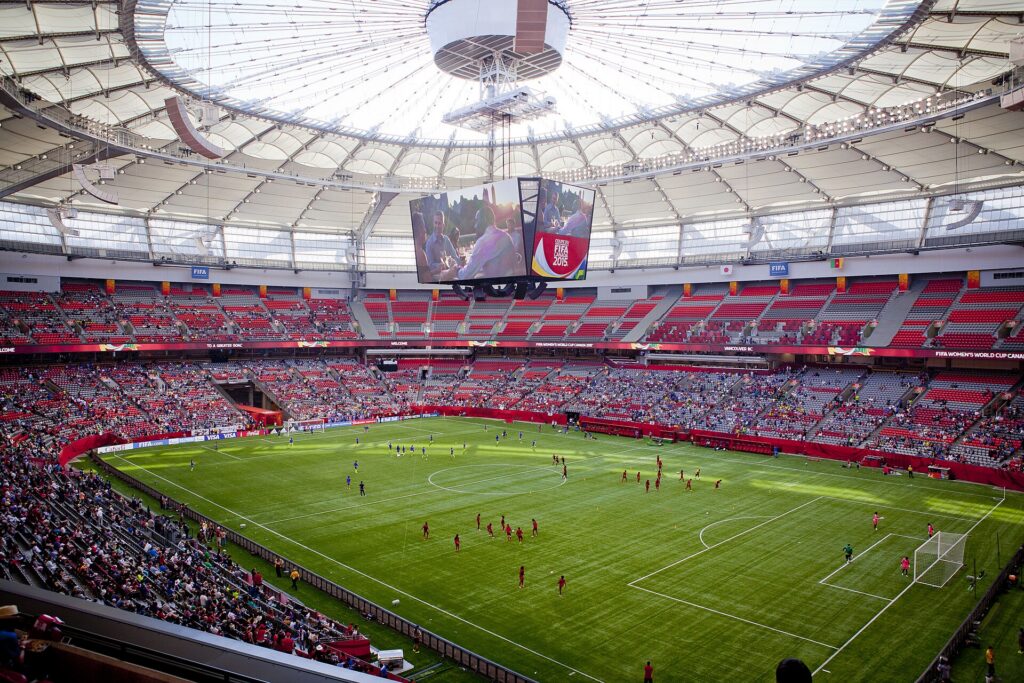
The World Cup is showing just how much climate change is altering the way global events are organized. Air-conditioned stadiums and retractable roofs can mitigate the problem during the competition, but they do not solve the issues that arise outside the venues. Exposed walkways, paved plazas, and a lack of trees and shaded areas become just as much of a risk as record-breaking temperatures.