
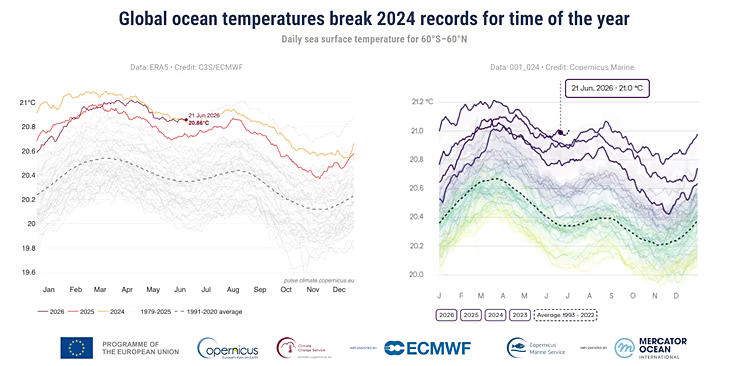
On June 21, 2026, the global average sea surface temperature reached 21.0 °C, according to data from the Copernicus Climate Change Service (C3S) and the Copernicus Marine Environment Monitoring Service (CMEMS). This figure exceeds the previous records set in 2023 (20.83 °C) and 2024 (20.86 °C) by 0.1 °C: never before, since satellite records began, have the oceans been this warm at this time of year. An increase of one-tenth of a degree may seem like a minor change, but for a body of water as vast as the oceans, it corresponds to an enormous amount of excess thermal energy.
Since the beginning of 2026, 82% of the ocean’s surface has been affected by marine heatwaves—periods of abnormal and prolonged increases in water temperature. Nearly half of the oceans have experienced intense or extreme heat waves, with the tropical Pacific and the Mediterranean Sea among the hardest-hit areas. This phenomenon has affected nearly all of the planet’s waters over the course of just six months.
The Mediterranean: The Epicenter
The Mediterranean basin, which is relatively enclosed and sensitive to atmospheric fluctuations, experienced marine heatwaves across 98% of its surface area in the first half of the year, peaking at 24.34 °C in June. In the northwestern Mediterranean, the Institute of Marine Sciences (CSIC) in Barcelona measured an anomaly of 5.2 °C above the seasonal average—the highest value ever recorded for the area—linked to the heat wave that swept across Europe during those same weeks. These figures translate into visible effects: from higher nighttime temperatures along the coasts to the suffering of marine life.
Furthermore, a warmer ocean releases more energy into the atmosphere, fuels evaporation, and increases the risk of heavy rainfall. It contributes to rising sea levels and puts pressure on ecosystems: corals, gorgonians, sea urchins, and mollusks are the first victims of mass die-offs linked to prolonged heat waves.
An Expected El Niño
On June 2, the World Meteorological Organization announced the onset of an El Niño event in the equatorial Pacific, the intensity of which, according to C3S models, could reach levels not seen in decades. “Current conditions could signal the start of a new phase, which will take us, once again, into uncharted territory,” said Carlo Buontempo, director of the Copernicus Climate Change Service.
Simon van Gennip, chief oceanographer for the Copernicus Marine Service, identified the Mediterranean, the north-central Atlantic, and the equatorial Pacific as the critical areas for the semester: “These regional signals paint a consistent picture of an ocean under prolonged thermal stress.”
UN projections
The figure comes one month after a UN assessment that described the crisis facing the oceans as “increasingly severe.” The United Nations estimates a 91% probability that one of the next five years will exceed the 1.5 °C threshold set by the Paris Agreement, and an 86% probability that a year will surpass 2024 as the hottest on record.
Friederike Otto, a climatologist at Imperial College London, warns that a prolonged period above 1.5 °C exposes us to “extreme weather events that exceed anything we have experienced in the past.” Otto urges people not to place all the blame on El Niño: “It comes and goes. Climate change, on the other hand, will keep getting worse until we stop burning fossil fuels.”
The oceans absorb about 90% of the excess heat produced by greenhouse gas emissions. According to Copernicus, every new record is a sign that the system continues to accumulate energy, with effects on the weather, coastlines, and ecosystems that will continue to be felt in the coming months.