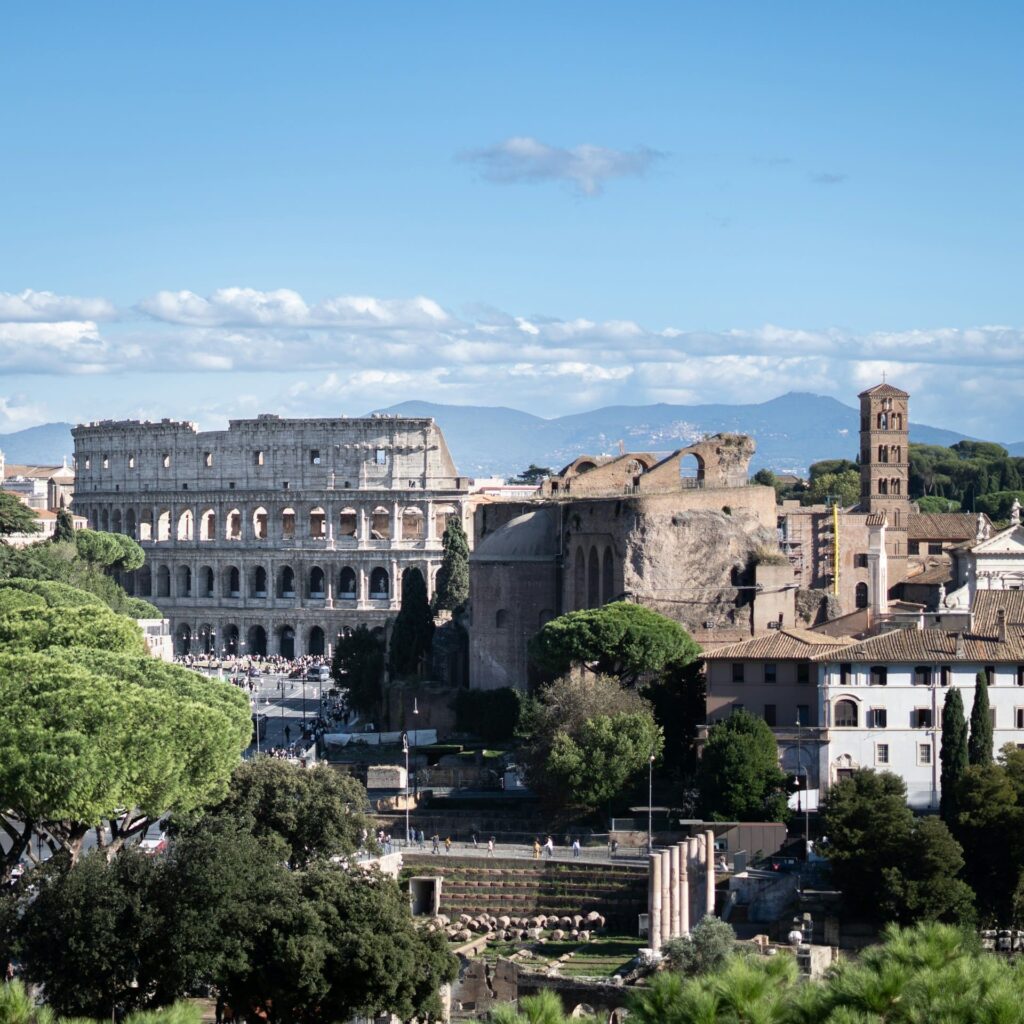
A pedestrian ring around the heart of Rome: a circuit of more than three kilometers around the central archaeological area, a continuous promenade embracing the Forums, Colosseum, Capitoline Hill and Circus Maximus. Work starts in March and marks the decisive acceleration on the Archaeological Promenade, the centerpiece of the CarMe project, a total investment of 282 million euros.
The idea is to create a continuous pedestrian frame that allows citizens and visitors to move seamlessly among the treasures of ancient Rome, viewing them from new angles, with panoramic overlooks and paths finally stitched together.
From the Forums to the Circus Maximus, a seamless walk
The construction site starts between Via dei Cerchi and Via dei Fori, with the aim of completing the circuit around the Imperial Fora, linking Colosseum and Capitol, up to the Circus Maximus and the Markets of Trajan. In total, more than three kilometers of pedestrian pathway that become a sort of urban “ring,” designed to be crossed slowly, on foot, restoring meaning and continuity to places that for decades have been separated by roads and unevenness.
After a 2025 dominated by Jubilee construction sites , 2026 points to this widespread and strategic intervention, set to take place before the eyes of the world.
A nineteenth-century project reinterpreted in a contemporary key
The Archaeological Walk takes up and updates an idea that dates back to the late 19th century, when then-minister Guido Baccelli envisioned a grand monumental route around the remains of imperial Rome. Today that vision takes shape with walkways, panoramic terraces and light connections, the result of an international competition won in 2023 by Labics, Horizontal and Openfabric groups.
The project’s path has not been linear. The area is under direct protection constraints, and discussions with the Superintendence were tight: materials, road widths, views of the ruins and architectural solutions were reviewed several times. What emerged was a compromise that maintains the balance between enhancement and philological respect, finally giving way to the key construction site.
Mending beauty, greenery and archaeology
The pedestrian ring is not a simple path, but a connective structure that connects a constellation of interventions. Along Via di San Teodoro, Via di San Gregorio, Via dei Cerchi, and Via dei Fori, the works dialogue with each other: from the Colle Oppio to the Caelian, from the Palatine to the Circus Maximus, and all the way to the Baths of Caracalla, where the water play will return after nearly two thousand years.
Completion of the ring is expected within the year and represents the piece that gives meaning to the entire CarMe project: a large urban promenade that transforms Rome’s archaeological center into a continuous, accessible space finally designed for those who live it at a walking pace. In a city accustomed to layering without always connecting, this is no small thing.