It is an ordinary morning in Bergamo, and along the T2 line an electric tram glides silently through the city streets. Noiseless, emission-free. It carries hundreds of passengers, with the promise of cleaner, more efficient mobility. A small signal, concrete and visible, that tells of an Italy trying to change pace. And the examples are many: from Rome to Milan, from Monza to Florence and Taranto. All cities that show that public electric mobility can bring tangible benefits, even if obstacles remain on the way.
In recent months, in fact, the public debate around electric mobility has been heated: the European Union has set 2035 as the end of internal combustion cars, but the goal was immediately questioned. In Italy, for example, several political figures have raised doubts about the economic sustainability of a transition in these times, fearing risks for the industry and workers in the sector. This pressure has resulted in a change of narrative on the part of the government: no longer “the future is already here,” but “more time is needed, alternatives are needed.” In short, the feeling is that the electricity dossier has become an ideological battleground even before the economic one. Yet, behind the numbers and slogans, there is concrete ground, made up of industrial choices already made, infrastructure to be built and citizens to be convinced.
Recounting what it means to live through this transitional phase from a business point of view is Giovanni Fabi, CEO of Terravision, a company specialising in international road transport: “The great push towards electric mobility, fuelled by excellent intentions, clashed with infrastructural problems that did not and do not only concern the automotive world. The major automotive groups reconverted and integrated their production lines right away to arrive ready for the dates set for 2035, with all that ensued in terms of crisis.” But they have had to come to terms with the complexity of the system that must be built by bringing together private resources, public interventions, information campaigns and training.
“Unfortunately,” Fabi continues, “the transition to such a radically different mobility than the existing one has proved more complex than probably had been believed, and these difficulties have reverberated with users who, as a result, have not responded according to expectations, thus affecting both the market and forecasts of whether the agenda can be met.”
So, was the green turn in transport really an imposition from above as part of the political class would have us believe? “Rather than an imposition from above,” Fabi continues, “I believe that the strategic choice towards green mobility was made as a result of a general context analysis that probably did not fully consider all the variables necessary to achieve an effective transition.”
In this sense, Fabi recalls that, for example, in the initial phase of electric mobility the climate was much more positive than it is today. At the time, he recalled, the narrative drive was strong and engaging, whilst as time went on, the incentives, which were often difficult to obtain and not always really accessible, ended up dampening enthusiasm, both amongst potential buyers and amongst those proposing solutions on the market. Moreover, he adds, environmental awareness has long been the preserve of certain political alignments, often opposed to those that are now the majority in many countries. This shift in perspective has led in some cases to environmental protection being considered a secondary issue to economic needs, when the real goal should be to embark on sustainability paths capable of strengthening market dynamics.
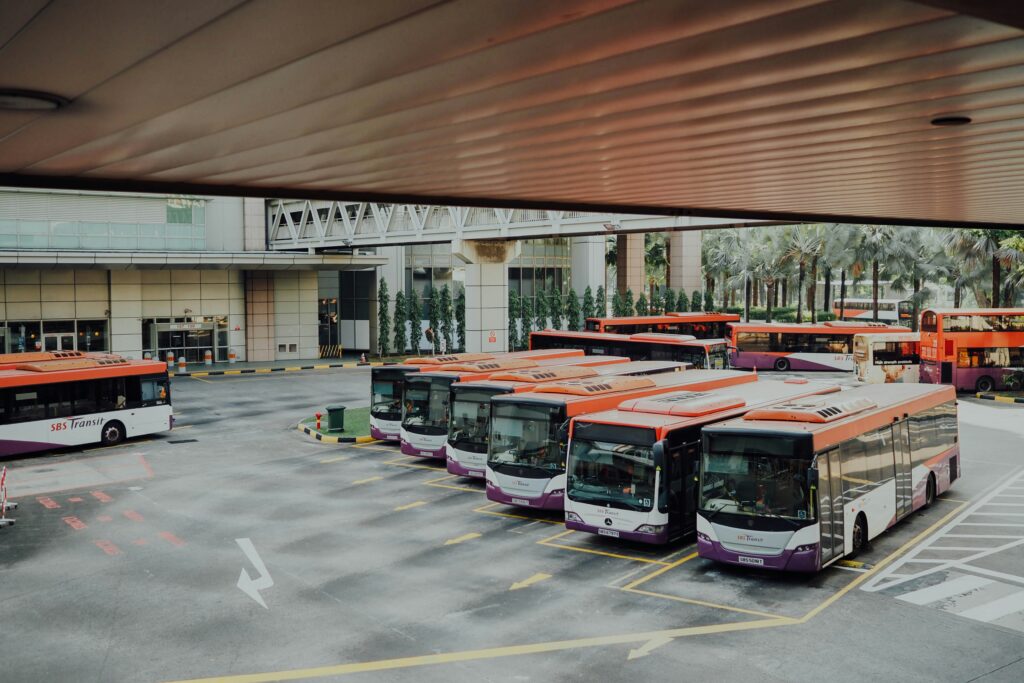
What solutions, then? According to Fabi, the public administration sector can lead the way: in public transport, many of the critical issues typical of electric, such as autonomy, charging times, availability of columns, are absorbed by central management. In short, in this way only the benefits remain: less emissions, less noise, more accessibility to historic centres.
For a breakthrough, therefore, it is necessary to address what to date are the main obstacles: “A collective awareness is needed. The battery is the most expensive and delicate part, and there are very few maintenance and reconditioning centres in Italy. And this generates distrust. It is necessary to invest in adequate facilities and in parallel to promote new positive beliefs.” With this in mind, Terravision Electric is carrying out a significant best practice: the company, in fact, has developed a material recovery and reuse system that makes it possible to minimise waste and put valuable components back into the production cycle. This not only lowers the environmental impact but also enhances the entire supply chain, turning what could be a problem into an opportunity for sustainability and innovation.
Numbers that confirm (and disprove perceptions)
Fabi’s words are reflected in the most up-to-date data. According to the International Energy Agency (IEA), global sales of electric cars exceeded 17 million units in 2024, a 25 per cent growth over 2023.
Still, in Europe, the public charging network has grown by more than 35 per cent by 2024, exceeding one million available points. In Italy, however, the path remains up and down: as of January 2025, electric car registrations totalled more than 6,700, registering a +132 per cent over the previous year, but they are still only 5 per cent of the total market.
Numbers, these, which show, yes, an acceleration, but also the distance from the European targets: according to the International Council on Clean Transportation, 68 per cent of new registrations should be electric by 2030. An ambitious goal that, without a decisive change of pace, risks not being reached.
More needs to be done because electric mobility is not the absolute solution, but a key piece in a puzzle made of innovations capable of reducing the environmental impact of mobility (still very high) and supporting the economy. “We need to think,” Fabi concludes, “about smart infrastructure and broad intermodality: environmentally friendly public transport, including hydrogen, connected with stations, airports and interchange parking lots; in parallel, bicycle paths and pedestrian areas that enhance historic centres.” This is the only way to really change the face of cities. Because the challenge is not to ask electric yes or electric no, but how to make it part of everyday life.