IInvesting in a stable climate, healthy nature and land and a pollution-free planet can generate trillions of dollars more in global GDP, prevent millions of deaths and lift hundreds of millions of people out of poverty and hunger. This is supported by the“Global Environment Outlook, Seventh Edition: A Future WeChoose” (GEO-7), the result of the work of 287 multidisciplinary scientists from 82 countries coordinated by the United Nations Environment Programme (UNEP).
The study finds that climate change, biodiversity loss, land degradation, desertification, pollution and waste have taken a heavy toll on the Planet, people and economies, already costing trillions of dollars a year. Following current development paths will only intensify this impact. However, whole-of-society and whole-of-government approaches to transform economic and financial, materials and waste, energy, food, and environmental systems could bring global macroeconomic benefits that could reach $20 trillion a year by 2070 and continue to grow.
The cost of doing business asusual
The report—particularly the executive summary that replaces the “summary for policymakers” that could not be approved at UNEP due to opposition from some governments—details the current and future consequences of business-as-usual development models. Greenhouse gas emissions, the report reminds us, have increased by 1.5 per cent every year since 1990, reaching a new peak in 2024, resulting in rising global temperatures and intensifying climate impacts.
The cost of extreme weather events attributed to climate change over the past 20 years is estimated at $143 billion per year. Between 20 and 40 per cent of the world’s land surface is estimated to be degraded, affecting more than three billion people, whilst one million of the estimated eight million species are at risk of extinction. Nine million deaths a year are attributable to some form of pollution. The economic cost of health damage caused by air pollution alone was about $8.1 trillion in 2019, or about 6.1 per cent of global GDP.
“The scientific evidence is stronger than ever and the solutions are clear. Urgent action is no longer optional,” noted Professor Edgar E. Gutiérrez-Espeleta, co-chair of GEO-7, “it is required and unavoidable. Clear political leadership is needed to address these crises. This is an urgent call to change human systems and prevent the collapse of natural systems.”
Four environmental crises
“We have four environmental crises,” notes Sir Bob Watson, former IPCC co-chair and co-chair of the study, “the climate crisis, biodiversity loss, soil degradation and pollution. All four are getting worse. The world has already warmed by 1.3 °C and could warm between 2.4 and 3.9 °C by the end of the century, far above the Paris target. The climate is warming at a rate almost certainly greater than we had anticipated. Biodiversity and populations of living species are declining. We are losing 100 million hectares of soils each year, and pollution is hitting many parts of the Planet hard. These four crises are interconnected and must be addressed together. The world population is growing, becoming more affluent and demanding more energy, more food and more materials, and unfortunately we are meeting this demand in an unsustainable way. So we have to change the energy, food and production system. We have to work together. Governments have to work with each other and together with the private sector. Is it possible to become sustainable? Yes, but only if we can implement unprecedented innovative action.”
And energy is at the centre of the required action. “We need to transform the way we produce and the way we use our energy,” Watson continues, “and that means we need to eliminate the use of fossil fuels over the next few decades, and in the meantime, as we increase the percentage of renewables, we need to capture the CO₂ emitted from fossil sources. We need electric cars, much more efficient buildings. We need a total transformation of our energy systems.”
One-fifth of GDP is at risk
The state of the environment, the report says, will worsen dramatically if the world continues to feed economies following the current path. Without action, the global average temperature increase will exceed 2.0 °C by the 1940s and continue to rise. Under this scenario, climate change would cause a 4 per cent reduction in annual global GDP by 2050 and 20 per cent by the end of the century.
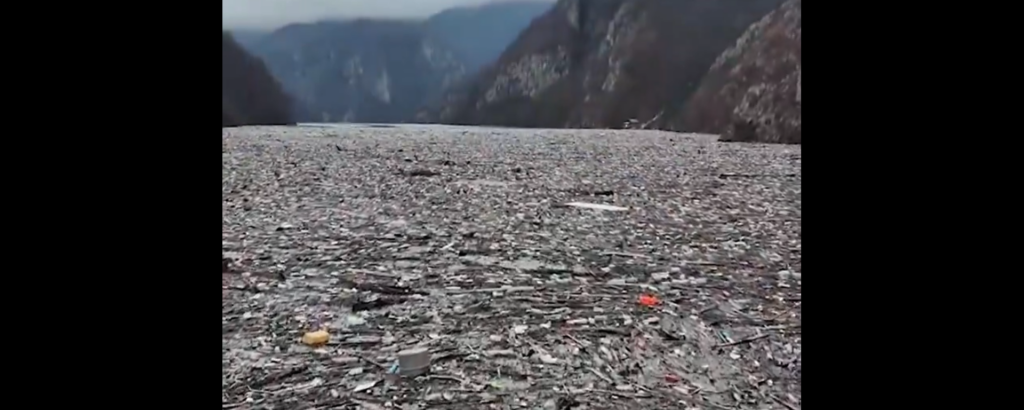
Land degradation is expected to continue at current rates, with annual loss of fertile and productive land equal to the area of Colombia or Ethiopia, at a time when climate change could reduce per capita food availability by 3.4 per cent by 2050. The 8 billion tonnes of plastic waste polluting the Planet will continue to accumulate, driving up estimated health-related economic losses of $1.5 trillion annually attributable to exposure to toxic chemicals in plastics.
The report presents two transformation pathways, examining behavioural changes to place less emphasis on material consumption and changes in which the world relies primarily on technological development and efficiency gains. The transformation pathways predict that global macroeconomic benefits will begin to manifest in 2050, grow to $20 trillion per year by 2070, and increase thereafter to $100 trillion per year.. Pathways include reduced exposure to climate risks, reduced biodiversity loss by 2030, and increased natural lands.
Nine million deaths prevented
Nine million premature deaths could be avoided by 2050 through measures such as reducing air pollution. By 2050, nearly 200 million people could be lifted out of malnutrition and more than 100 million out of extreme poverty. Achieving the goal of zero net emissions by 2050 and ensuring adequate funding for biodiversity conservation and restoration requires annual investments of about $8 trillion through 2050. However, the cost of inaction is much higher.
Following the paths of transformation would require radical changes in five key areas. The report outlines recommended measures for each area, including:
- Following the paths of transformation would require radical changes in five key areas. The report outlines recommended measures for each area, including:
- Materials and waste. Implement circular product design, transparency, and traceability of products, components, and materials; shift investments towards circular and regenerative business models; shift consumption patterns towards circularity through a change in mindset.
- Energy. Decarbonise energy supply; increase energy efficiency; support social and environmental sustainability in critical minerals value chains; address energy access and energy poverty.
- Food systems. Move to healthy and sustainable diets; improve circularity and production efficiency; reduce food loss and waste.
- Environment. Accelerate conservation and restoration of biodiversity and ecosystems; support climate adaptation and resilience, building on nature-based solutions; implement climate mitigation strategies.
What will happen if we look the other way
Will we be able to make such a profound change? The presence of a denialist and anti-environmentalist leader like Donald Trump at the helm of the United States and the leadership of fossil-producing countries, often entrusted to autocrats, raise doubts. But science, as always, warns us of what we are heading for if inaction prevails. “If we look at some of what has happened in the last year, from the failure of the plastics treaty negotiations to the limited progress at COP30,” notes Bob Watson, “I have to admit that right now we are moving in the right direction but we are definitely not moving at a sufficient speed to become sustainable in the timeframe that would be needed. We have many governments that don’t believe in the need to address issues like climate change or biodiversity loss. This is a fact. Multilateralism seems to have problems. So, I have to be honest. We have to rely on visionary governments who feel this responsibility, citizens and private sector people who understand the importance of seriously addressing these global issues. And remember: the cost of action is high, but clearly lower than the cost of inaction.”