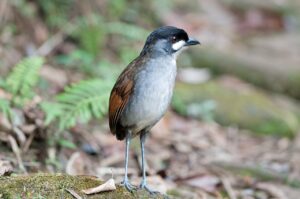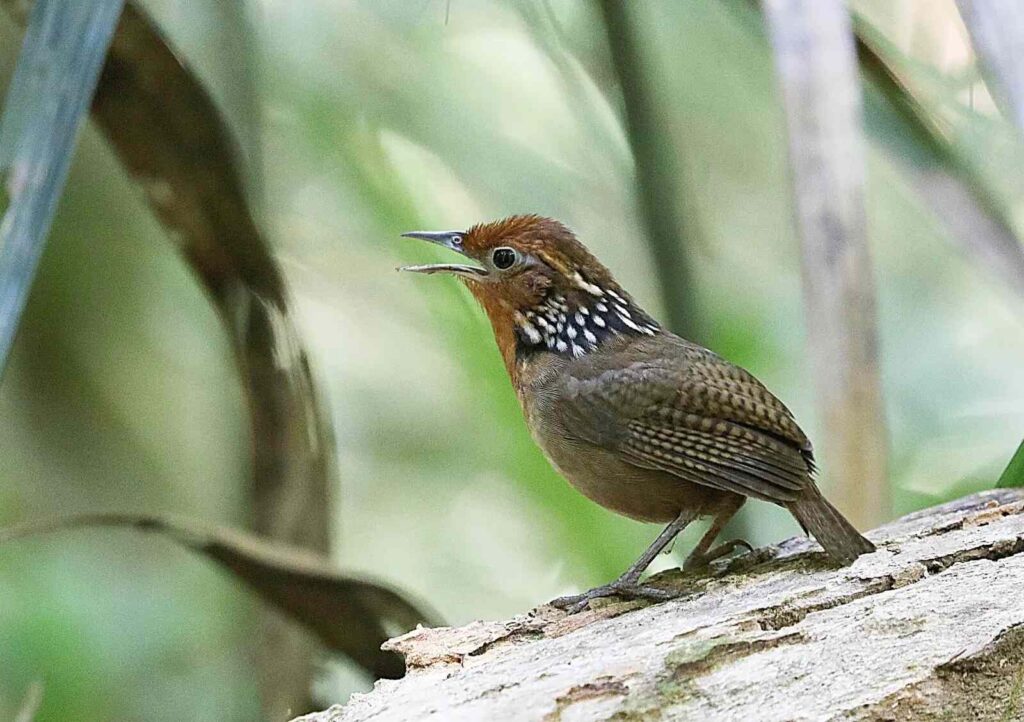
The first sign of the day in the Amazon rainforest has always been birdsong. But today, in some parts of the jungle, that natural concert is becoming increasingly rare. When the call of the musician wren resonated in the trees near Manaus, Brazil, in October 2025, researchers in the field reacted with surprise: hearing it is no longer so common.
The episode, recounted in a report published in Science, is symbolic of a trend that is worrying more and more ornithologists: many tropical bird species are declining even in seemingly intact forests far from deforestation or direct human activities.
Numbers of concern
The first warnings came from Ecuador. In the Yasuní Biosphere Reserve, one of the richest biodiversity hotspots on the planet, ornithologists John Blake and Bette Loiselle observed a gradual decline in morning bird song over the years. Their research, based on more than a decade of monitoring, has since confirmed the suspicion.
Between 2001 and 2014, the number of birds caught in scientific monitoring networks decreased by 40 percent, while field observations indicate a decline of up to 50 percent in overall occurrence. The most affected species are those that feed on insects in the forest undergrowth.
Similar data emerge at other tropical research sites. In Soberanía National Park, Panama, about 70 percent of resident species are less abundant today than in the late 1970s. In the Brazilian Amazon, in study areas near Manaus, some insectivore species have lost more than half their population in recent decades.
The suspect: the climate
What makes the situation particularly disturbing is the context. The forests analyzed have not been destroyed or fragmented-they are protected and relatively intact ecosystems.
This is why many researchers look to climate change as a possible key factor. Over the past four decades in the central Amazon region, the dry season has gradually warmed and rainfall has decreased. Even relatively small changes can have major effects on species accustomed to very stable environmental conditions.
A study published in Science Advances showed that warmer, drier years are associated with lower survival of Amazonian understory birds.
The role of insects
Scientists are also investigating a possible ripple effect involving prey. About two-thirds of tropical birds feed primarily on insects, and several studies suggest that these populations are also changing.
In Costa Rica, for example, research recorded a 10 percent decrease in caterpillars and a 15 percent decrease in insect pests between 1997 and 2018. Too much rain or too dry seasons can reduce food availability, directly affecting birds.
The result is not always immediate mortality: it often means less energy to reproduce and thus fewer new individuals in subsequent generations.
The jungle experiment
To better understand what is going on, a group of researchers has initiated near Manaus an unusual experiment: irrigating a portion of forest to simulate the wetter weather conditions of the 1980s.
The system uses miles of pipes and dozens of sprinklers that spray water into the underbrush during the dry season. Early data, cited in the Science investigation, indicate that birds in irrigated areas show higher energy levels and greater signs of reproductive activity.
A clue that strengthens the hypothesis of a link between water availability, insects and the health of bird populations.
An ecosystem that could change
The decline of tropical birds is not just about the loss of sound and color in the forest. Many species perform crucial ecological functions: they disperse seeds, pollinate plants and control insects.If these populations continue to decline, the effects could spread to the entire ecological network of rainforests.
For now, the research is still ongoing. But one thing is already clear: Even the richest and most seemingly intact ecosystems on the Planet are beginning to show the first cracks in the era of climate change.