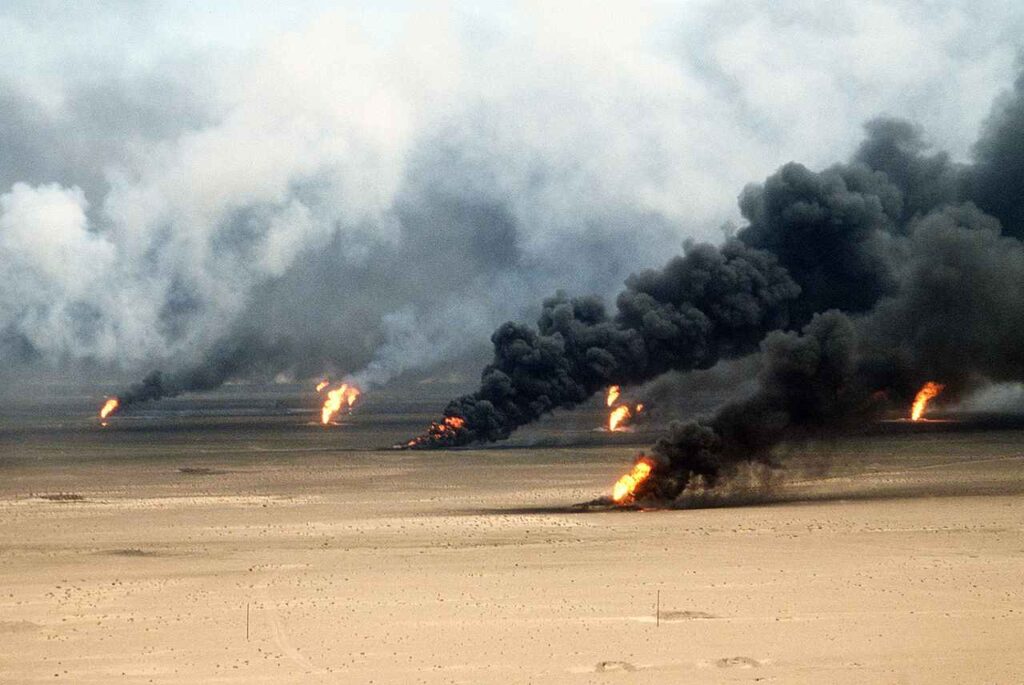
Recalling the ecological disaster of 1991, but also the attacks last June against Iranian nuclear and missile sites helps to understand how the Persian Gulf area is also in the crosshairs environmentally. In these hours, the environmental impact of the conflict is dramatically increasing. After overnight raids on crude oil storage tanks on the outskirts of Tehran, the Iranian capital was enveloped in a giant cloud of smoke and petroleum substances. The explosion of the tanks released large quantities of combusted oil into the air, making the atmosphere heavy and almost unbreathable. In several parts of the city, black “oil rain”-like drops fell from the sky, residues of combustion and particles dispersed in the toxic cloud. The situation has aggravated the already difficult conditions in a city that has been living under bombardment for days. The dark cloud has also become a symbol of the escalating conflict: attacks are hitting not only military targets but also strategic energy infrastructure. The offensive against oil depots is part of the new phase of the war, in which Israel aims to weaken Iran’s logistical and industrial capabilities by targeting bunkere oil-related infrastructure.
Only when military operations are over will a definitive assessment be possible, but early reports are already causing grave alarm. “The picture,” says Doug Weir, director of the Conflict and Environment Observatory (CEOBS), a U.K.-based nonprofit organization, “is very worrying. So far our monitoring has identified a wide range of environmentally problematic sites targeted by parties to the conflict, from fossil fuels to military facilities.”
Of the 2,000 drones and 500 missiles launched by the Iranians in the first six days of the conflict, 84% of those directed against Israel and the UAE (40%) would have been intercepted, lower percentages but still above 60% for Saudi Arabia, Bahrain, Qatar, Iraq. Of the missiles and drones that reached target, 50% would have hit environmentally sensitive targets such as refineries and military bases causing potential environmental damage. Of the 3,000 targets hit by the United States in the first four days of the war, 90 percent would have potential environmental impacts; of the 1,600 hit by the Israelis (who carried out more attacks against the Iranian leadership), about 80 percent. In total there would then be, in just four days, 3,980 sites hit by Americans and Israelis that have potential environmental damage.
The drama of 1991
The 1991 Gulf War was one of the worst man-made ecological disasters due to the deliberate use of environmental pollution as a military tactic by Iraqi forces during the retreat from Kuwait. Between late January 1991 and early February as many as 732 oil wells were blown up, 610 of them caught fire and continued to burn for months: from February to April 1991 between 4 and 6 million barrels of crude oil per day, between 70 and 100 million cubic meters of natural gas per day. Huge clouds of soot and toxic gases (sulfur dioxide, nitrogen oxides) obscured the sun and caused regional temperatures to drop by up to 10 C°.
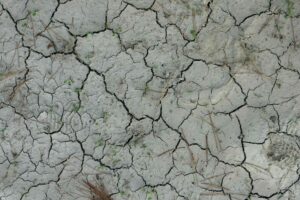
Seven months later, 441 rigs had been brought under control, while 308 remained uncontrolled. The last well was shut in on November 6, 1991. The total amount of oil burned is estimated at one billion barrels or just under one percent of Kuwait’s total reserves of 104 billion barrels. The soot fell back as acidic “black rain,” contaminating soil and groundwater up to hundreds of kilometers away in Iran, Iraq, Turkey and Syria. Unburned oil formed some 300 crude oil lakes that covered more than 50 square kilometers of the Kuwaiti desert, seeping underground and threatening scarce underground water resources. The mixture of sand, oil and soot created a hard layer called “tarcrete,” which cemented about 5 percent of Kuwait’s surface, preventing vegetation regrowth and destroying the desert ecosystem.
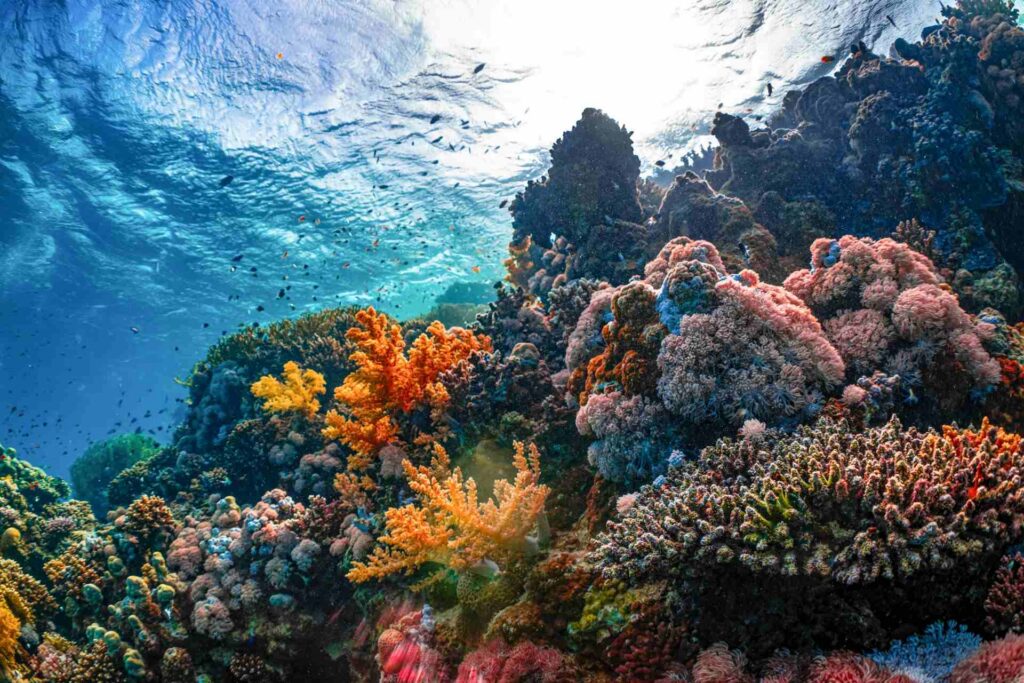
The Iraqi military, to prevent possible U.S. landings, also spilled millions of gallons of crude oil into the sea, resulting in the largest oil spill in history, with estimates ranging from 4 to 11 million barrels poured into the sea. Some 850 km of coastline has been contaminated, devastating critical habitats such as salt marshes, mangroves and coral reefs. Thousands of seabirds (about 30,000 grebes and cormorants), endangered sea turtles and marine mammals have died as a result of the oil.
The current attack
Most U.S. and Israeli strikes in the first phase of Operation Epic Fury targeted missile bases, airfields, weapons depots and military production facilities throughout Iran. Iran responded by striking U.S. air and naval bases in Kuwait, Qatar, Bahrain and the United Arab Emirates. And the environmental damage is heavy even beyond the destruction of the facilities themselves, because they have most likely created environmental pollution.
“Although many attacked sites have secondary explosions and fires,” the CEOBS report notes, “these rarely destroy all hazardous materials and can generate additional pollution. Likely contaminants include fuels, oils, heavy metals, energy compounds and PFAS, while fires can release dioxins and furans. Many Iranian military facilities are located in rural areas, which complicates damage assessment and potentially reduces the risks of human exposure, but several sites in Iran, Lebanon, and the Gulf are located near cities, increasing the risks of public exposure should pollutants spread.”
Attacks against oil infrastructure have also been carried out from Iran to Qatar and Saudi Arabia. A drone attack on the Ras Tanurah oil refinery in Saudi Arabia triggered a fire and a large column of smoke. Such columns can contain particulate matter, nitrogen oxides, sulfur dioxide, carbon monoxide and toxic organic compounds, including PAHs and potentially dioxins, posing a health risk to communities downwind. Blackouts following attacks on energy infrastructure, such as those in the industrial city of Ras Laffan in Qatar, can cause significant secondary damage, with power outages disrupting security systems and triggering industrial pollution.
And then there are the attacks on military infrastructure. “Damaged missile facilities are of particular concern. Iran,” notes the CEOBS study, “uses both solid- and liquid-propellant ballistic missiles, and some liquid propellants, such as asymmetric dimethylhydrazine and inhibited red nitric acid used in SCUD-type systems, are highly toxicand have posed serious management and disposal challenges in other conflict contexts. Affected sites include the well-known Tabriz missile base and the Zanjan military base in northwestern Iran. Large columns of smoke were visible from both facilities, and satellite images show collapsed tunnels at various entry points to Tabriz.”
At the Natanz nuclear site near Quom, which had already been heavily bombed in last June’s “12-day war,” facilities were again attacked, but because they are underground facilities, there is currently no evidence-according to the Atomic Energy Agency in Vienna-of environmental contamination in the atmosphere. Which is not to say that it may not emerge at a later time, for example through groundwater circulation, operations to reopen tunnels to access buried uranium enrichment laboratories, or any collapse.
Iranian navy destroyed by US
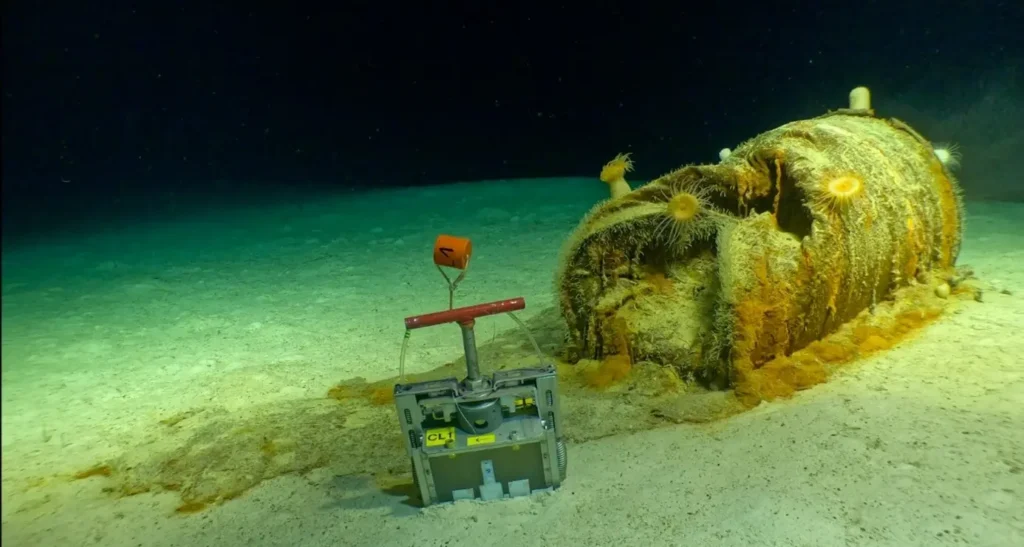
Attacks on Iran’s navy, which the United States has declared it will annihilate, result in inevitable damage to marine ecosystems. Sunken ships and damaged port infrastructure can pose significant pollution risks, including from fuels and oils. Attacks at sea pose serious risks of oil spills, especially when conflict conditions limit emergency response capacity.
CENTCOM, the U.S. Central Command said Saturday, March 6, that it had struck or sunk 42 Iranian ships, including the two helicopter carriers and drones several frigates and at least one Kilo-class submarine. In particular, the Iris Dena, a frigate that was sunk and sunk in the Bay of Bengal by a U.S. submarine; the Iris Makran, a converted former oil tanker, Iran’s largest naval vessel, which was heavily damaged in the Bandar Abbas dock, rendering it inoperable. And then the Iris Shahid Bagheri, Iran’s new drone and helicopter carrier, commissioned just a year earlier, which was hit and sunk early in the operation; some Jamaran-class frigates including the Iris Jamaran, with a confirmed sinking at the Chah Bahar pier. The same goes for some Alvand- and Bayandor-class frigates: the Sahand, Sabalan, Bayandor and Naghdi are believed to be sunk or damaged based on satellite imagery and analyst reports. Some Kaman-class corvettes were also reportedly damaged or sunk.
At least five commercial ships were also hit. The MKD VYOM, a 273-foot crude oil tanker, struck by a naval drone. It is currently located 50 nautical miles off the coast of Muscat, Oman. The STENA IMPERATIVE, a U.S.-flagged tanker, was attacked twice while in a Bahraini port, triggering a fire. The SKYLIGHT, a sanctioned oil and chemical tanker, was set ablaze following a naval drone attack in the governorate of Musandam, Oman. The SKYLIGHT is considered an Iranian “shadow ship,” yet it is believed to have been attacked by Iran, potentially to increase the perceived risk of conflict between shipowners and insurers. The OCEAN ELECTRA, an oil tanker, was reportedly hit by a drone, although without significant damage. The HERCULES STAR, a 115-meter oil tanker, was reportedly hit 17 nautical miles northwest of Mina Saqr in the United Arab Emirates, causing a fire. According to Iranian sources, as yet unconfirmed by independent sources, a sixth ship, “a U.S.-flagged tanker from the Marchall Islands,” the LOUISE P, is reportedly on fire after being struck in the northern part of the Gulf on Friday night by a drone. A week-old ship, the Maltese tanker PRIMA was reportedly hit, again according to the Iranians, while attempting to “breach” the Strait of Hormuz on Saturday morning. At least five other ships have been targeted by missiles and drones since the conflict began but have not been hit. Partly because of this, commercial traffic in Hormuz has virtually stopped. But commercial ships, at least 200 in number, remain “captive” in the Gulf and could be targeted for attack with potential, devastating consequences for the marine ecosystem.
Because this is war. A horror also from the environmental point of view.