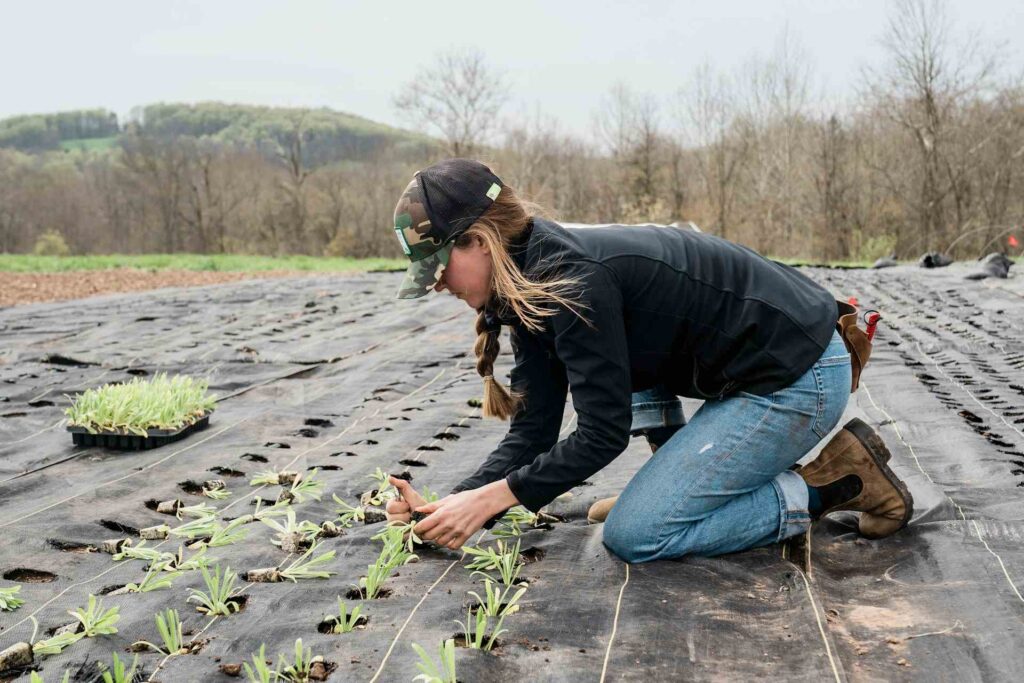
Less than one in three farms in European agriculture is run by a woman. The share stands at 32 percent, reflecting an imbalance that runs through the entire supply chain: from access to land to the distribution of funding and formal recognition of work. To take action on this gap, the European Commission has launched the Women in Farming Platform, a mentoring and networking program open for applications until April 30.
Women’s work is a stable component of the industry, but it rarely translates into ownership. Women participate in the day-to-day management of businesses, follow administrative and commercial activities, and contribute to the processing and sale of products. When looking at formal ownership and responsibility, however, their presence is reduced.
Data published by the European Commission in March 2026 show a still slow rebalancing. Firms led by women have an average size of 9 hectares, compared to 21 hectares for those led by men, and the difference affects investment capacity and the ability to obtain financing, which remain linked to firm size. The same pattern is reflected in income:farms led by women record an average income per worker that is 42 percent lower than those led by men. Youth presence is also particularly low: only 3 percent of owners are under 40 years old, and among farmers under 40 just 26 percent are women. A figure that signals how generational turnover in agriculture continues to be marked by strong gender disparities.
Family dynamics
Underlying this are known factors. Access to land continues to go through family dynamics that favor transmission to male children. Financing tends to focus on larger enterprises. Care work limits time and mobility, affecting the ability to start or expand a business. This is compounded by fewer training opportunities and lower participation in professional networks.
The Women in Farming Platform fits right into this plan. The program connects experienced and new women farmers with the goal of facilitating entry to skills, markets and operational tools. Topics include caregiving services, family planning and pensions, elements that directly affect the continuity of farming activities but remain marginal in traditional educational pathways.
An unbalanced distribution
This intervention complements instruments already active at the European level. The Common Agricultural Policy allows member states to introduce dedicated measures, and in recent years an increasing share of resources has also been allocated to women entrepreneurs. In 2024 more than 55,000 young women received European funds to start or strengthen their business. At the same time, however, the distribution remains unbalanced: women account for about one-third of the beneficiaries but receive a significantly smaller share of the total funding.
The point then shifts from the availability of tools to the conditions of access. Support programs and training pathways require time, connection and a favorable context. Under these conditions, those who benefit most often are those who are already structured, while in more marginal rural areas-where infrastructure is more fragile and opportunities more limited-access remains more difficult.
Moreover, 2026 is the year that the United Nations has dedicated to women farmers. A framework that helps keep the issue on the global political agenda, but which alone is unlikely to change the balance in the sector.