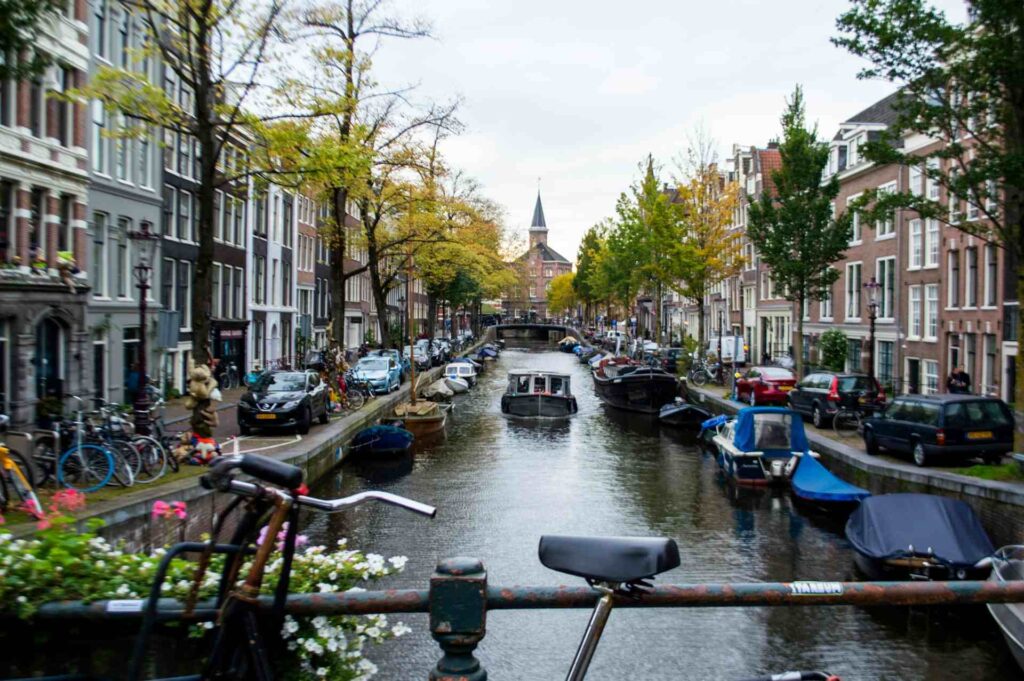
Since May 1, Amsterdam’s advertising landscape has changed its face. At streetcar stops and metro stations, ads for chicken nuggets, low-cost flights or private jets have disappeared. In their place are posters dedicated to concerts, museums and cultural initiatives. The Dutch capital decided to stop public promotion of products and services considered incompatible with its climate goals.
The junta led by Mayor Femke Halsema has introduced a ban on advertising for meat, fossil fuels, airlines, cruises, and gasoline or diesel cars in all spaces managed by the municipality. It is the first European capital to adopt such a measure, set to become a precedent in the debate on urban policies and commercial communication.
Amsterdam aims to achieve climate neutrality by 2050 and, in parallel, to reduce meat consumption among citizens by 50 percent . Against this backdrop, continuing to give advertising space to emission-intensive sectors has also appeared increasingly inconsistent politically. “The climate crisis is most urgent,” said Anneke Veenhoff of the environmentalist GreenLeft party. “It makes no sense to rent our space to people who promote exactly what municipal policies are trying to reduce.”
The precedent of tobacco
The economic impact of the measure will be limited. According to data released by the municipality, advertisements related to fossil fuels and high-emission travel account for about 4 percent of the total, while those on meat affect just 0.1 percent.
The value of the measure is primarily symbolic and cultural. The approach recalls the path followed over the years with tobacco: when a product is recognized as harmful to public health, its presence in urban space gradually stops being normalized.
Anke Bakker, group leader of the Party for the Animals, argues that eliminating these advertising messages can help reduce impulse purchases and change the collective perception of some consumption. For a city that wants to increase the share of plant-based proteins to 60 percent by 2030, the issue is not only about commercial freedom, but also about consistency in environmental policies.
The European debate
Amsterdam is part of a trend that is taking shape in several European cities. France passed a law against fossil fuel advertising in 2021, although its implementation has so far remained limited. In Italy, the comparison is still in its infancy. Florence and Genoa have passed motions in recent months urging administrations to consider similar restrictions, but without introducing outright bans.
The Amsterdam decision thus shifts the debate to a terrain that has so far remained on the sidelines of the ecological transition: the role of advertising in consolidating consumption patterns with a high environmental impact.