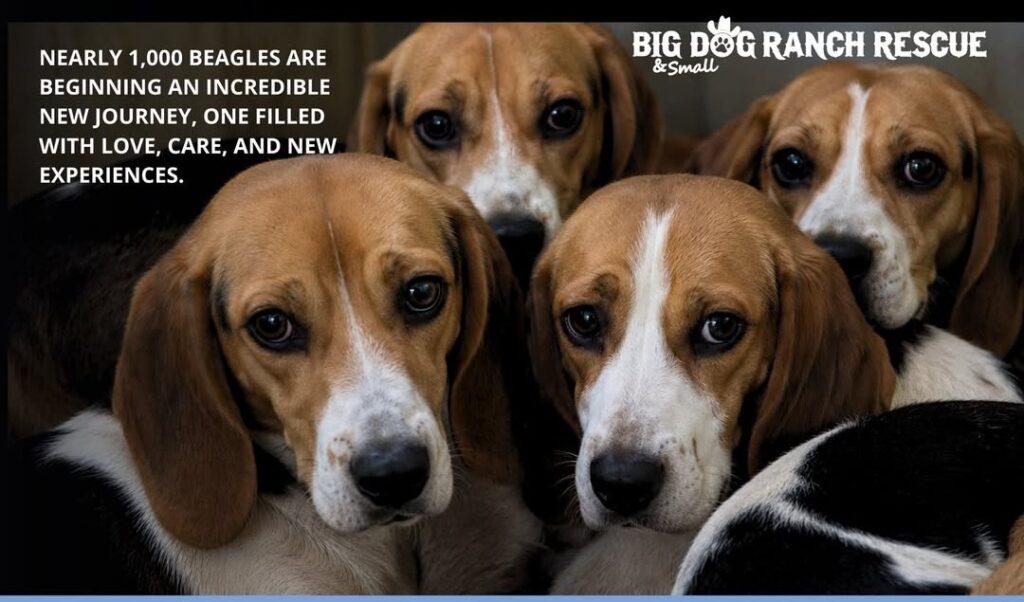
They were running on the grass for the first time. They had probably never seen sunlight before. Yet, Lauree Simmons, founder of Big Dog Ranch Rescue, tells EuroNews, “within an hour or so, they started approaching us, looking for attention. Some snuggled into people’s arms.” One thousand five hundred beagles, taken from Ridglan Farms in Blue Mounds, Wisconsin-the second largest laboratory dog farm in the United States-began their journey to something that was unheard of for them: freedom.
The news, bounced all over the major media in the United States and elsewhere, is technically an animal rescue story. But to tell it only that way would be reductive. It is also a story about how the social consensus around animal experimentation is changing and how much it weighs-in economic and political terms-public pressure on an industry that has operated in the shadows for decades.
An agreement, not a blitz
The 1,500 dogs were not freed by activists but bought. Big Dog Ranch Rescue and the Center for a Humane Economy negotiated a confidential agreement with Ridglan Farms for months to acquire the animals. Negotiations were ongoing even before the April protests, and Simmons was careful to point out that his group “was not connected to the protests.”
On April 18, some 1,000 activists from across America had gathered in front of the facility in an attempt to forcibly remove the dogs. The law enforcement response had been sharp: tear gas, rubber bullets, pepper spray. Twenty-nine arrests, five charges for grand larceny. By March, a raid had taken away 30 dogs, with 63 people reported to the district attorney’s office.
The negotiated bailout came independently of the protests, perhaps due in part to the pressure they generated in the media, but through separate, legal avenues.
Because beagles
Beagles are the most widely used breed in animal testing in the United States. The reasons are practical: small size, mild temperament, behavioral reliability in testing. As Simmons herself explains, “A Belgian Malinois shepherd will not tolerate being tested or confined to a kennel for life.” Beagles do. That docility-evolved over centuries to stand beside humans-has become their doom in the lab.
“We’re taking one of the gentlest, kindest, most trusting breeds and mistreating it,” Simmons said again. “This needs to be stopped.” It is a position that goes beyond the single incident and directly challenges the regulatory agencies, universities and pharmaceutical companies that still depend on these animal models.
The structure and its past
Ridglan Farms is no stranger to controversy. Last October, the facility had agreed to surrender its state livestock license effective July 1, 2026, as part of an agreement to avoid criminal prosecution related to allegations of animal mistreatment. The company has always denied the charges, but a special prosecutor had determined that some eye procedures practiced on the animals violated Wisconsin state veterinary standards. Not an insignificant detail, given that this was a farm that supplied research centers.
Of the 2,000 dogs in the facility, 1,500 have been purchased. The others remain. The Center for a Humane Economy said it is “continuing its efforts to try to free the remaining dogs,” adding that “these arrangements require compromises” and that “without this negotiated outcome, it is very likely that none of these dogs would have been released.”
The logistics of a liberation
The first 300 dogs were transferred last Friday. The others will follow over the next few weeks. The two organizations have set up a temporary area in Wisconsin with outdoor enclosures where the animals are being vaccinated, microchipped, sterilized and prepared for transport. Big Dog Ranch Rescue is already moving them to its headquarters in Palm Beach County, Florida, and from there to shelters across the country. The charity has already received more than 700 adoption applications, but the process will be long: potential foster parents are being carefully screened, and many of the dogs-especially the older ones-will need time to adjust to a home life they have never known.
A signal, not a solution
It would be wrong to close this story with a happy ending. One thousand five hundred dogs are finding homes – and that is good news. But the system that imprisoned them has not disappeared. There are other similar farms in the United States, other laboratories that continue to operate in full compliance with federal law. Activist pressure, media coverage and negotiated settlements have affected one specific case; they have not changed the rules governing animal experimentation nationwide.