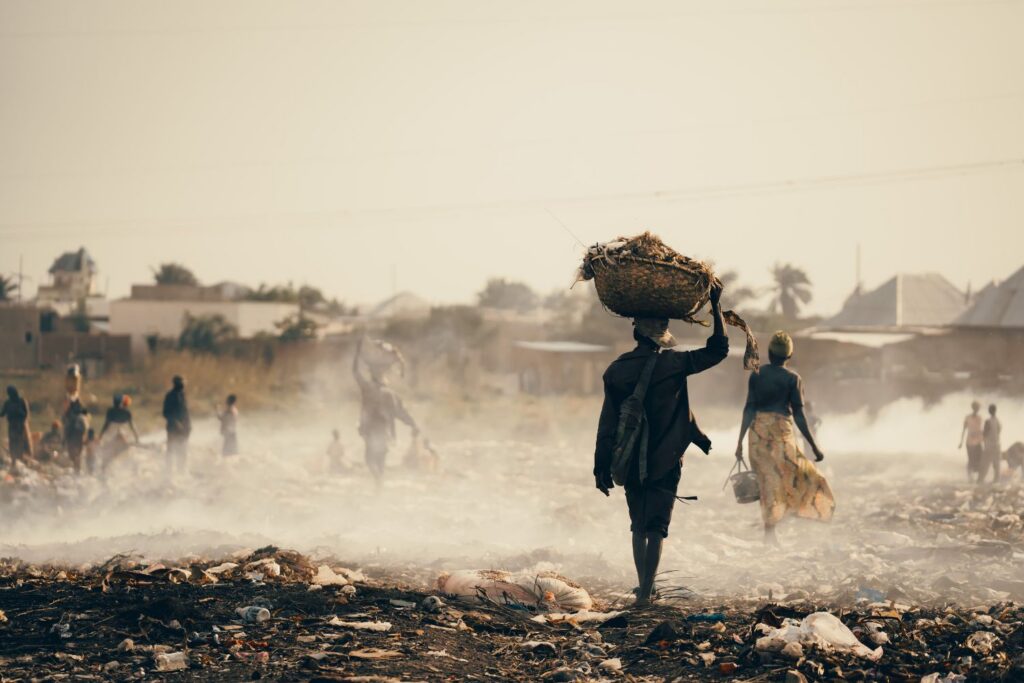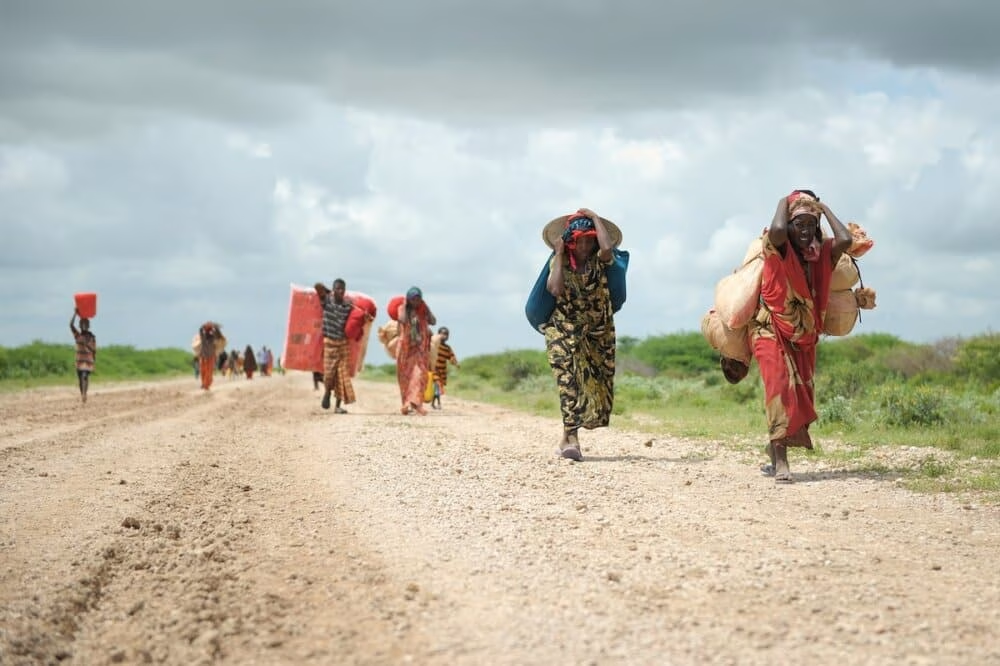
More than 2 billion people worldwide lack access to safely managed drinking water services. And the daily burden falls mostly on women: in 80 percent of households without water at home it falls to women and girls to take care of the collection. These are the figures provided by the United Nations on the occasion of World Water Day
The most striking figure is about time: women and girls collectively spend about 200 million hours each day collecting water. A huge amount of time taken away from education, work and social participation. Not surprisingly, the UN points out that girls are far more likely than their male peers to be excluded from school.
So it is not just a matter of physical exertion: the time it takes to collect water translates into a structural limitation to opportunity. In many rural areas, the cycle is always the same: less access to water means less education, less economic autonomy and greater vulnerability.
The UN also highlights another critical aspect: the lack of adequate water and sanitation services increases risks to personal safety, especially for women and girls forced to move to isolated areas.The problem, then, is not only environmental. It is deeply social.
Climate change accelerates the crisis
Climate change further amplifies these dynamics. More frequent and prolonged droughts make access to water increasingly difficult, increasing the distances to be traveled. At the same time, extreme events such as floods and storms can contaminate water sources.The result is increasing instability: water is not only less available, it is also less predictable. And when the system becomes destabilized, it is the most vulnerable who pay the highest price.
The water crisis is therefore also a question of rights and equality. Improving access to water means intervening on infrastructure, but also recognizing the invisible work that sustains entire communities.Reducing leakage, investing in efficient networks, promoting water reuse, and ensuring adequate sanitation services are key actions. But without an inclusive approach that takes gender inequalities into account, the risk is to intervene only on the surface of the problem.
Italy, less rain and less available water
If the global picture highlights the social implications of the crisis, Italian data clearly show the quantitative dimension of the problem. According to ISPRA analysis, total precipitation in 2025 was 963.4 millimeters (about 291 billion cubic meters), down 9 percent from 2024, a particularly rainy year.
The renewable water resource-that is, the amount actually available net of evapotranspiration-was estimated at about 128 billion cubic meters. This is more than 7 percent below the historical average, 4 percent below the 30-year period 1991-2020, and especially 19 percent below the previous year.The figure confirms a negative trend that has been observed nationwide since 1951.
The most critical issues are concentrated in the South Central and islands. The Southern and Central Apennine districts show the most significant declines in water resources, up to 30 percent below average values. Sardinia and Sicily continue to show deficit conditions, by 12 percent and 13 percent, respectively.