Australia tries to rewrite its marine policy without reopening old rifts. Environment Minister Murray Watt has launched a review of management plans for 44 national marine parks with a clear goal: to extend “highly protected” areas, those where fishing and mining are banned, by more than 500,000 square kilometers. A necessary step to reach the international target of 30 percent of protected oceans by 2030, but also to correct controversial policy choices of the recent past.
The weight of past decisions
The problem dates back to 2018, when a revision sought by conservative governments drastically reduced the level of protection in more than one million square kilometers of ocean. It was a move that opened vast areas to industrial fishing and drilling, marking – according to several studies – the largest downgrading of a protected area ever recorded globally. Today that decision weighs like a boulder on biodiversity defense.
The review initiated by the Labor executive thus looks like a “restoration” operation, but with a delicate balance: strengthening protections without triggering head-on conflict with the economic sectors involved. It is no coincidence that Watt insists on the need to avoid “culture wars,” aware that the environmental issue in Australia has often been the terrain of political confrontation rather than planning.
How far to 30%
Currently about 24 percent of Australia’s waters enjoy high protection, amounting to 2.2 million square kilometers. To reach 30 percent, an additional 523,980 square kilometers are needed, which the government intends to achieve by expanding existing reserves and establishing new ones. This is a pathway that will unfold over the next few years: the first updates will cover the Coral Sea and the Temperate East network, with deadlines stretching to 2028.
But numbers alone are not enough. Environmental organizations and the scientific community are calling for protection to also be “quality,” that is, distributed representatively among different marine habitats. Today, underwater canyons, oceanic mountains and rocky reefs remain largely excluded from strict protection zones, just as climate change increases their vulnerability.
Between economy and biodiversity
The critical issue remains the coexistence of conservation and economic interests. Commercial fishing and the oil industry are players with growing clout. The government argues that it is possible to expand protected areas without penalizing these sectors, but the game will be played on maps: which areas to actually close and which to leave open.
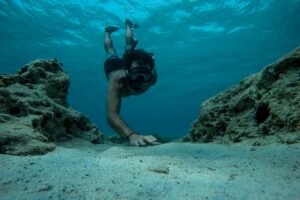
Environmentalists see the review as a concrete test case. After years of backtracking, they are calling for clear signals, not just formal commitments. Not least because Australia is home to ecosystems unique in the world, from the Coral Sea-often called the “Serengeti of the ocean”-to remote coral reefs.
A window that opens every ten years
Review of marine parks occurs by law every decade. This makes the present moment decisive: the choices made now will define the level of protection until the middle of the next decade, amid increasing climate pressure on the oceans.
For the Australian government, it is a chance to show that environmental protection can move away from the logic of ideological confrontation and become structural policy. For marine ecosystems, it is a real chance for survival.