The spill did not happen, but the risk this time was real. The attack on a Kuwaiti oil tanker off the coast of Dubai, in the midst of the war between the United States, Israel and Iran, has brought a structural vulnerability back to center stage: the security of oil routes increasingly coincides with environmental security.
According to available reconstructions, the vessel — loaded with about two million barrels of crude oil — was hit by a drone attributed to Iran in response to raids launched by the United States and Israel against Iranian military and infrastructure targets in previous weeks. The vessel caught fire, but local authorities managed to contain the blaze without spills or casualties.
An outcome that avoids immediate damage to Gulf ecosystems, but does not change the substance: energy infrastructure has permanently entered the perimeter of the conflict.
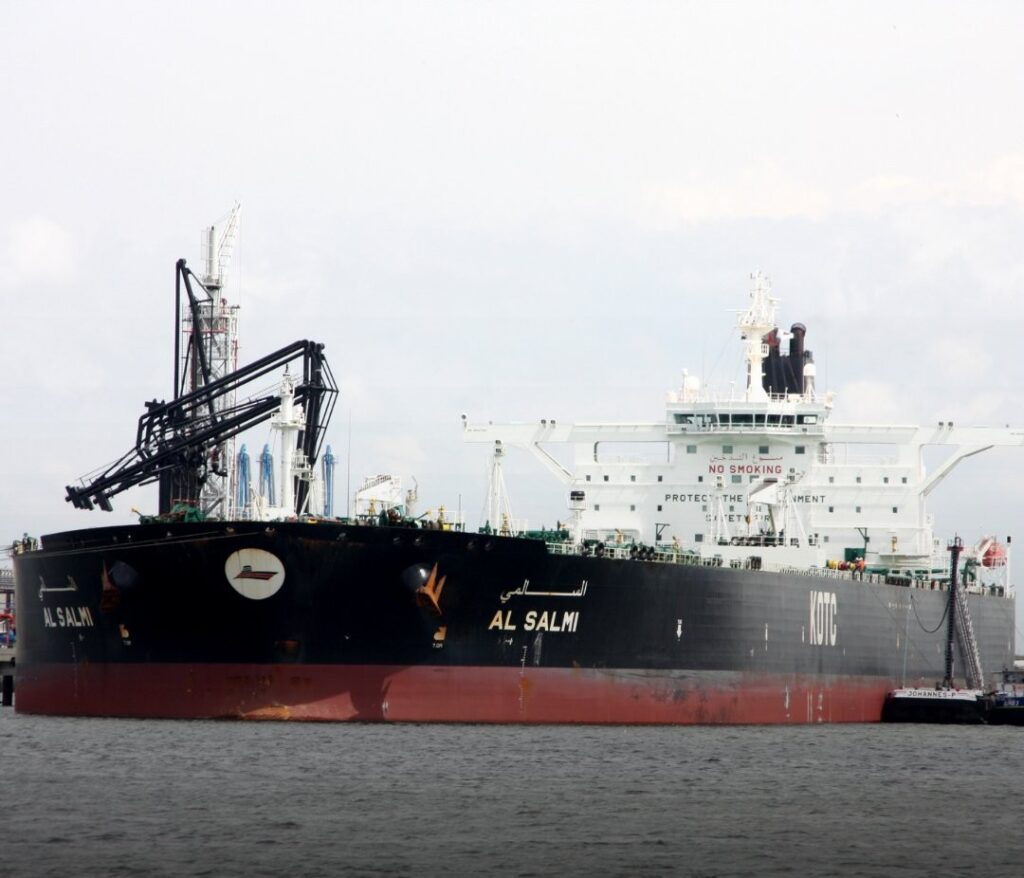
Kuwaiti crude carrier "Al-Salmi" was directly attacked by Iranian forces while docked at the anchorage area of Dubai Port in the United Arab Emirates, Kuwait Petroleum Corporation (KPC) said early Tuesday.
— KUWAIT TIMES (@kuwaittimesnews) March 30, 2026
In a press statement, KPC said that the tanker was fully laden at the… pic.twitter.com/Fi4062GDGc
Energy routes in the crosshairs
Since the start of U.S.-Israeli military operations against Iran, which began in late February, Tehran has responded by striking indirect targets as well: commercial traffic, oil tankers and energy hubs in the Persian Gulf.
In recent days, drone and missile attacks have multiplied, while Israel has intensified raids on Tehran and Hezbollah-linked infrastructure. The conflict has thus expanded to a regional dimension, involving Lebanon, the Gulf and sea routes.In this context, the sea becomes, from a transit space, a field of operations. And every affected ship constitutes a potential environmental incident.
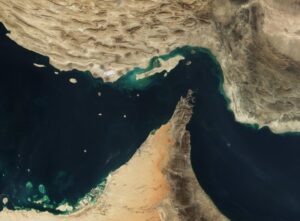
The most sensitive point remains the Strait of Hormuz, the obligatory passage between the Persian Gulf and the Indian Ocean. About 20 percent of the world’s oil transits through here, a share that makes this corridor a critical junction for the global economy.
In response to the attacks it has suffered, Iran has restricted traffic in the strait, allowing passage only to vessels from countries considered non-hostile. The result is a selective and unstable system: few vessels pass through, many remain stationary or divert routes.
This reduction in flows is the main cause of soaring energy prices and rising logistics costs. More than the physical shortage of oil, the perceived risk of supply disruption weighs in.
Markets under pressure
The consequences are already visible. The price of crude oil surpassed $100 a barrel after the attacks on ships in the Gulf, while in the United States the cost of fuel is back above $4 a gallon.
Asian stock exchanges register sharp declines, signaling a climate of uncertainty reflected in investment and production. More expensive energy quickly translates into inflation: transportation, industry and agriculture are directly affected by the cost of oil.Countries heavily dependent on imports, such as Japan, are already resorting to strategic reserves and strengthening bilateral agreements to secure supplies.
Diplomacy and military pressure
Politically, the crisis is moving on a double track. On the one hand, indirect contacts between Washington and Tehran to reopen the Strait of Hormuz continue; on the other, military pressure remains high.
The United States has strengthened its presence in the region and threatened direct attacks on Iran’s energy infrastructure if routes are not reopened. In parallel, Iran continues to use control of maritime traffic as a negotiating lever.The result is an unstable balance, in which energy security becomes a tool of strategic confrontation.
Environmental risk remains
The Persian Gulf is a closed basin, with limited water exchange and biodiversity already under pressure. Any large spill would have lasting effects on ecosystems, fisheries, and desalination plants, on which the water supply of millions of people depends. With the conflict still ongoing and energy routes exposed, the risk is not episodic but systemic. And it concerns, together, environment, economy and global stability.