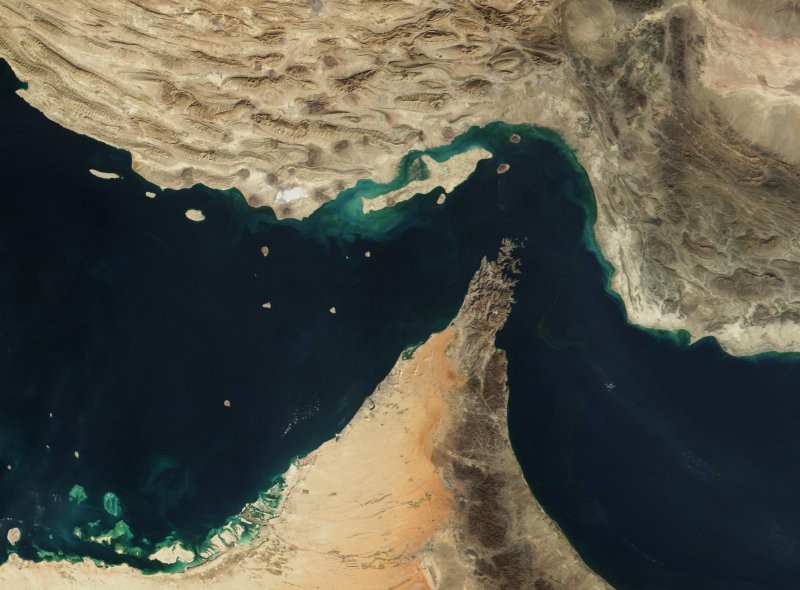
Since the Feb. 28 U.S.-Israeli attack on Iran, shipping traffic in the Strait of Hormuz has plummeted by 95 percent. A paralysis that affects not only oil: about one-third of the world’s trade in chemically synthesized fertilizers passes through that strait, and nearly half of the global production of urea-the most widely used nitrogen fertilizer-comes from the Persian Gulf area. The price of urea has already risen more than 30 percent since the start of the conflict, reaching its highest level in three years.
The timing is the worst possible. April and May are the decisive weeks for spring planting in much of the world. Fertilizers that do not arrive today cannot be made up in October: plant cycles do not wait. And even if hostilities ended tomorrow permanently, restarting production and transport would still take weeks, enough time to jeopardize an entire agricultural season and drag up food prices in the months ahead.
The crisis thus makes visible something that has existed long before the war. Industrial agriculture is built on structural dependence: on natural gas to produce ammonia, on trade routes to transport it, and on geopolitical stability to ensure that ships reach their destinations. Each link in this chain is a potential breaking point. Many preferred not to say it out loud. Hormuz said it for everyone.
Those who have stayed out of this crisis are those who have long since chosen another path. “In this war, as in all wars, industrial agriculture is trembling,” says Enrico Amico, president of Demeter Italia, the brand that certifies Italian biodynamic producers. “Organic and biodynamic represent the alternative model for food security in our country.”
Demeter Italia brings together about 1,000 farms spread throughout the country that apply the biodynamic farming method inspired by Rudolf Steiner in the 1920s. A method that does not use synthetic chemical fertilizers: soil fertility is built with compost, biodynamic preparations and crop rotation. No dependence on ammonia, urea, the natural gas needed to produce it, or the sea routes that transport it. “It’s not romanticism,” Amico emphasizes. “It is applied agronomy, which has proven for more than a century that it can build fertility without relying on what is lacking today.”
The point is not the emergency. It is the direction. “This crisis is not just a fertilizer crisis,” Demeter’s president continues. “It is the crisis of an agricultural model that has put short-term efficiency ahead of long-term resilience, that has replaced natural cycles with global supply chains.” A system that produces food, yes, but has rooted its costs in the mechanisms of international commodity finance instead of nature. And which is now paying the bill.
Demeter hopes that the crisis will finally open a serious debate about the structural fragilities of industrial agriculture and the alternatives that are already available and proven. The biodynamic method can show all farmers a concrete way to reduce dependence on chemical fertilizers, regardless of what happens in the Straits in the coming weeks.