High season can be stressful, but between May-June and September-October Southern Italy changes face. Coastal resorts stop living under pressure, parking lots return, reservations no longer need to be made a week in advance for a table at a restaurant, local boats find space in the harbors and wind in the pine forests.
It is the time when many of Italy’s Mediterranean coasts recover their best form. Not that of the summer-postcard, but that of fishermen mending nets, of walkable paths without sultriness, of historic centers that are slowly traversed. From Scylla, where the myth of Ulysses meets the swordfish of the Strait of Messina, to the Gulf of Orosei in Sardinia, which out of August recovers the silence of its cliffs, here are seven places in southern Italy that are at their best before and after the high season.
Maratea
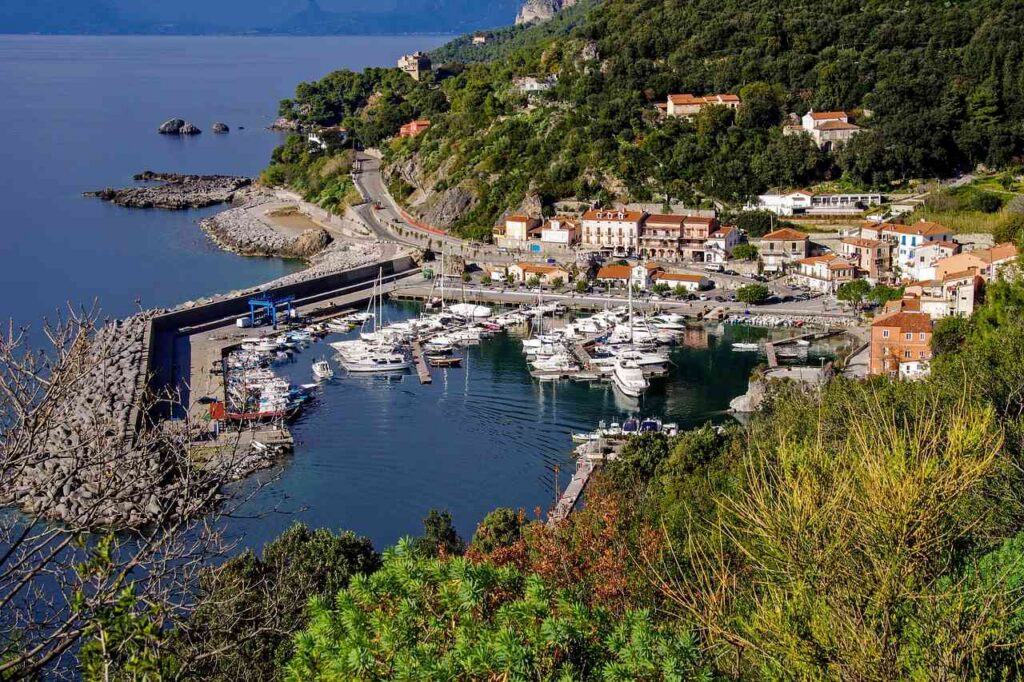
The coast of Maratea does not concede itself right away. You have to look for it among bends, maritime pines and roads that rise and fall continuously above the Lucanian Tyrrhenian Sea. It is one of the few portions of Basilicata facing the sea that can build one of the most vertical coastal landscapes in southern Italy: dark rocks, small coves invisible from the road, sea caves and walls that plummet into the water.
Out of season, the town changes pace completely. The traffic that paralyzes Mount San Biagio in August almost disappears, and one can reach unhurriedly the Christ the Redeemer of Maratea, a 21-meter statue overlooking the Tyrrhenian Sea from over six hundred meters above sea level. On clear days the view reaches as far as Calabria.
The historic center, built into the hillside and separated from the harbor, preserves stairways, noble palaces, and more than forty churches. Many smaller beaches remain accessible only by sea or via paths: comfortable shoes here are worth more than flip-flops.
The cuisine holds sea and mountains together. Cod with cruschi peppers, marinated anchovies, cavatelli with fried breadcrumbs and Lucanian oil appear in restaurants.
Scylla
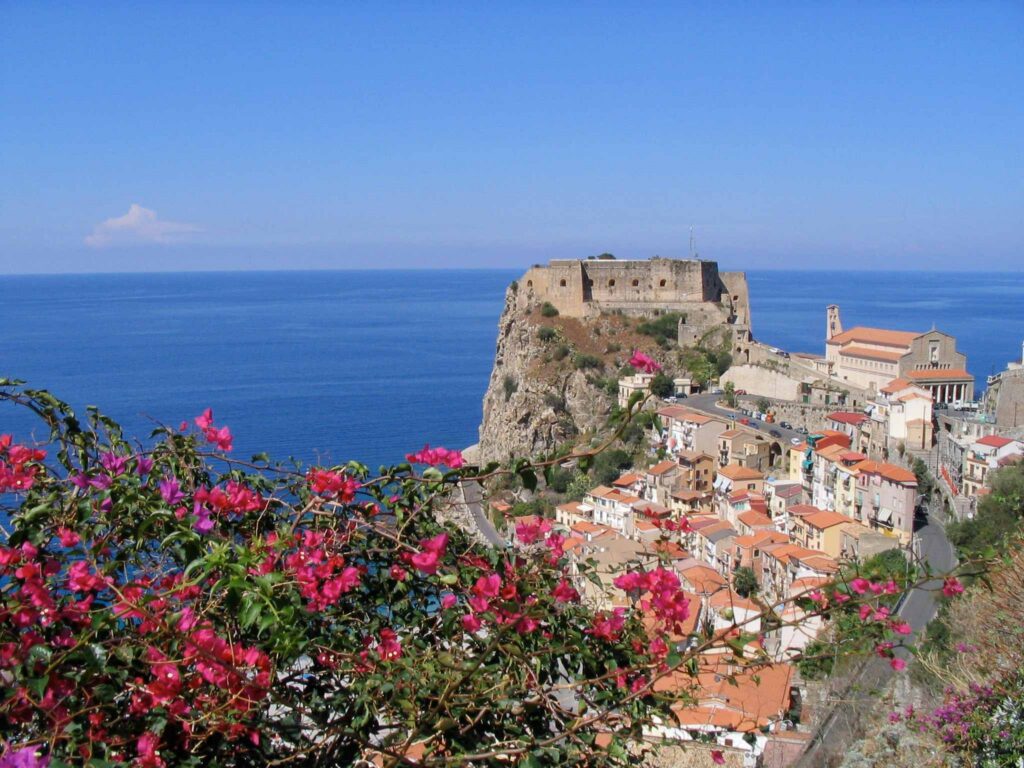
In the Strait of Messina, the sea is never just the sea. Currents, winds and myths continue to coexist in the same stretch of water. Scylla, according to Homeric tradition, is the site of the sea monster faced by Odysseus on his journey to Ithaca. Even today, one only has to look at the sea on windy days to understand why this stretch of Calabria has fueled legends for centuries.
The village is divided into two very different souls. Marina Grande is the long beach of the Strait, while Chianalea, often referred to as the “Venice of the South,” is a tangle of houses built directly on the rocks, with balconies that seem to enter the water.
Towering above the promontory is the Ruffo Castle, a medieval fortress suspended between the Ionian and Tyrrhenian seas. Here the absolute star remains swordfish. It is still fished with traditional feluccas, long boats with elevated gangways that have been used in the Strait for centuries.
Acciaroli
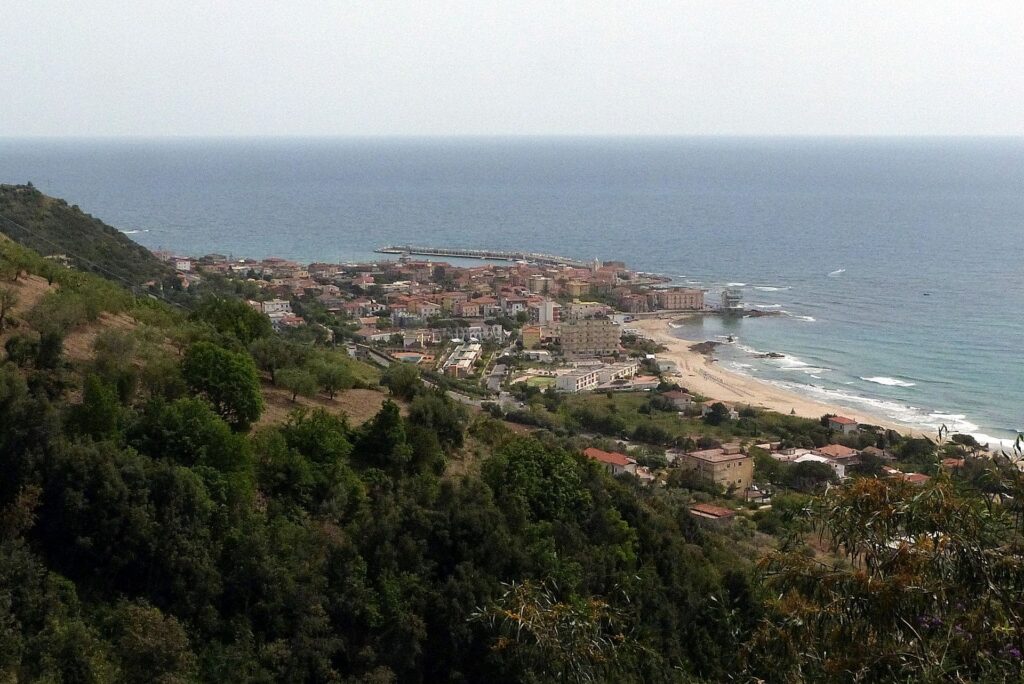
Acciaroli has the rhythm of resorts that never needed to become too mundane. This seaside hamlet in the Cilento municipality of Pollica remains tied to an idea of a slow Mediterranean, made up of port, small squares and days that flow by unhurriedly.
In the nearby hamlet of Pioppi lived for a long time Ancel Keys, the American physiologist who studied the Mediterranean diet and helped make it world famous. It is not difficult to understand why he chose this stretch of Campania: extra virgin olive oil, oily fish, legumes, vegetables and an essential cuisine that seems designed to last.
Out of season Acciaroli becomes an ideal base for exploring inland Cilento and the trails of the National Park. The village is traversed entirely on foot among stone alleys, small boats and low houses overlooking the harbor. The Spiaggia Grande beach remains one of the most accessible in the area, while Torre Caléo offers rocks and transparent seabed perfect for snorkeling.
The local specialty is menaica anchovies, caught using a very ancient technique that selects only the largest specimens.
Marzamemi
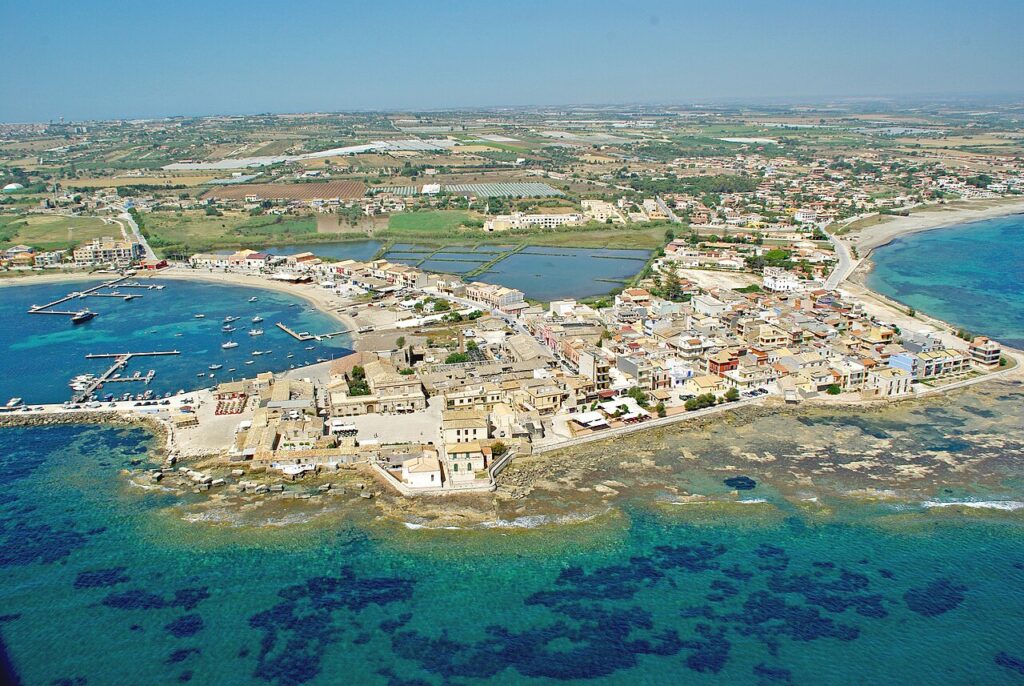
In Marzamemi, light seems to be reflected everywhere: on the pale stone of the square, on the blue windows of the tuna fishery, on the outdoor tables.
The southeastern Sicilian borgonel was born around tuna fishing, and the large eighteenth-century tuna fishery continues to dominate the historic center, although it has not been active for some time: over the years it has become one of the most cinematic symbols of Mediterranean Sicily.
From Piazza Regina Margherita, it is easy to reach the Vendicari Reserve, where flamingos and migratory herons appear in autumn, Calamosche Beach, and Correnti Island, the point where the Ionian Sea meets the Sicilian Channel.
Local cuisine revolves around bluefin tuna roe, Pachino cherry tomatoes, and Nero d’Avola wine.
Bay of Turks
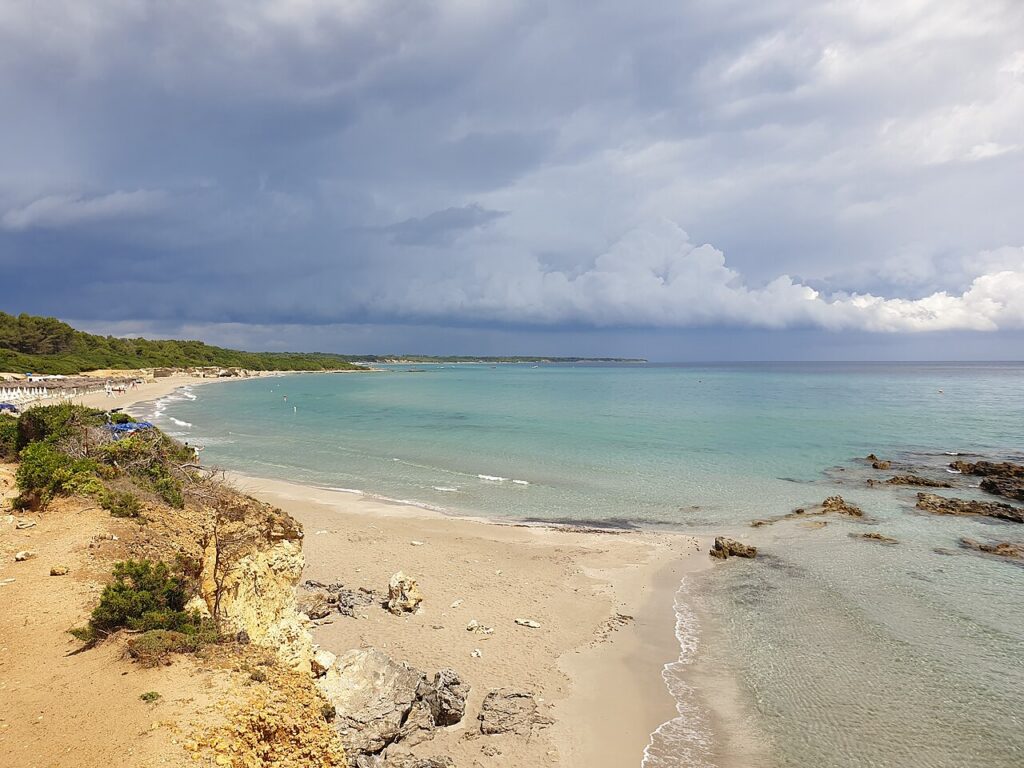
To get to Baia dei Turchi, in Puglia, you have to walk. And that is probably why it still retains something of the wild. You leave your car inside theLaghi Alimini oasis, then cross a coastal pine forest following a flat path that smells of resin and Mediterranean scrub. After ten minutes the forest suddenly opens up to the sea.
The beach, eight kilometers north of Otranto, takes its name according to tradition from the 15th-century Ottoman landing during the siege of the city. Today it is one of the most beautiful bays in Salento.
Here it pays to arrive prepared: water, shade and packed lunch. To really eat you have to head back toward Otranto or stop at inland agritourisms, where Salento dishes such as ciceri e tria, pucce (a traditional Apulian bread) and rustici made of puff pastry appear.
Cala Gonone
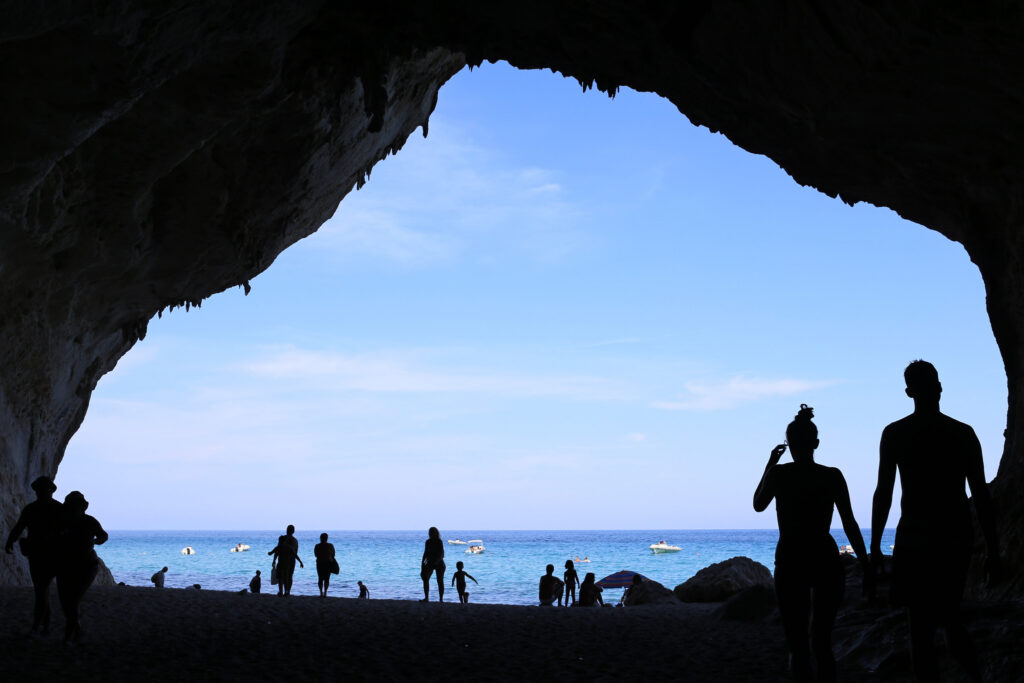
Cala Gonone overlooks the Gulf of Orosei, which concentrates some of eastern Sardinia’s tourism. Between July and August: full parking lots, crowded boarding, restricted beaches, saturated trails. From September everything changes.
The limestone cliffs of Supramonte become visible again without rows of dinghies in front, excursions to Cala Luna and Cala Mariolu resume a normal pace, and even the harbor seems to breathe better. The sea is not easily conquered here: there is no coastal road connecting the coves of the gulf, and many beaches can only be reached by sea or by challenging treks.
It is precisely this difficulty that has preserved one of the most spectacular stretches of the Italian Mediterranean. The Grotte del Bue Marino caves, once a refuge for the monk seal, traverse miles of sea cavities, while Pedra Longa continues to attract climbers from all over Europe.
The cuisine alternates between sea and Barbagia: culurgiones, porceddu, sheep cheeses, and fresh fish from the gulf.
Cape Rizzuto Island
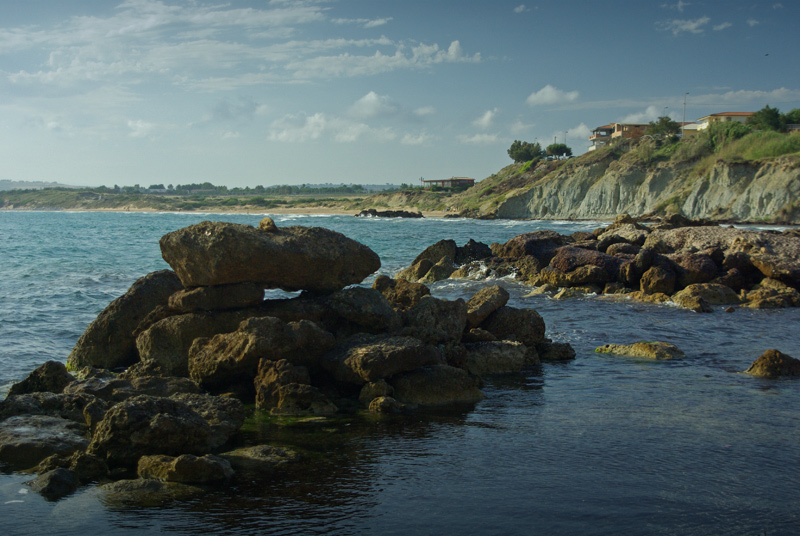
Despite its name, Isola di Capo Rizzuto is not an island but a long stretch of Calabrian Ionian coastline dotted with beaches, headlands and fortresses. It is an area that alternates between red sand, Mediterranean scrub and transparent sea protected by the largest marine area in Calabria.
Its symbol is Le Castella. The medieval fortress stands on a small island connected to the mainland by a thin tongue of sand and looks like something out of a chivalric novel. Built by the Angevins in the 13th century and expanded by the Aragonese in later centuries, it controlled the Ionian Sea routes when the Mediterranean was crisscrossed by pirates and military fleets.
Transparent-bottom boat trips allow you to observe posidonia prairies and seabeds populated by bluefish. The local cuisine is as intense as this part of Calabria: sardines, anchovies, chili peppers, ‘nduja and pecorino crotonese. Clear, marine, often spicy flavors. Like the wind that blows across this coast almost all year round.
Above all, visiting these off-season locations means seeing the South in a different form: less congested and closer to the real rhythm of the territories.