For decades, the answer to the question “what is the world’s largest city?” was a given: Tokyo. The Japanese capital dominated the rankings with a conurbation of nearly 37 million people, a record that seemed destined to last. Then the United Nations released the report World Urbanization Prospects 2025, and the answer changed.
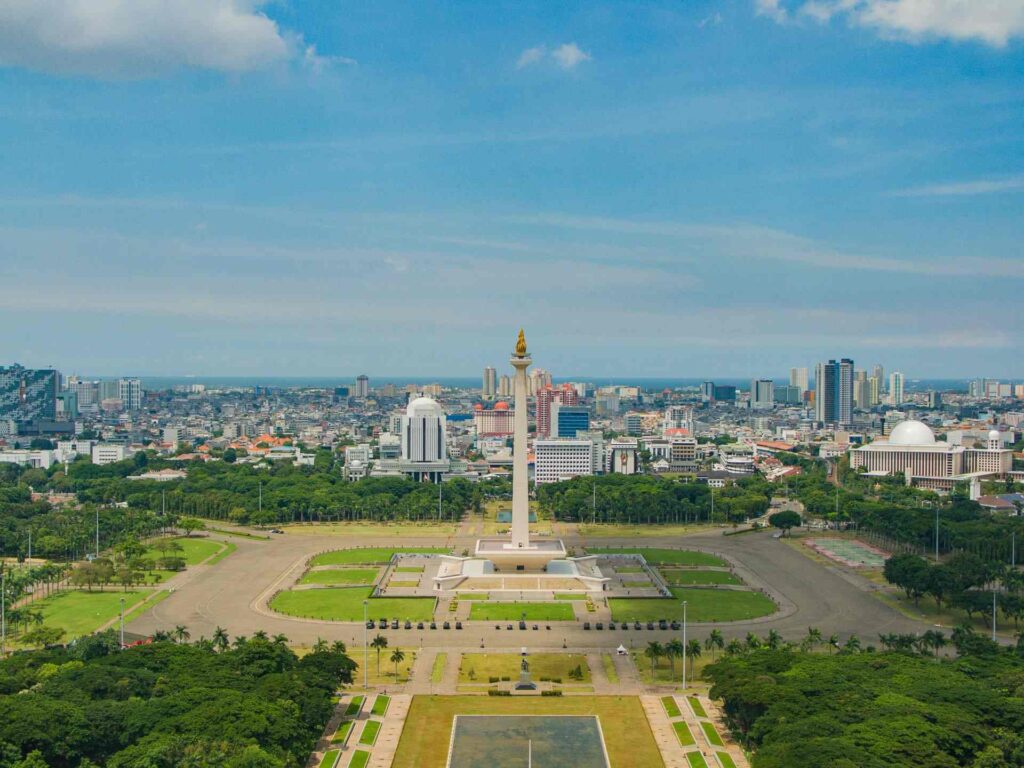
The world’s largest city is now Jakarta. Indonesia’s capital has nearly 42 million people in the urban area, according to estimates by the UN Department of Economic and Social Affairs. Tokyo slips to third place with 33.4 million, also surpassed by Dhaka, the capital of Bangladesh, which ranks second with 36.6 million.
Two factors contribute to explain this jump. The first is real growth: Indonesia, the fourth most populous country in the world, has experienced a massive exodus from the countryside to urban centers in recent decades, and Jakarta has attracted the largest share of these internal migration flows. The second factor is methodological: the United Nations has adopted a new definition of a city, based on contiguous urban agglomerations with at least 1,500 inhabitants per square kilometer, which has allowed for more homogeneous comparisons between megacities that were previously measured by differing criteria.
Jakarta’s supremacy is destined to be short-lived, however, according to projections. By 2050 it will be Dhaka that leads the pack, with an estimated 52 million residents, while Jakarta will continue to grow and may approach 52 million. Tokyo, struggling with a deep population crisis and one of the lowest birth rates in the world, will fall further.
The sinking city
Today, however, the most populous city in the world is Jakarta. And it is sinking. This is not a metaphor: the ground is giving way for several reasons. The oldest is subsidence, and in Jakarta it manifests itself with an intensity unmatched among the Planet’s great metropolises. In some northern districts the ground drops to peaks of 25 centimeters per year. Since 1970 the city has subsided by more than four meters. Already today 40 percent of its territory lies below sea level.
The causes feed off each other in a vicious cycle that is difficult to break. Jakarta lies on marshy land crossed by thirteen rivers that flow into the Java Sea. The public water supply network-a legacy of the Dutch colonial era, never properly updated-reaches barely 40 percent of the population. The other 20 million people who live in and pass through the city every day make do: private wells, often illegal drilling, and uncontrolled withdrawals from underground aquifers. The result is that the water table subsides and the soil, deprived of water support, gives way. Not least because it is overpowered by a mass of concrete, skyscrapers, elevated roads and chronic traffic that turns simple urban travel into logistical feats: government officials must be escorted by columns of cars to get to meetings on time, costing the city economy an estimated $6.5 billion a year.
Added to this is a crucial factor: the climate crisis that is exacerbating the situation. Rising sea levels in Java are further reducing the margin of safety for an already exposed city. Floods, once exceptional events, have become seasonal occurrences. The most reliable projections indicate that without extraordinary interventions, a quarter of Jakarta will be permanently flooded by 2050.
The government’s response: build elsewhere
Faced with this scenario, the Indonesian government has chosen a radical solution: abandon the capital and build a new one from scratch. In 2019, President Joko Widodo announced the Nusantara project- “archipelago” in Javanese-a city to be built in the jungles of Borneo in East Kalimantan province, about two thousand kilometers from Jakarta. The initial estimated cost was $33 billion, later raised. The construction site is now open. The presidential palace, topped with eagle wings inspired by Garuda, the mythological bird symbolic of Indonesia, already completed.
On August 17, 2024, the anniversary of Indonesian independence, Widodo inaugurated the new capital in a scaled-down ceremony: 1,300 guests instead of the planned 8,000, construction sites open everywhere, only 12 of 47 residential towers for civil servants finished. The city was only 15 percent ready. New President Prabowo Subianto, who took office in October 2024, reduced state funding from Pound 2 billion in 2024 to Pound 700 million in 2025, with Pound 300 million planned for 2026. In May, he officially downgraded Nusantara from a national capital to merely a political capital, setting 2028 as the date when it should house legislative and judicial buildings. Meanwhile, the UN estimates that another 10 million people will join Jakarta by 2050, capital or not.
The injustices of moving
Nusantara has been presented as a smart forest city: 70 percent of the land will be given over to greenery and forests, mobility will be electric, and 100 percent renewable energy by 2045. A manifesto of sustainability. The problem is that in order to build this green city, Borneo’s rainforest, one of the most valuable and threatened ecosystems on the planet, habitat of orangutans-already decimated by oil palm cultivation-the Malayan bear and hundreds of endemic species, is being cut down. The indigenous tribes of East Kalimantan, which inhabited those territories without urbanizing them, have protested the expropriation of their lands. Environmentalists denounced the “ecological disaster.”
Then there is the social issue, perhaps the most burning. Nusantara is described as “a city for all,” but in practice it will be accessible only to those with sufficient resources to buy an apartment in a brand-new, tech-savvy, far-flung city. Ten percent of Indonesia’s population lives below the poverty line: relocation is not an option for them. The real risk, already denounced by multiple observers, is that Jakarta will continue to be inhabited by the most vulnerable-in a deteriorating, increasingly flood-prone, increasingly underserved urban environment-while officials and the affluent classes move to the new capital. An urban version of climate apartheid, where the consequences of the crisis fall, as always, on those least able to defend themselves.
A precedent that weighs
Jakarta is the first case in modern history where a country decides to relocate its capital not because of a war, not because of contingent political reasons, but because the ground no longer holds. Also because of the climate crisis. It is a precedent of concern. Many of the world’s coastal cities-from Miami to Bangkok, Ho Chi Minh City to Alexandria to Venice-are facing the same problem: sagging soils, rising seas, increasingly extreme weather events.
What makes the Jakarta story particularly alarming is that it is not a sudden catastrophe: it is the predictable outcome of decades of poor choices. A city built on marshes without respect for the fragility of the land, swollen without planning, deprived of its aquifers to make up for a water supply that was never adequate. Now that the problem has become impossible to ignore, the answer is to build elsewhere. The throwaway of places.