Many of us think that being a good “owner” requires mostly wrist: teaching the dog to sit, not to pull on the leash, to obey commands. But science today tells us that we are looking in the wrong direction. If the goal is to build a true and deep friendship, an old knotted sock counts for a lot more than a thousand training sessions.
This is revealed in one of the largest studies ever conducted on the subject, conducted by researchers at Linköping University in Sweden and published in the journal Royal Society Open Science. Scholars P. Jensen, Caisa Persson-Werme and Lina S. V. Roth analyzed nearly three thousand dog-human pairs to understand what really makes their bond strong. The answer is that we like training more than they do.
The Swedish study
To find out how strong the relationship between humans and their four-legged friends was, the researchers used a scientific measurement scale called MDORS, which assesses three aspects: how much time you spend together, how close you feel emotionally, and how challenging it is to manage your dog.
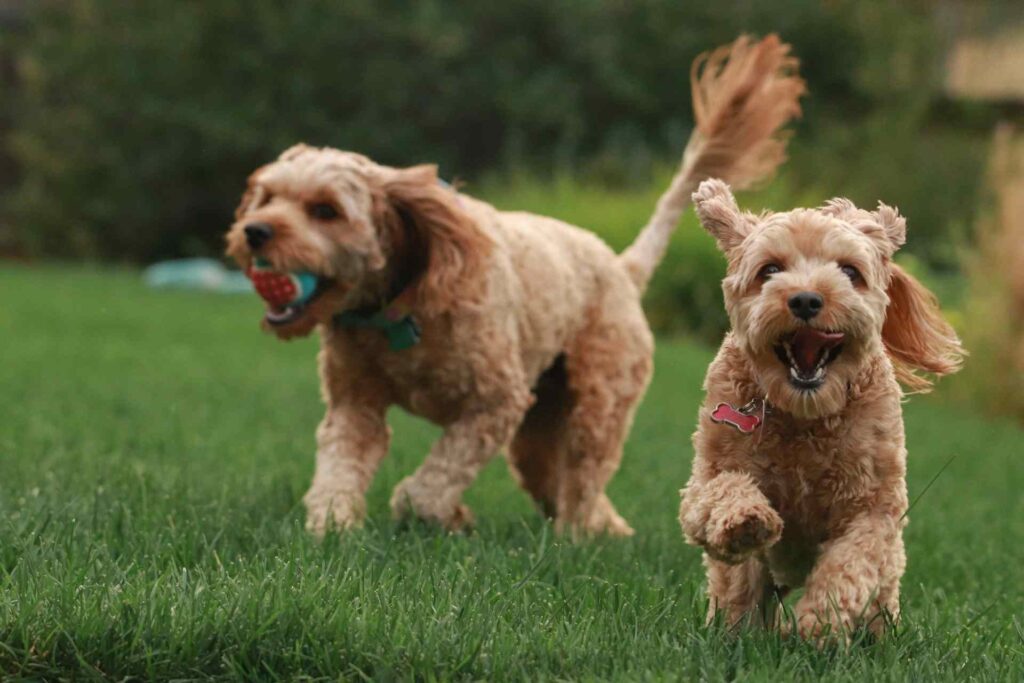
In a first phase involving 2,940 participants, it was found that both playing and training help. But there is a catch: the effect of play on emotional bonding was found to be much more powerful and profound than that of training. Learning to paw is helpful, but chasing each other around the living room changes the substance of the relationship.
Five minutes that change everything
But how much time is needed? We often give up interacting because we think we need to spend hours on structured activities. This Swedish study proves otherwise. In the second phase of the research, a group of volunteers added just five minutes a day of free play (no goals, just fun) to their routines.
After only four weeks, only those who had played more recorded a marked improvement in emotional closeness. Those who had focused on training, on the other hand, achieved “technical” results (the dog obeyed better), but the emotional bond had not changed. “Even short daily play sessions can strengthen the bond between dogs and owners,” the authors explain. It’s a matter of tuning in: during play, dog and human hearts tend to beat in unison, lowering levels of the stress hormone cortisol.
The game is in their DNA
Why is play so magical? Because it is what has made the dog such during its evolution. Playing with us is part of his nature. This is amazing news for those who decide to adopt an adult dog from the pound.
It is often feared that because they have not lived together for the first few months of life, the bond will always remain somewhat superficial. The study disproves this prejudice: dogs who have changed families show excellent emotional closeness scores. Those who invest in play with an already adult dog start from an advantageous position. Play is the fastest way to say “you can trust me” to an animal that has suffered.
Less “sergeants,” more playmates
Training gives us humans the illusion of control and visible progress, but play is the only time when we are truly on an equal footing with our dog. No complicated rewards or instructions are needed: a tug-of-war, a hide-and-seek behind doorways or a chase in the backyard is enough.
In a fast-paced world, these five minutes are a gift we give to ourselves as much as to them. Stop giving orders and start having fun is the shortest path to happiness for both of us. As Swedish science suggests, the next time you come home, before asking your dog to “sit,” try asking him to play.