When the Strait of Hormuz was effectively closed in March 2026 due to the military escalation in the Middle East, European energy markets reacted just as they had in 2022 during the war in Ukraine: gas prices skyrocketed, bills soared, and governments scrambled to implement emergency measures. But not everywhere to the same extent. Spain found itself managing a global energy shock with much lower exposure than the European average, and data compiled by the independent research institute Ember clearly demonstrate this.
In the first five months of 2026, natural gas influenced Spanish electricity prices in only 9% of hours; in 2021, that figure stood at 52%. And while European gas prices have risen by about 75% since the start of the conflict with Iran, Spain has felt the shock but not the full impact. The difference is due to seven years of massive investment in renewable energy.
More than 40 gigawatts additional capacity starting in 2019
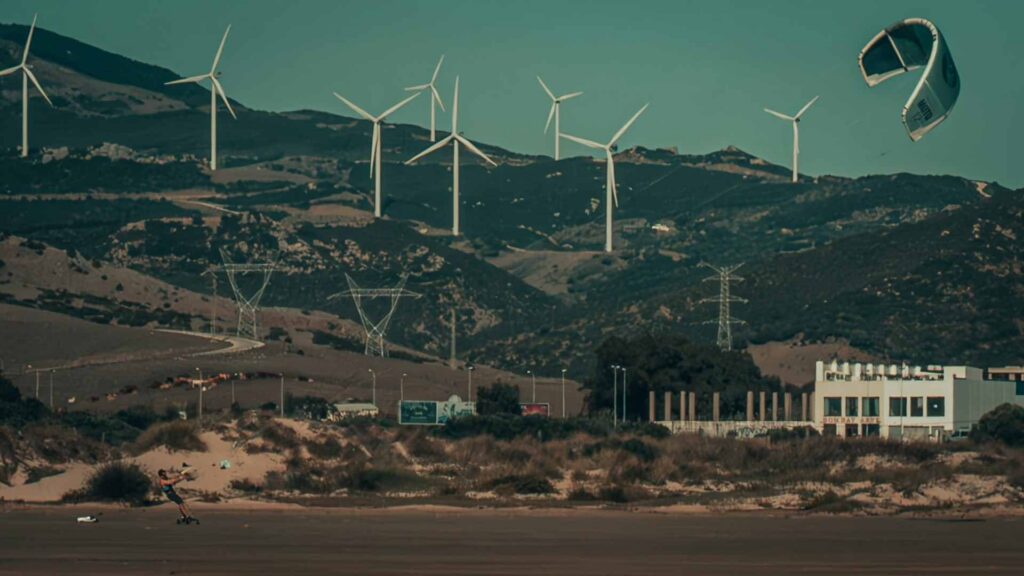
Since 2019, Spain has added over 40 gigawatts of wind and solar capacity, more than any other country in the European Union except Germany, whose electricity market is, however, twice as large. Overall, wind and solar generation grew by 37% between 2021 and 2025. The result is that Spanish electricity is increasingly being generated without burning gas, and the wholesale price-setting mechanism—which in Europe tends to follow the cost of the most expensive source in use, typically gas—is consequently becoming progressively decoupled from fossil fuels.
The comparison with Italy is stark. In March 2026, the wholesale price of electricity averaged 42 euros per megawatt-hour in Spain, compared to 143 euros per megawatt-hour in Italy—more than three times as much. In the first quarter of 2026, gas prices influenced Italian electricity prices 75% of the time, compared to just 9% in Spain. Spain and Portugal ranked among the three cheapest electricity markets in the EU during the first four months of the year.
Household budgets: a savings of 10 euros a month
These savings aren’t just a market statistic—they translate into real money for Spanish households. Ember estimates that a typical household on the regulated rate has saved an average of about 10 euros per month since March 2026.
Prime Minister Pedro Sánchez used the energy crisis as a platform to defend his government’s energy strategy. “Today we are more resilient thanks to the deployment of renewables, and we must continue on this path,” he said while presenting the package of 80 measures worth €5 billion approved by Parliament to mitigate the economic impact of the war.
The government’s package also includes social protection measures: the social electricity subsidy has been extended through December 2026, the enhanced heating subsidy, reduced fuel excise taxes with an estimated savings of 20 euros per full tank for the average driver, and a direct subsidy of 20 cents per liter for farmers, ranchers, and fishermen.
Europe spends 60 billion, but invests little in electrification
The Spanish case is not just a national success story: it also serves as a mirror reflecting the vulnerabilities of the rest of Europe. Since the start of the war in Iran, the European Union as a whole has increased its imports of fossil fuels, racking up an energy bill linked to the conflict estimated at 60 billion euros. Of this amount, less than 5%—about 2 billion—has been allocated to structural electrification measures, the only investment capable of reducing long-term exposure.
For Italy, the comparison with Spain is as uncomfortable as it is instructive. Wholesale prices three times higher, gas dictating the market for 75% of the time, households and businesses fully exposed to every fluctuation in international prices. The difference is neither geographical nor technological: Italy has plenty of sun and wind. It is a difference in policy choices and the pace of investment. Spain has doubled its installed wind and solar capacity in seven years, with a consistent policy direction that has transformed the electricity system. Italy has moved more slowly, and is now paying the price—in its electricity bills.