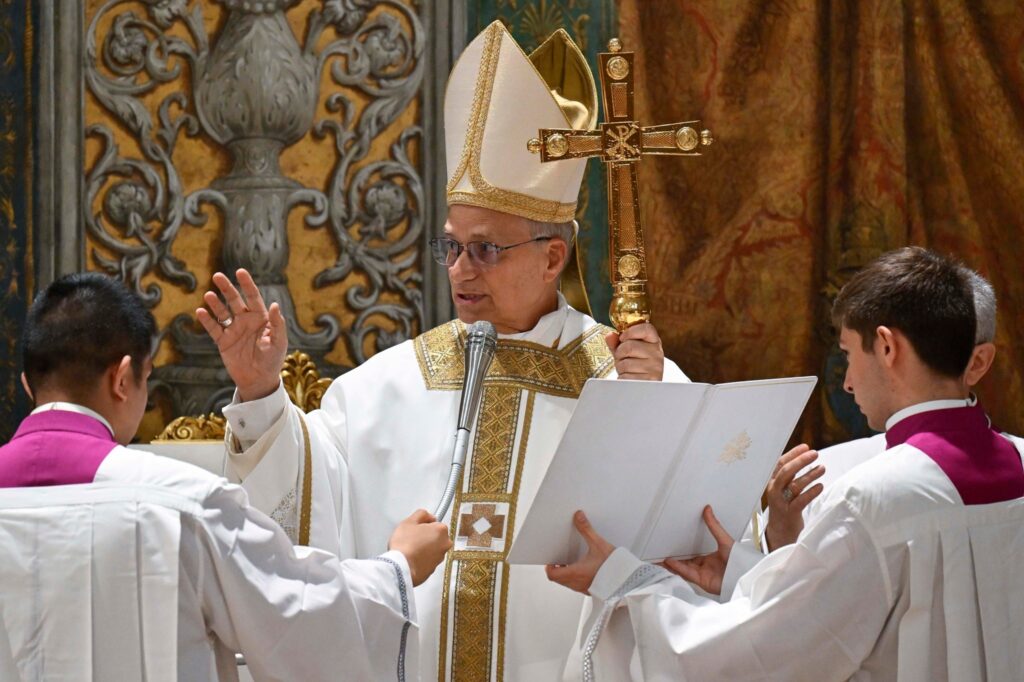
Among the many stakeholders who have taken the stage in the debate over the Malan bill—politicians, environmentalists, farmers, and legal experts—none was as unexpected as the latest arrival: Pope Leo XIV. LIPU, the Italian League for the Protection of Birds, had written to the pontiff asking him to take notice of the hunting law reform under discussion in the Senate. The response came from the Vatican Secretariat of State, and it shifted the tone of the debate.
While clearly reaffirming the Holy See’s neutrality with regard to the legislative decisions of individual states, the Pope described the issue as “one of great social and moral significance.” He also assured that he would not fail to promote “respect for and protection of Creation.” Just a few lines, measured in tone as befits Vatican diplomacy, but carrying significant weight in a country with a strong Catholic tradition, in the midst of a perpetual election campaign, with a government that explicitly invokes Christian values.
Why Leo XIV’s Voice Matters
This is not the first time a pope has spoken out on environmental issues: Francis did so in *Laudato Si’* and *Laudate Deum*, establishing a solid ecological doctrine within the Church’s tradition. Leo XIV follows in that tradition, but with one distinctive feature: this time, the pope’s message focuses on a specific law, in a specific country, at a specific political moment. It is not an encyclical or a magisterial document, but a letter to an environmental organization fighting a concrete parliamentary battle.
The message is subtle, but clear. The Vatican isn’t saying that hunting reform is wrong; it’s saying that protecting Creation is a moral duty. The distinction is technical, but the political impact is immediate: the opposition immediately seized upon the Pope’s words, and the center-right couldn’t ignore them.
The opposition takes the blow; the majority remains silent
All opposition leaders have taken up the words of Leo XIV, turning them into a political issue. PD Secretary Elly Schlein called the government’s proposal an “unconditional surrender to the most extremist hunting fringe” and called for the immediate withdrawal of the bill. M5S leader Giuseppe Conte pointed out that it was his government that enshrined environmental protection as one of the Constitution’s fundamental principles, calling the reform a step in the opposite direction. Green Party leader Angelo Bonelli spoke of parks and beaches being turned into “places where people can shoot.”
Also significant was the stance taken by Michela Vittoria Brambilla, a member of parliament from the Noi Moderati party, who—from within the majority—pushed not to amend the text but to go further: a referendum and the total abolition of hunting. This is an uncomfortable position for the center-right, which finds itself having to respond to internal dissent just as the pope is fueling the opposition.
The government, for its part, has chosen not to comment directly on the papal letter. The Ministry of Agriculture’s report focuses on technical and regulatory aspects, refuting the accusations point by point: no parks will be opened to hunting, land-use planning remains the responsibility of the regions, and scientific data remains at the heart of decision-making. This bureaucratic language, set against the Pope’s words, comes across as a jarring shift in tone.
Palazzo Madama Under Siege
Bill 1552 reached the floor after nearly a year of committee deliberations. The bill, sponsored primarily by FdI group leader Lucio Malan, aims to update Law 157 of 1992. The debate was expected to be heated; the Pope’s intervention made it explosive. The opposition has filed nearly 900 amendments, with the stated goal of slowing down the bill’s progress. And on the very first day of the plenary session, the meeting was already suspended due to a lack of a quorum: a sign that even within the majority, not everyone is comfortable with this issue.
The bill is supported by hunting and agricultural organizations. Federcaccia defends the concept of the hunter as a “bioregulator” of the territory. Cia and Confcooperative highlight the concrete damage that excess numbers of ungulates and wildlife cause to farms. The center-right intends to move forward, but the convergence of the pope’s letter and the environmentalist mobilization has transformed a regulatory update into a battle of civilizations.
Creation and Politics
There is something telling about the fact that a hunting reform has ended up involving the Vatican. It highlights just how much the issue of nature conservation has become, in Italy as elsewhere, a matter of identity rather than a technical one. The debate is not merely about how many species can be hunted or in which areas; it is about what kind of relationship we want to have with the natural world—and who has the right to define it. Pope Leo XIV chose to respond to LIPU with a letter, not with silence. He stated that the protection of Creation is a moral issue. In a country that proclaims itself Catholic, governed by a right-wing administration that invokes its Christian roots, ignoring that voice will not be easy. The bill still has a long way to go, and the final word has not yet been written.