Heat waves don’t just affect those who are already vulnerable—they also affect those who don’t realize they are. Elderly people living alone, children, and people with chronic illnesses who take medication every day: they are the most at risk, but the danger doesn’t end there. Anyone, during prolonged heat, can face serious consequences if they ignore a few basic rules. The Ministry of Health has updated its recommendations—ten behavioral guidelines and a brochure dedicated to the home microclimate—and that’s a good place to start.
The Hours That Make a Difference
The most dangerous time of day is between 11:00 a.m. and 6:00 p.m. During a heat wave, exposing yourself to direct sunlight during those hours is the first mistake to avoid. This isn’t obvious advice: many people continue to go grocery shopping, walk their dogs, or work outdoors right in the middle of the high-risk period. The same applies to physical activity: exercising during the hottest hours is not recommended, and athletes should gradually acclimate to the heat at the start of the season, slowly increasing the intensity and duration of their workouts. Adequate hydration and breaks in cool environments are not optional, and in cases of heavy sweating, it may also be necessary to replenish electrolytes—always in consultation with your doctor.
Pets need to be protected just as much as children: the scorching asphalt transfers heat to their paws and can cause serious damage in just a few minutes. It’s best not to let them go outside during the hottest part of the day and to always make sure they have fresh water, even when traveling, with frequent stops in the shade.
It can be hotter inside the house than outside
This is perhaps the least well-known piece of information among those released by the Ministry: if rooms are exposed to direct sunlight, poorly ventilated, and the roofs and attics are not well insulated, the indoor temperature can exceed the outdoor temperature. This is the norm in many Italian buildings, which were constructed without regard for thermal efficiency.
The first step is to shade south- and southwest-facing windows with adjustable curtains or blackout shades, shutters, or Venetian blinds that block light without preventing airflow. The second is natural ventilation during the cooler hours, preferably at night. Only then should you turn on the air conditioner.
The Air Conditioner: Not Too Cold, Not Neglected
Air conditioning is effective, but it must be used properly. The Ministry’s recommendation is clear: the indoor temperature should not fall below 25–27°C, with low humidity. A temperature difference of more than 5 degrees compared to the outside exposes occupants to sudden temperature changes and increases energy consumption (a 20-square-meter room already requires nearly 1 kWh). Systems whose filters and outdoor units are not cleaned periodically become sources of contaminants, as well as less efficient. The Ministry’s brochure recommends a technical inspection of the refrigerant and the compressor every two to three years. While the air conditioner is in use, it is advisable to limit the use of appliances that generate additional heat, such as ovens, irons, and hair dryers.
The fan isn’t lowering the temperature
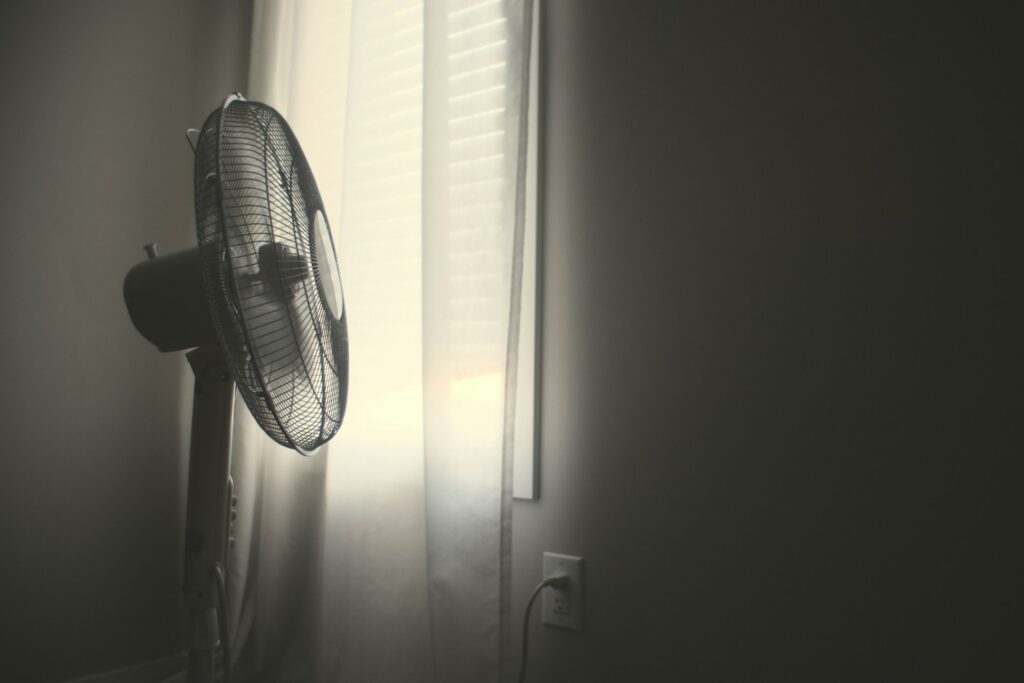
This is a common misconception. A fan speeds up air movement and makes the heat feel less intense, but it does not lower the room temperature. The body continues to sweat, and if you don’t drink enough, the risk of dehydration increases. When the indoor temperature exceeds 32°C, a fan becomes counterproductive. It should never be directed at the body, especially in the case of bedridden elderly people or those with limited mobility.
Drinking, eating, dressing: three things we do wrong
At least one and a half liters of water a day is the recommended minimum. A different rule applies to older adults: the sensation of thirst diminishes with age, and waiting until you feel thirsty before drinking can be dangerous. Caffeinated beverages should be limited, and alcoholic beverages should be avoided. Anyone with kidney, liver, or heart conditions, or who is undergoing treatment that regulates fluid intake, should consult a doctor before changing their habits.
When it comes to diet, the Ministry recommends five servings of fruits and vegetables a day, fresh and easily digestible foods, low in fat and salt—preferably iodized salt. One often-overlooked point concerns food storage: maintaining the cold chain in the summer is not a minor precaution, but a concrete public health measure.
Clothing matters, too. Natural fibers, such as cotton and linen, promote perspiration; synthetic fibers hinder it. When outdoors, wear a lightweight, light-colored hat, UV-protective sunglasses, and high-SPF sunscreen. Pay special attention to children, whose skin is more sensitive and whose ability to regulate body temperature is still developing.
The Invisible Vulnerability of Lonely Older Adults
The warning signs for those living with an older adult are subtle: a decrease in daily activities—such as moving around the house, getting dressed, eating, and bathing—can indicate a heat-related decline in health. Often, those affected do not speak up. The Ministry urges people to report situations requiring intervention to social and health services. For infants and very young children: give them a lukewarm shower to lower their body temperature, and leave their diaper open whenever possible.
When driving, never underestimate
It is mandatory to ventilate the passenger compartment before setting out, even if the car has air conditioning. Set the temperature to no more than 5 degrees below the outside temperature, do not direct the vents toward passengers, and always keep water in the car. And here’s a rule with no exceptions: never leave children, infants, or pets in the car, not even for a few minutes.
For more information: www.salute.gov.it — public service number 1500.