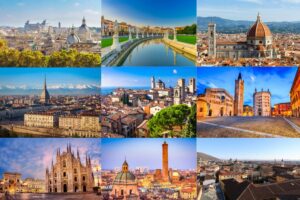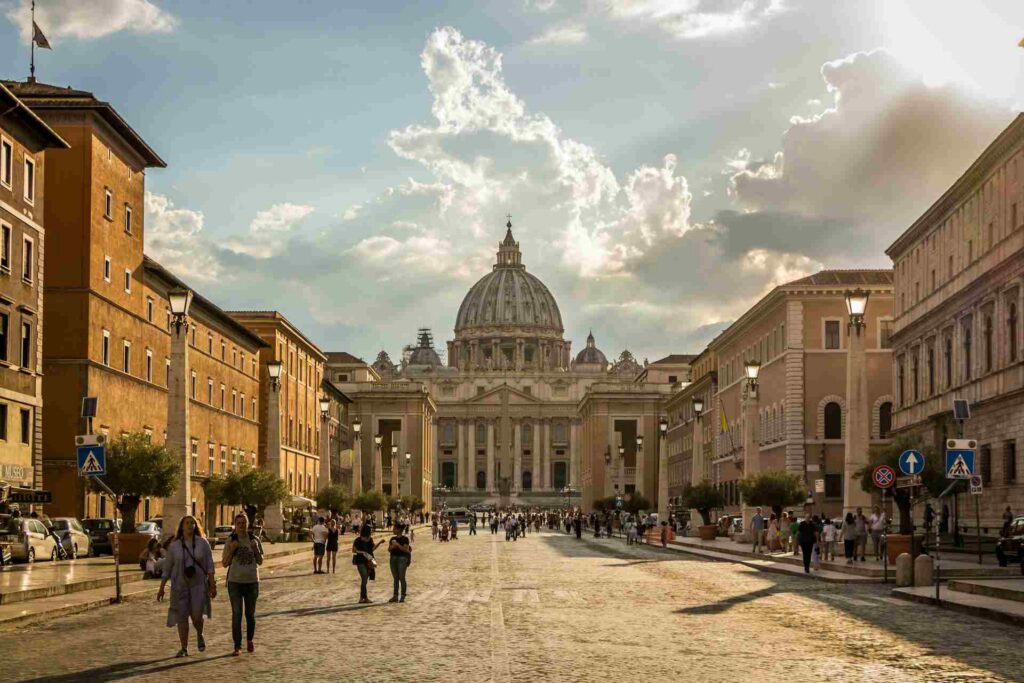
Rome has become the first Italian city to adopt a comprehensive strategy to combat extreme heat. The plan, presented by Mayor Roberto Gualtieri alongside the relevant city council members, calls for investments totaling 50 million euros over five years. The goal is to move beyond reacting to seasonal emergencies and build a sustainable response capable of making a difference in the city’s infrastructure and the daily lives of the most vulnerable residents. “Heat waves are now the rule, no longer the exception,” Gualtieri emphasized, explaining that the phenomenon now affects an increasing number of days throughout the year.
More trees, less concrete
Since 2021, the capital’s green space has increased by 187 hectares, five of which were created along the Tiber. “The city must be ready, and we are equipping it to respond,” said Sabrina Alfonsi, Councilor for the Environment, Agriculture, and Waste Management. “We’re doing this through a street tree planting and reforestation plan on a massive scale—we’re talking about 38,000 trees on streets and in parks, and 18 new urban forests under the PNRR plan. We’re also creating climate refuges—places where people can find shade, coolness, and water in the city. We’re doing this by removing pavement and renaturalizing the city: four hectares have already been unpaved, and we’re working on three more. We’re doing this by systematizing and reactivating the network of city wells and reservoirs to irrigate and nourish our green spaces: seven wells have been reactivated or are in the process of being reactivated.”
A network of shelters to beat the heat
Among the most immediate new initiatives is the network of climate-controlled shelters, which can be accessed online and via an app. It includes air-conditioned centers, municipal swimming pools, libraries, and other public spaces where residents can find relief from the heat on the hottest days. The Building Code will also be updated to introduce mandatory climate adaptation criteria for new construction, while work will continue on school buildings, bus shelters, and water and energy networks, with the goal of reducing the risk of blackouts on peak days.
Special attention to vulnerable people
The plan allocates a significant portion of its resources to those most affected by the heat: elderly people living alone, homeless individuals, and socially vulnerable citizens. It includes day centers, outreach teams, home meal delivery, free health screenings, and summer camps, as well as strengthening Civil Protection efforts during emergencies. As Barbara Funari, the councilor for social affairs, noted, the goal is to build “a stable community support network” capable of addressing not only the heat but also the social isolation that often accompanies it.
The Contribution of Ama and Acea
The city’s subsidiaries are also involved in the strategy. Ama has launched the “Mobile Sentinels” project, which uses thermal sensors installed on company vehicles to collect over 150,000 environmental data points, which are then fed into the Ucronia digital map to monitor heat stress street by street. Acea, for its part, is investing approximately 1.5 billion euros in the Peschiera aqueduct and in the reuse of treated wastewater—with a potential of over 5.5 million cubic meters per year—to reduce pressure on natural water sources during periods of drought.