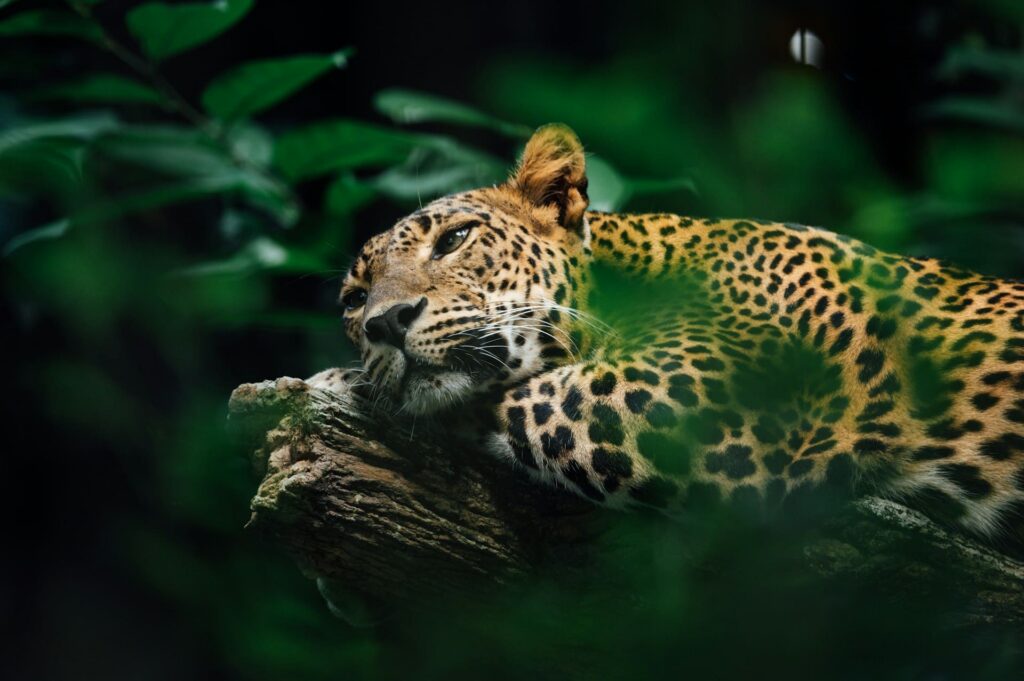
In June, a female jaguar escaped from a steel cage on the banks of a river in Noel Kempff Mercado National Park in Bolivia and made her way into the forest. Her name is Yaguara; she was eight months old when she was orphaned during the 2024 wildfires—the worst ever recorded in the country—which burned more than 10% of the country’s territory. She is the first jaguar rehabilitated in captivity to be released into the wild in Bolivia. This story is covered in a report by The Guardian. by Douwe den Held.
Two years in a 1,000-hectare reserve
Yaguara grew up in Ambue Ari, a 1,000-hectare reserve belonging to the Comunidad Inti Wara Yassi (Ciwy), surrounded by pastures and rescued animals that can no longer be released back into the wild. To prepare her for release, the staff built a 10,000-square-meter enclosure with a pool, which cost $80,000—two-thirds of the total cost of the operation, which came to $120,000. Prey animals entered the enclosure spontaneously; camera traps documented over 600 interactions with a wild male jaguar, a sign of active reproductive behavior.
A country that loses 61 jaguars a year
In Bolivia, poachers kill an average of 61 jaguars a year—the highest number in the world—with their teeth and other body parts primarily fueling the Chinese market. In 2024, the country became the world’s second-largest contributor to deforestation after Brazil, often due to fires set to clear land for agriculture and livestock farming. The jaguar is classified as Near Threatened on the IUCN Red List globally and as Vulnerable in Bolivia, where, according to researcher Damián Rumiz of the Noel Kempff Mercado Natural History Museum, a discussion is underway to reclassify it as Endangered.
Rehabilitation remains an exception
Of the 18 countries in the Americas where jaguars live, only a few have succeeded in reintroducing jaguars raised in captivity: among the successful cases is the Rewilding Argentina project in the Iberá wetlands. Most rescued jaguars, however, remain in captivity forever: this is the case of Kusiy, a resident of Ambue Ari, who was kept as a pet as a cub and is now too accustomed to humans to survive on his own. Rumiz explained to the British newspaper that jaguars accustomed to human presence tend not to avoid populated areas and, in some cases, are killed after release—especially if they have already attacked livestock.
Limited resources, priorities to be discussed
It is precisely these costs that divide the conservation community. Rumiz notes that funding rangers, camera traps, and in-situ protection would yield more reliable results than breeding and releasing a single specimen, especially in an area like Noel Kempff Mercado, where the local population is already large and healthy. Ciwy counters that the release enriches the species’ genetic diversity and expands scientific knowledge.
Biologist Iván Márquez, who coordinates satellite monitoring of Yaguara, describes the operation as a long-overdue return of animals that were removed from their natural habitat, and expects lower costs for future reintroductions, since the enclosure that has already been built can be reused.