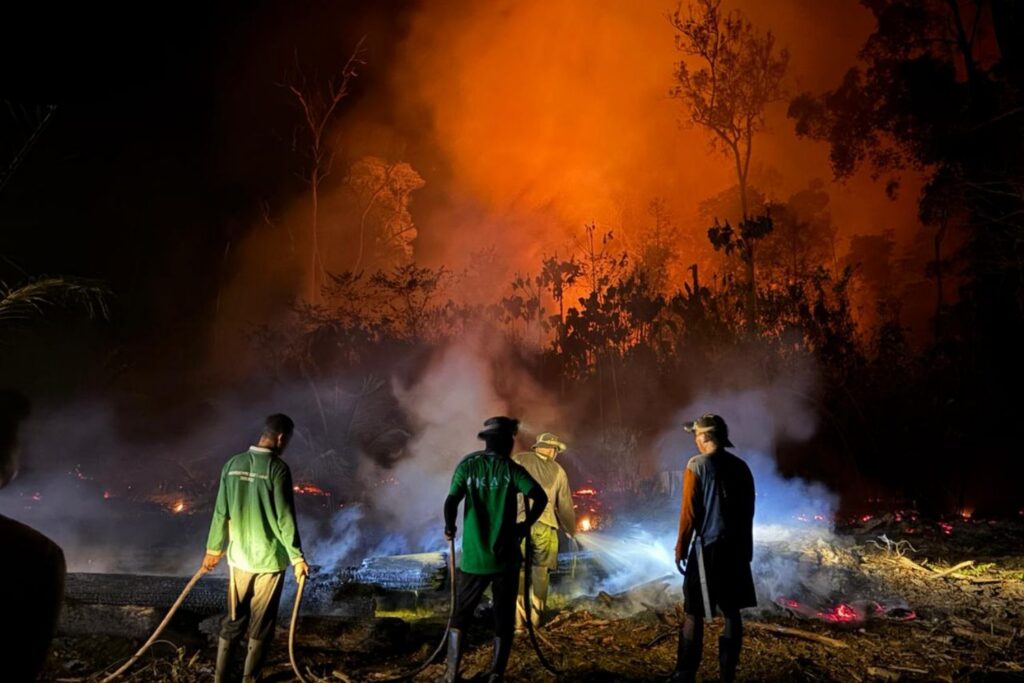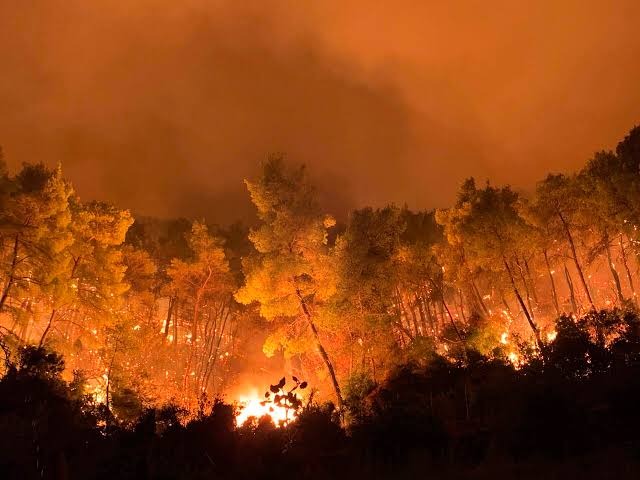
The last weekend of August painted a picture of a wildfire season that shows no signs of abating. On Saturday, Sicily saw fourteen nearly simultaneous fires break out within a few hours, fueled by the sirocco wind and temperatures reaching 40 degrees. In the countryside around Ciminna, in the Palermo area, some families fled their homes as they were threatened by the flames; in the village of Makauda, in the municipality of Sciacca, guests at a tourist resort were evacuated and gathered on the beach. The fires also spread to the Trapani, Messina, and Nisseno areas before extending to Sardinia, Abruzzo, Campania, and Puglia, where the Alberona forest is once again ablaze.
The WWF Report
This is yet another chapter in a summer marked by the new climate—the one we are creating by burning fossil fuels and deforesting. According to the WWF report released on August 5, based solely on the data available up to that point , approximately 70,000 hectares had gone up in smoke—the equivalent of 100,000 soccer fields: a 133% increase compared to the average over the last twenty years, with nearly one-third of the fires affecting protected areas.
The European satellite system EFFIS confirms that the fire season began well ahead of schedule: already in the first part of the year, the area burned exceeded the historical average by 26 percent, with an unusual peak of 820 hectares in a single day in early May—the highest figure ever recorded for that period.
The picture worsens when looking at 2025, the last full year for which data is available: ISPRA calculated that fires burned 965 square kilometers, nearly double the previous year’s figure, equivalent to about 135,000 soccer fields. In its report “Italia in fumo” (Italy in Smoke), Legambiente describes this as a now-structural trend, with wildfires starting earlier in the summer and affecting even regions that had previously been spared.
The Causes
As for the causes, the data leave little room for doubt: in Italy, only about 2% of fires are of natural origin, while the remaining 98% are attributable to human activity, including arson, negligence, and poor land management. More than half of the fires are intentionally set, and Southern Italy remains the hardest-hit region: Puglia, Calabria, Sicily, and Campania alone account for more than half of the reported crimes. Climate change, experts warn, is not the spark but the accelerator: prolonged droughts and heat waves make the spread of fire faster and more deadly.
Italy, however, is faring better than other countries. Across the continent, about 435,000 hectares have already been burned—100,000 more than during the same period in 2025: in Spain, over 219,000 hectares; in France, more than 90,000, resulting in casualties and the evacuation of hundreds of thousands of people.
The key issue remains the strategy. Italy has the largest fleet of Canadair aircraft in Europe— 18 aircraft, of which only 15 are operational during the summer due to mandatory maintenance shutdowns—so much so that some Italian aircraft have even been deployed in Spain.
But the crux of the matter remains prevention. Legambiente points to the inadequate enforcement of regulations regarding the land registry of areas affected by wildfires, investigative shortcomings, and a system that focuses too much on firefighting rather than prevention. The real battle, as experts keep pointing out, is fought there: year-round land maintenance, inspections, and enforceable penalties—not just planes in the air once the fire is already burning.