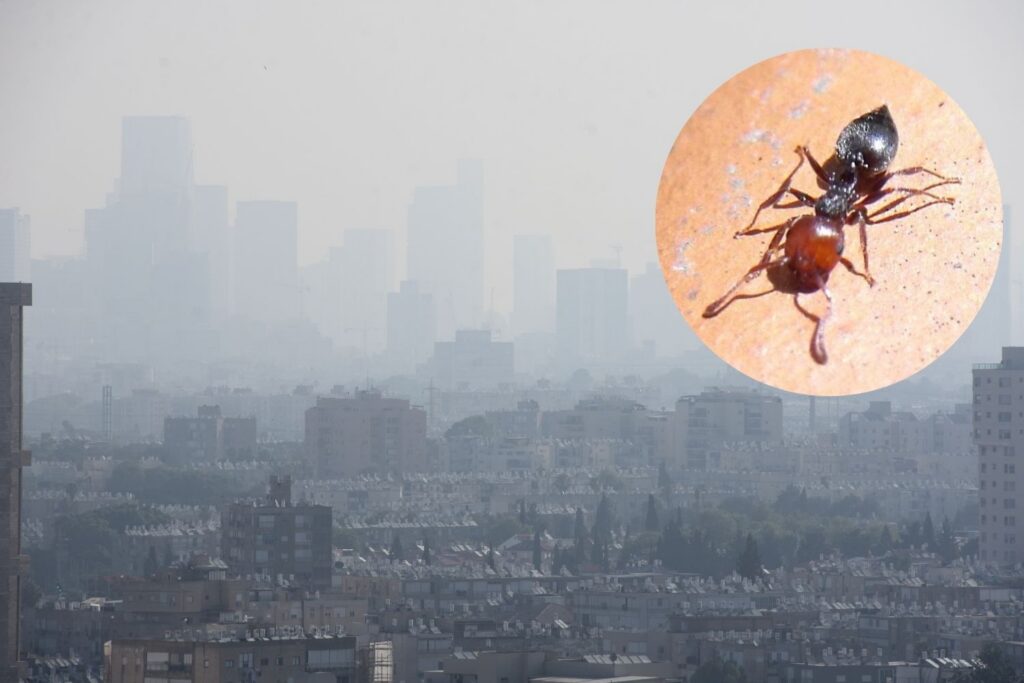
Ants as living indicators of urban pollution. This is the idea at the heart of a study bythe University of Parma published in Environmental Pollution, which proposes using these insects to detect and map the magnetic particulate matter produced by traffic. A widespread, scalable, and low-cost biomonitoring system designed to complement traditional monitoring networks.
The researchers chose the Crematogaster scutellaris, a tree-dwelling ant, as their sentinel species, collecting samples at 30 locations throughout the city with varying traffic volumes and in four car-free areas. Vehicle traffic data collected by the City of Parma were compared with the particles deposited on the ants’ bodies and those present in the soil. The result: a strong correlation between the number of vehicles and the magnetic particulate matter on the insects, which, however, was not observed in the soil samples. According to the model, for every additional 1,000 vehicles per day, the magnetic susceptibility of the ants increases by about 41%. The particles, concentrated mainly on the thorax, are rich in iron oxides and contain zinc, copper, and titanium, with shapes and sizes typical of traffic emissions.
A Local Legacy That Endures Over Time
The advantage lies in the ants’ habits: because they are tied to their nest and in constant contact with the environment while foraging for food, they provide a snapshot of exposure limited to a specific location and accumulated over time. “Ants do not replace monitoring stations,” explains Donato Grasso, the study’s coordinator, “but they can help identify, in great detail, the critical areas where measures and interventions should be concentrated.” The goal is a two-tiered diagnostic approach: a rapid and cost-effective screening based on magnetic susceptibility, followed by particle analysis at the most problematic sites. The method will now be validated in other cities and seasons and compared with data from official monitoring networks.
From Canaries to Lichens
The story of the ants is just the latest chapter in a long history. The most famous example is the canary in the coal mines: sensitive to carbon monoxide, it warned miners of danger before it became lethal, and in the United Kingdom it was used until the 1980s.
In Italy , lichens have served as an indicator of air quality for decades, because they disappear where pollution is high, while bees—which forage within a radius of a few kilometers—bring traces of heavy metals and pesticides back to the hive. In rivers, the presence of insect larvae such as stoneflies and mayflies helps assess the health of the water. And in London in 2016, pigeons equipped with tiny sensors flew over the city to measure nitrogen dioxide.