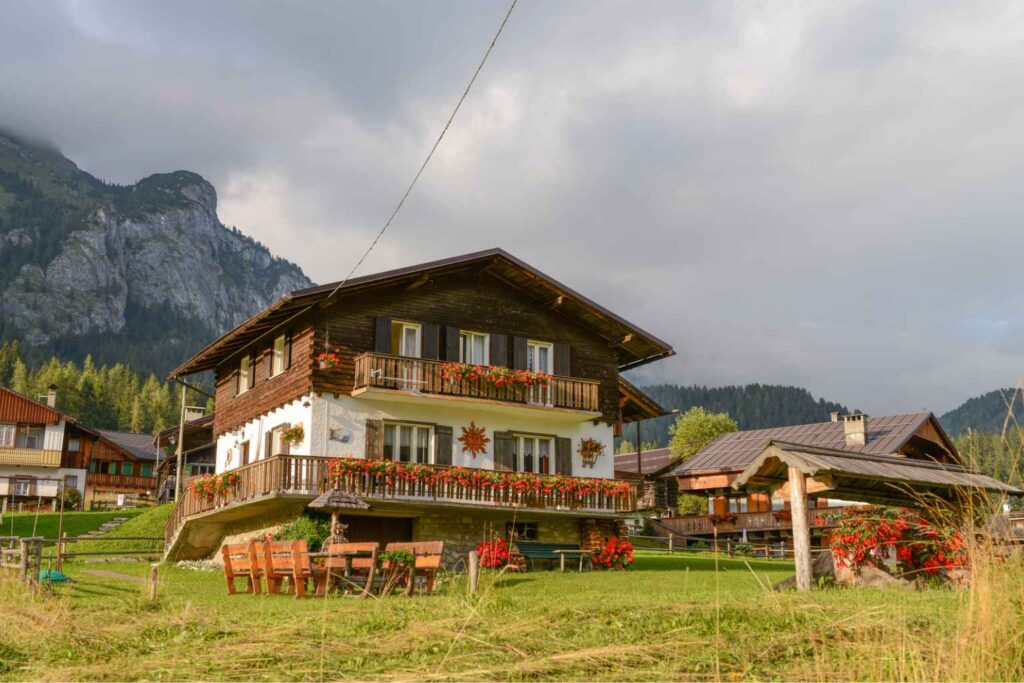
Between 2019 and 2025, Italy’s mountainous regions recorded a net migration gain of 174,274 people. These are new residents choosing to move to the Alpine and Apennine regions—people returning to their places of origin and families deciding to live far from major urban centers. This phenomenon challenges the notion that mountain areas are inevitably destined for depopulation, even though the recovery is proceeding at very different paces.
This picture is painted by the “Montagne Italia 2026” Report, produced by the National Union of Municipalities, Communities, and Mountain Authorities (Uncem) in collaboration with the Montagne Italia Foundation, with statistical analysis by Eures. In the two-year period from 2024 to 2025 alone, the net migration was +72,811 people.
The North is gaining residents, while the South continues to lose them
The geography of repopulation reveals a divided country.Between 2019 and 2025, the Northwest recorded a net migration gain of 84,636 people, followed by the Northeast with 67,518 and the Center with 38,370. In the South, however, the balance remains negative: 16,250 fewer residents as a result of migration.
“We need to stop portraying the mountains solely through the lens of depopulation and vulnerability,” observes Marco Bussone, national president of Uncem. To build on this newfound appeal, he argues, we need stronger local services, investments, and institutions.
In terms of employment, the gap compared to the rest of Italy is modest. In mountain municipalities, 64.9% of the working-age population is employed, compared to 65.8% in other areas. Unemployment is even slightly lower: 8.6% versus 8.9%. The economic gap is more pronounced. The average taxable income stands at 18,093 euros, compared to 19,860 euros in non-mountainous municipalities. This difference of 1,767 euros, according to the Report, calls for specific economic and fiscal policies.
Distant Hospitals and Towns Without Banks
The possibility of settling in the mountains also depends on the availability of essential services. Eleven percent of residents take more than an hour to reach a hospital, and 18.1% take more than an hour to reach a train station. Fifty-five percent of mountain municipalities lack banking services.
Fiber-optic connections to buildings reach 63.3% of households. This infrastructure is important for fostering employment and economic activity, but it alone does not solve the difficulties in accessing services. There is also the issue of an aging population: 26.7% of the mountain population is over 64 years old, and 309 municipalities recorded no births in 2025. The influx of new residents must therefore contend with an increasingly difficult generational turnover.
The Natural Heritage and Risks of the Region
The Italian mountains recorded over 113 million tourist visits in 2024. Mountain municipalities are also home to approximately 7.2 million hectares of forests, while land use is limited to 3.4% and protected areas account for 10.5%. Alongside this natural heritage, however, significant environmental vulnerabilities are evident. 25.7% of the mountain population lives in areas at risk of landslides, and 16.1% in areas exposed to water-related risks.
According to Uncem, a new agreement is needed between cities and mountain regions, based on the economic recognition of ecosystem services—that is, the benefits that natural environments provide to the community—and on stable public investment. The positive net migration indicates a renewed ability to attract residents. Transforming these arrivals into a lasting demographic recovery will depend above all on the ability to guarantee jobs, adequate incomes, transportation links, and services—even in the most isolated areas.