One-tenth of a degree every five years. That is the cost, in terms of global warming, of continuing to emit carbon dioxide at today’s rates. This figure is included in theEmissions Gap Report 2026, the annual analysis in which the United Nations Environment Programme (UNEP) measures the gap between actual emissions and those consistent with the Paris Agreement. It explains why time has now become the decisive factor.
The report, presented on October 21 in London just a few weeks before COP31, the climate conference in Turkey, acknowledges that the possibility of staying below 1.5 degrees—without exceeding that threshold, or exceeding it only slightly—has been lost. However, the Paris Agreement goal is not being abandoned. The question now is how high global warming will peak and how quickly we will be able to bring temperatures back below that threshold.
Emissions aren’t going down
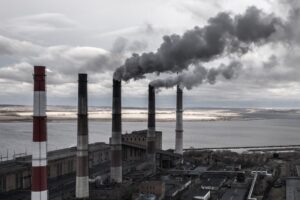
The starting point is not very encouraging. Over the past decade, global greenhouse gas emissions have risen by an average of 0.8% per year. In 2025, they leveled off at roughly the record levels seen in 2024, but the authors say it is too early to speak of a peak: carbon dioxide emissions from fossil fuels have continued to rise, while methane emissions have remained stable. The “Trump effect” is also a factor: the United States is the only major economy where emissions have resumed significant growth, driven in part by the resurgence of coal.
Under current policies, global warming would reach 2.8 degrees by the end of the century compared to pre-industrial levels. The implementation of unconditional national commitments—the so-called NDCs—would bring the figure down to 2.7 degrees; including those contingent on financial aid would lower it to 2.6 degrees. If we consider that just a year ago, UNEP estimated a rise of 2.3–2.5 degrees in the event of full implementation of national plans, we can see the extent of the deterioration currently underway. This deterioration has been exacerbated by the United States’ withdrawal from the Agreement and the revision of estimates regarding historical emissions.
A risk that grows as time goes on
Therefore, today the ecological and energy transition is more necessary than ever and more crucial than ever for the security of our lives and our economy, because, as the report points out, every fraction of a degree increase raises the likelihood of serious and irreversible changes: from the loss of ice caps to the release of carbon trapped in permafrost, from changes in ocean circulation to the decline of coral reefs. Limiting the temperature overshoot will not eliminate more frequent droughts, floods, and storms, but it can limit their severity by significantly reducing the problems we already experience day after day.
“We’ve spent decades putting off emissions cuts, and now we’re facing the consequences,” said Anne Olhoff, director of UNEP’s Copenhagen Climate Center and lead author of the study. The Paris Agreement goals, she added, remain achievable, provided that countries go beyond their most ambitious commitments.
The Way Home
The scenario on which the report focuses is one of “minimal” warming: warming peaks at 1.7–1.8 degrees around mid-century and then returns to 1.5 degrees, or below, by 2100. To achieve this, global emissions would need to fall by 18% by 2030, 45% by 2035, and 69% by 2040 compared to 2025—that is, by nearly 6% per year through 2035. This is a faster pace than that outlined in the IPCC’s latest assessment report.
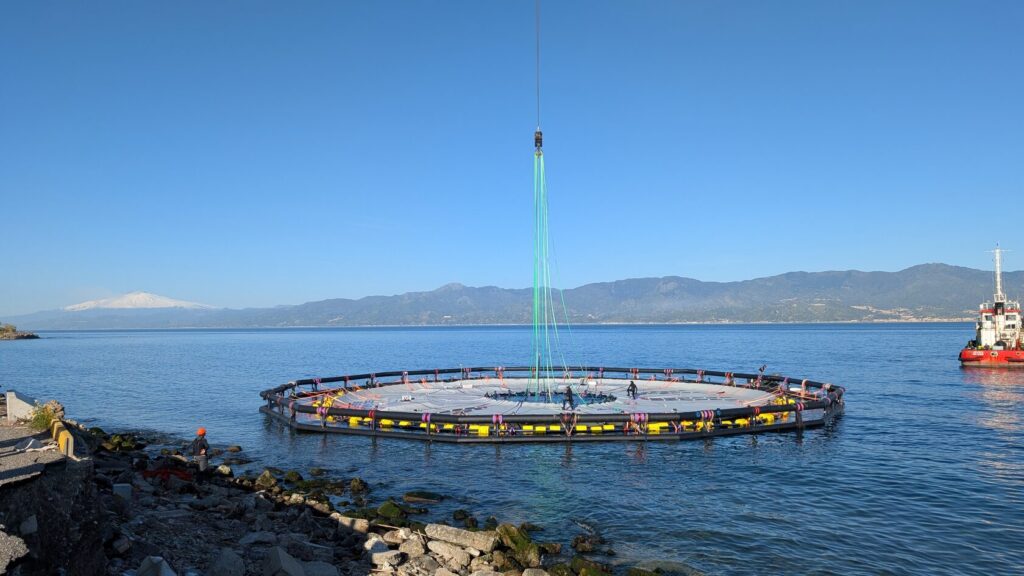
Specifically, by 2035, renewable electricity capacity would need to triple compared to 2025, the share of coal in the energy mix would need to be cut by more than half, and methane emissions would need to be reduced by a quarter. It will also be necessary to remove approximately 320 billion metric tons of CO2 from the atmosphere and store it permanently by the end of the century—the equivalent of eight times the emissions in 2024. This is the most uncertain part of the path forward, because removal technologies are expensive, largely unproven, and not always risk-free. For this reason, UNEP insists that they can complement emissions reductions, but never replace them.
What Worked
The report does not only highlight delays. The growth of renewables has exceeded expectations. Since 2015, solar photovoltaic capacity has grown seven times faster than estimated, and wind power has surpassed even the most optimistic projections. With additional support policies, according to UNEP, renewable capacity could triple as early as 2030. Outside the electricity sector, however, progress is much slower.
Furthermore, accelerating this process would also bring benefits in terms of employment and social balance. The authors identified 63 structural changes that have already significantly reduced emissions in various countries, ranging from investments in renewables to carbon taxes. The proposal is to extend these measures globally and across all sectors of the economy: the tools have been tested; what’s missing is the scale.
UN Secretary-General António Guterres summed up the message as follows: “Moving forward does not mean giving up.” For UNEP Executive Director Inger Andersen, the shift in approach must begin now, not later. COP31 will reveal whether governments truly intend to make up for lost time.