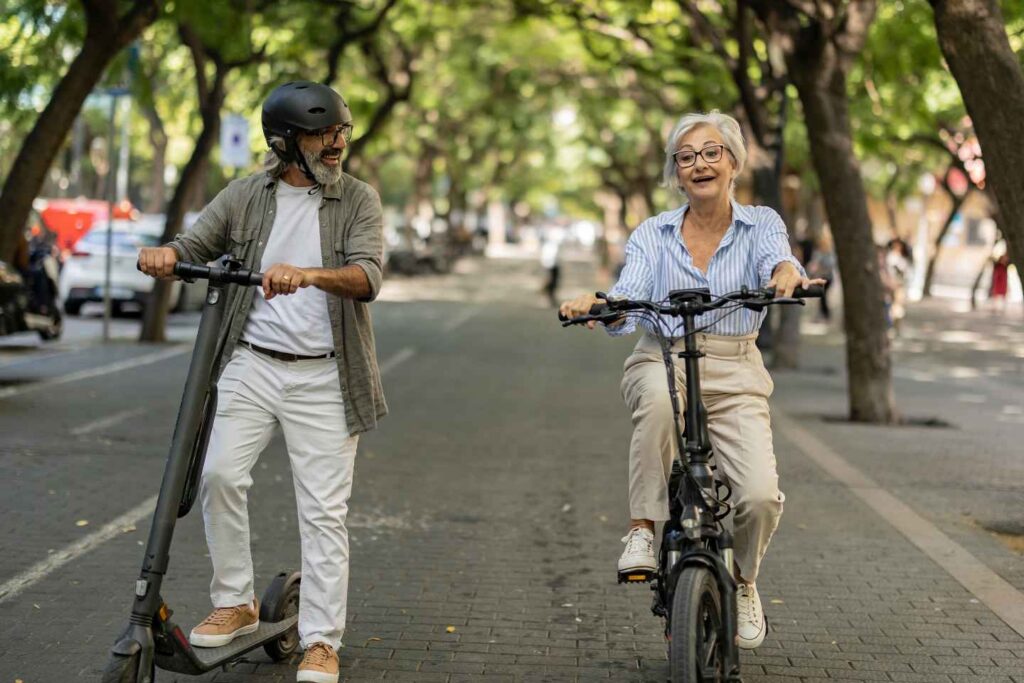
Shared mobility in Italy continues to grow, but it’s changing. Fewer and fewer cars, more and more bicycles and scooters: this is the picture paintedby the National Observatory on Shared Mobility and presented in Rimini during IBE Intermobility Future Ways, the Italian Exhibition Group event dedicated to mobility. By 2026, rentals will reach 75 million—nearly 50% more than two years ago.
Lightweight, electric vehicles for short trips
The car-sharing fleet, consisting of about 100,000 vehicles, is 96% electric and increasingly compact: these vehicles take up less space and make better use of public areas. The way people use them is changing, too. In two years, rentals have grown by nearly 50%, while total kilometers traveled have increased by only 13%: on average, each trip is therefore shorter. Sharing is increasingly used for short trips—a couple of kilometers by bike or scooter to get to the office or reach the train station. It’s a market now worth nearly 250 million euros a year.
The Bike Takes Center Stage
The real driver of growth is bike sharing: in two years, rentals have doubled to 30 million, and there are over 51,000 bicycles on the road—a record. Three out of four are electric, and the number of active services is also growing, bucking the trend compared to the rest of the industry. Scooters remain popular, with rentals increasing by about a quarter each year, but the supply has shrunk compared to the peak in 2022: fewer operators and fewer cities served, in a market that has become more selective and efficient. Scooter sharing remains essentially stable.
The Car-Sharing Vehicle While Braking
Car sharing is moving in the opposite direction. By 2026, the free-floating fleet—the cars that can be picked up and dropped off anywhere in the city—had shrunk by half. Cars reserved at the station are used less frequently but for longer trips: more for outings outside the city than for daily commutes.
Safer than private micromobility
The accident rate remains low. In 2025, shared micromobility recorded only one fatality, compared to the 253 fatalities involving private micromobility vehicles reported by ACI: in terms of accidents, the risk is ten times lower. And shared scooters are no more dangerous than bicycles and scooters.
Milan Leads the Way, While Smaller Towns Lag Behind
Milan returns to first place with over 17 million rentals, closely followed by Rome: bicycles dominate in the Lombard capital, while scooters are the most popular in the national capital. Next come Turin, Bologna, Florence, Palermo, Catania, Bari, Verona, and Rimini. The downside is that demand is concentrated in large cities: 56% of provincial capitals have no sharing services at all, and the trend is declining in small and medium-sized towns. Europe remains the model, where rentals have grown by a quarter and Paris leads the way with 78 million trips, almost all by bicycle.
“Shared mobility in Italy continues to grow, in line with trends in European cities,” comments Raimondo Orsini, coordinator of the Observatory. “The challenge now is to implement incentive mechanisms and provide financial support for shared mobility services, especially in smaller provincial capitals and areas with low demand.”
Incentives: A Two-Speed System Among the Regions
The tools actually exist, but they are rarely used. During the 2022–2024 period, the national government allocated 45.7 million to pilot sharing services integrated with public transit, but the regions spent less than 18 of that amount. Abruzzo, Emilia-Romagna, and Piedmont used nearly all of their allocated funds, while Lazio and Lombardy spent practically nothing. Almost all the funds went to micromobility, primarily in the form of mobility vouchers and integrated transit passes. Where efforts were made, the results are clear: in Bologna, public transit subscribers used 700,000 vouchers for shared bikes and scooters over two and a half years.