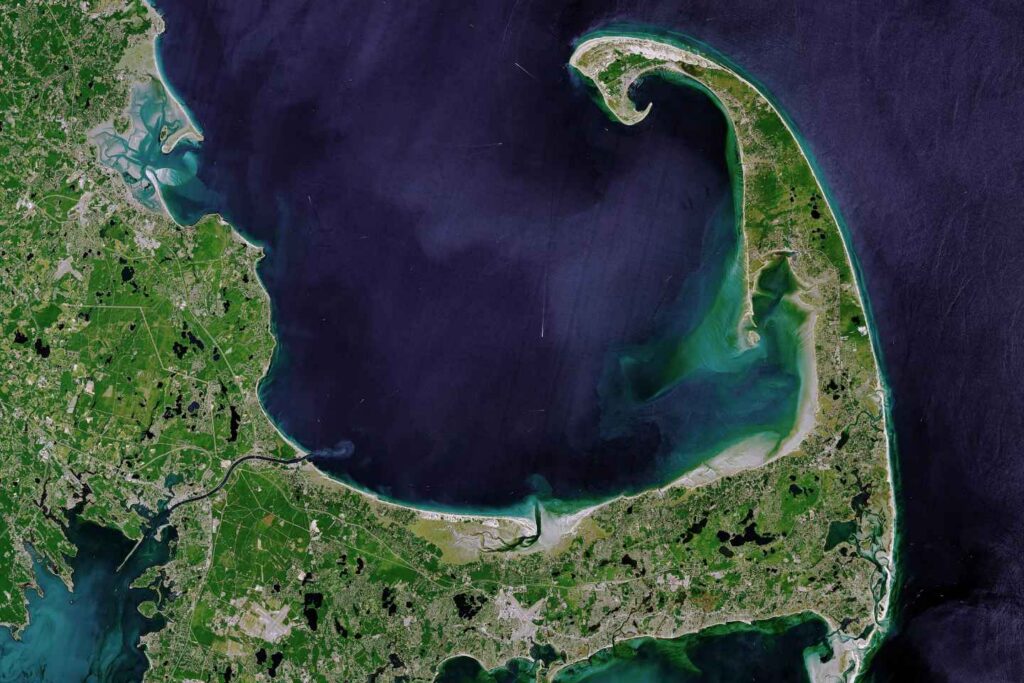
Just a short walk from the beach where, more than four centuries ago, Native Americans confronted the Pilgrims, a stretch of the Massachusetts coastline has returned to Indigenous ownership. On October 30, The Nature Conservancy, one of the world’s leading environmental organizations, donated approximately 51 hectares of land to the Native Land Conservancy, a nonprofit organization founded and managed by representatives of the indigenous peoples of the United States.
The transaction, announced on November 10, involves an area of Cape Cod in the town of Eastham, characterized by brackish marshes and coastal vegetation. The land borders another eight hectares purchased last June by the same indigenous organization for three million dollars. The two acquisitions will make it possible to manage nearly 60 hectares of land, preserving its biodiversity and restoring the ability of Native communities to practice traditional activities there.
The lands taken from the Nauset
This news takes on special significance on Thanksgiving, which the United States celebrates today, November 26. It was along this stretch of coastline, in December 1620, that Nauset warriors confronted a group of colonists who had arrived aboard the Mayflower, after the colonists had stolen corn reserves and desecrated several graves. This incident, from which the current First Encounter Beach derives its name, preceded by nearly a year the famous feast between the colonists and the Wampanoag, to which the American holiday is traced.
“Long before the first encounter with Europeans, Native Americans lived here and cared for this land,” said Ramona Peters, founder of the Native Land Conservancy and a member of the Mashpee Wampanoag Tribe, in the press release announcing the donation.
The Protection of Coastal Ecosystems
The restored lands include transitional habitats between the sea and the mainland, where the presence of saltwater fosters the development of unique flora and fauna. Among the species inhabiting these habitats is the diamondback terrapin ( Malaclemys terrapin), which finds favorable breeding conditions along the coast. Its presence is the reason for the name given to the property acquired in June: T8nupâhs Uwatuhshât, which in the Wôpanâak language means “at the turtle’s nest.”
Land management will involve removing invasive plant species and restoring native flora. In addition, certain environmental restrictions will remain in place to prevent construction, allowing indigenous families to return to fishing, gathering plants, and holding ceremonies in the places frequented by their ancestors.
The Land Back Movement
The return of Cape Cod is part of the broader “Land Back” movement, which was launched to demand the return of lands taken from Indigenous peoples during the colonization of North America. In recent years, partly through donations and agreements with environmental organizations, some communities have been able to regain ownership of lands of particular historical and natural significance.
Founded in 2012, the Native Land Conservancy was the first Indigenous-led land conservation organization east of the Mississippi. Today, it manages more than twenty properties in Massachusetts, entrusting the protection of ecosystems to a board of directors composed of representatives from seven different tribes.