The 90 per cent holds, if only formally. The EU is moving towards agreeing to a weakened climate target, but in the EU Council of Environment Ministers the Commission salvaged what could be saved after a complex night in which countries faced off in two major blocs. On one side was the Commission with Germany, Spain, France, and Sweden pushing for an ambitious agreement, and on the other a “realist” minority led by Italy, and including Poland, Hungary, Slovakia, and Bulgaria, with partial support from Austria and Belgium.
The overnight compromise
There were endless discussions and a “near failure” when negotiations broke down at 1:30 a.m. with a promise to resume after a few hours. But the Danish presidency, having consulted with the Commission, urgently called back delegations at 2:10 a.m. and presented a text with much more flexibility. That was the turning point. It was discussed for three hours and a tentative understanding was reached around 5 a.m.
More flexibility and postponement of ETS 2
After more than 18 hours of negotiations, ministers attending the Environment Council thus gave their support to a compromise to reduce emissions by 90 per cent by 2040, compared to 1990 levels, but with a number of flexibilities—it was the only way to meet the concerns of many governments and break the impasse.
The agreement reached amongst EU countries on the amendment to the climate law introduces the interim target of 90 per cent emission reduction by 2040 compared to 1990 levels, raises the share of high-quality international credits to 5 per cent (the Commission’s initial proposal was 3 per cent), bringing the domestic GHG cut down to 85 per cent. Use of international credits will start in 2036, but a pilot phase is introduced between 2031 and 2035.
The agreement introduces a review clause, whereby the Commission considers flexibility for member states to use additional international credits of up to 5 per cent for their post-2030 targets. It also postpones the entry into force of ETS 2 by one year: the extension of the CO₂ allowance auctioning mechanism to road transport and building heating moves from 2027 to 2028. In addition, the agreement stresses the need for access to innovative technologies in all member states, taking into account geographical balance, and asks the Commission to take into account the role of zero-carbon and renewable fuels in the decarbonisation of transport.
Reactions: Italy speaks of a “good compromise”
The text on the 2040 target garnered the support of all EU countries except Poland, Hungary, and Slovakia and recorded abstentions (which, however, amounted to a vote against) from Belgium and Bulgaria. Austria supported the agreement, though it submitted a separate statement. Now the Council will be able to begin so-called trilogues with the European Parliament to arrive at the final version of the text. Regarding the nationally determined contribution, the NDC for 2035, to be presented at COP30, the countries unanimously supported keeping the range already formulated in September in the Declaration of Intent between 66.25 per cent and 72.5 per cent.
“We approved both the Climate Act and the NDC [Nationally Determined Contributions, ed.] for COP30,” and “a good compromise was found,” claimed Gilberto Pichetto Fratin, minister of the Environment and Energy Security. “It was,” he said, “an intense negotiation, the Commission recognised that the demands we were bringing forward as Italy and as a group of countries united with us were relevant and important, balanced.” The EU Commission recognised the requests that concerned the one-year postponement of ETS 2, and it is also “the first time that biofuels are brought into the regulatory part of the proposal, and then it showed willingness not only to move from 3 to 5 per cent of international carbon credits but also to include in the review phase an additional 5 per cent from domestic credits,” as well as “a number of other assessments involving both the international trade part, which was the subject of the European Council of Leaders, and the requests received from the various countries, which were accepted.” Thus, Pichetto argued, “a good agreement was found.”
Brussels looks ahead to COP30
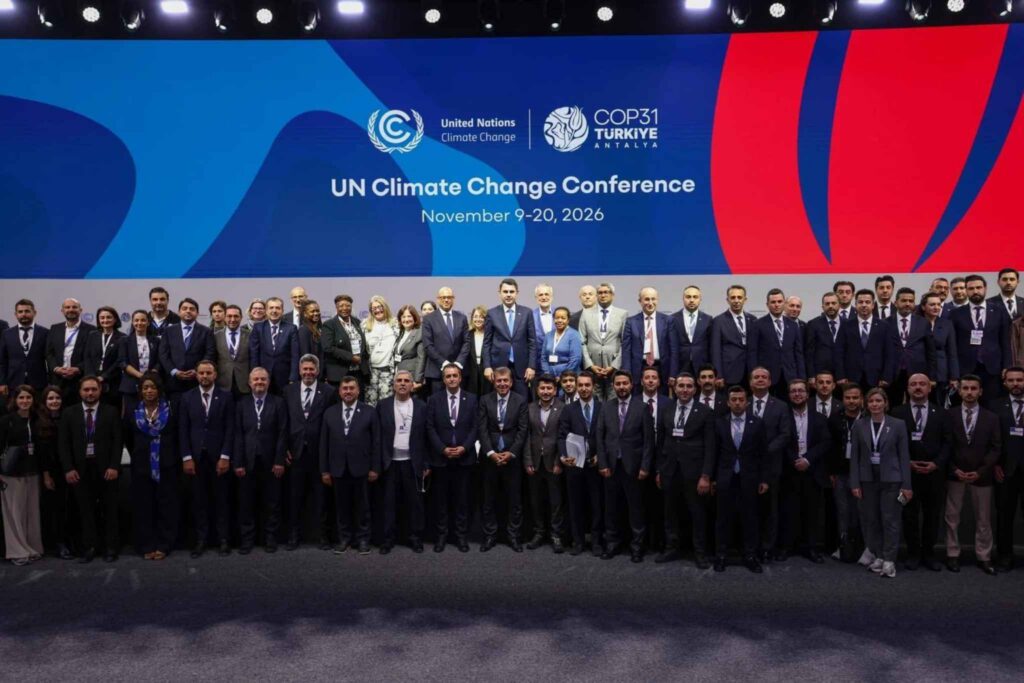
And the Commission is putting a brave face on it, seeing well beyond the proverbial half-full glass. “In the run-up to COP30,” said European Climate Commissioner Wopke Hoekstra at a press conference at the end of the EU Environment Council, “we will have complete unity in the EU. We now have an exceptionally strong mandate that also allows us to ask more of others as we face an international problem. Again, perhaps with the exception of Britain, this is an NDC second to none, and we call on everyone else to join the EU in this ambition, because we need others to do more. They don’t have to do it for us. They have to do it for everyone.”
“The Commission,” Hoekstra continued, “confirms its intention to propose a revision of the key elements of the ETS implementation framework to facilitate the entry into force of ETS 2, in line with the indications of paragraph 47 of the European Council conclusions. Relevant proposals will be adopted later this year and will address concerns about excessively high or volatile prices. The aim is to ensure an orderly market start and a predictable price trajectory through a more robust price stabilisation system. With Italy, as can be seen in the text of the compromise, we have included specific language on the role of zero- and low-carbon renewable fuels in the decarbonisation of transport.” In Italy the agreement is defended by FdI and Forza Italia, which claim credit for softening it, but also, albeit with criticism of the role played by the government, by PD and Verdi, whilst M5S is against it. The League is also critical, taking the same position as Poland, Hungary and Slovakia.