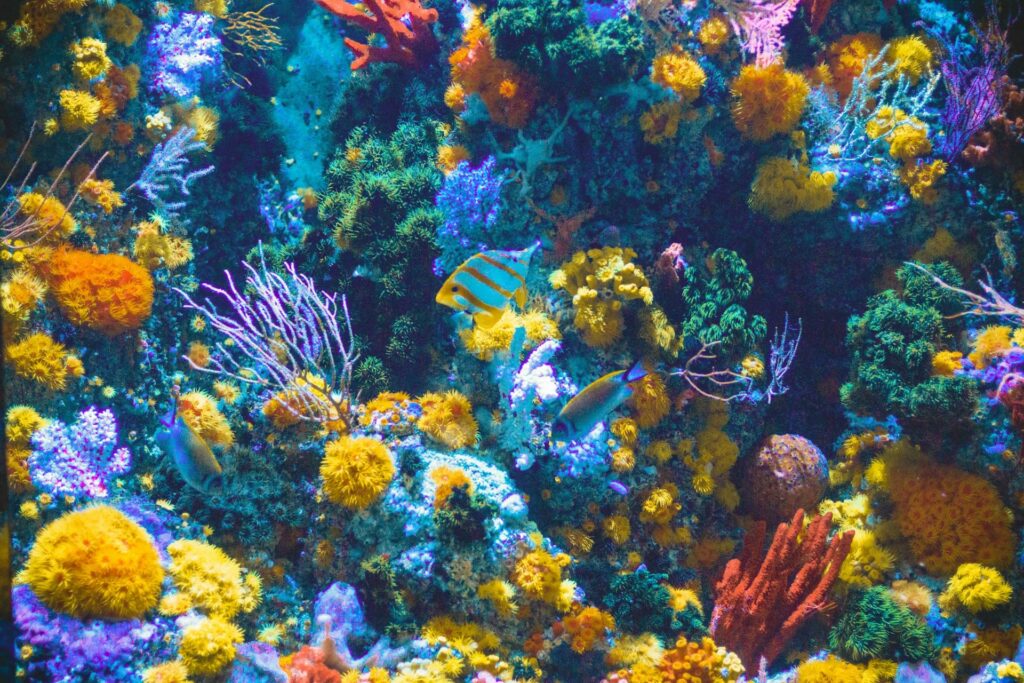
The crisis of coral reefs is one of the alarm bells of a system that is reaching its limits. Corals occupy just 1 per cent of the seafloor, but more than a quarter of the sea’s biodiversity depends on them. A biological paradox that tells the stakes well. Ancient organisms, capable of surviving five mass extinctions, now threaten to fail in the face of global warming, ocean acidification, heat waves, and intensifying human pressures .
It is from this awareness that“MedCoral Guardians”: the project initiated by the Marevivo Foundation to defend and restore Mediterranean corals. After a first experience in the Marine Protected Area of Ustica, the initiative arrived at Punta Campanella, one of the most precious stretches of sea in Campania. Here, together with the Department of Biology of the University of Naples Federico II, an active monitoring and restoration of the Cladocora caespitosa, the so-called cushion madrepore, one of the main “engineers” of the Mediterranean marine ecosystem.
An open-air laboratory
The project was presented at the Turtle Recovery and Marine Biology Centre of the Marine Protected Area in Massa Lubrense. The first plant, with 13 fragments of Cladocora, was shown live before placement in the sea. A total of 12 implants and 156 coral fragments are planned, recovered and restored through painstaking, almost surgical restoration operations. Work that requires time, precision and above all scientific knowledge.
“In recent decades, about half of the Planet’s coral reefs have been severely damaged, and the same phenomenon is affecting the Mediterranean,” explained Raffaella Giugni, secretary general of Marevivo. “This is an alarming situation because corals play a fundamental role in the health of marine ecosystems: they provide habitat and shelter for numerous species, are home to about 25 per cent of marine wildlife, and mitigate the force of waves, helping to limit coastal erosion. Today, however, their survival is endangered, a victim of climate change, heat waves, ocean acidification, anthropogenic activities and wild anchoring by boats that can destroy entire colonies.”
Not just corals: saving ecosystems
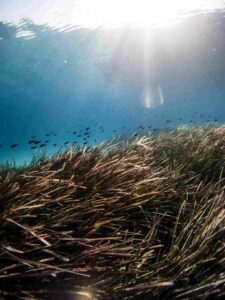
“MedCoral Guardians” looks not at the individual organism, but at the overall balance of the sea. At Punta Campanella, the focus also extends to the forests of Cystoseira, brown algae that are critical to marine life and now in steep decline throughout the Mediterranean. Pollution, coastal urbanisation, eutrophication, global warming and invasive species are also putting these habitats at risk. Restoring them means mending broken ecological relationships and increasing ecosystem resilience.
As pointed out by Carmela Guidone, director of the Punta Campanella Marine Protected Area, the strength of the project lies in the synergy between institutions, the scientific world and environmental associations. Diving centres and local diving associations are also involved, with reporting, monitoring and guided tours of restoration sites. A valuable contribution to identifying areas where the Cladocora is still present and should be protected.
People are also at the centre of the initiative, starting with the youngest. More than 700 students from local secondary schools will participate in educational workshops to learn about Mediterranean corals, understand what threatens them and reflect on everyday behaviours that can make a difference. Because protecting the sea is a shared responsibility.
Gaining time, defending the future
Replanting corals will not be enough to stop the climate crisis. But it means buying time, protecting biodiversity and coastlines, and proving that proactive action works. Marevivo’s goal is to turn “MedCoral Guardians” into a replicable model in other areas of the Mediterranean. Whilst waiting for politics to do its part on the root causes of the crisis, there are those who have decided to go down to the sea and start healing its wounds. And, in these times, that is no small thing.