On the fjord in front of Nuuk, Helgi Áargil watches the water and tries to guess where the fish have moved. Until a few years ago, the answer was simpler: just follow the ice. Today, the ice is no longer a reliable guide. “It’s too hot,” the Greenlandic fisherman tells Euronews. And that sentence, uttered in the middle of the Arctic, tells better than any graph the ongoing transformation of that fragile region.
Greenland is changing rapidly. The Arctic is warming almost four times faster than the global average, as shown by numerous scientific studies published in recent years, including research in Nature. The consequences don’t just affect glaciers or polar bears: they directly affect the daily lives of coastal communities. And especially fisheries.
The end of ice fishing
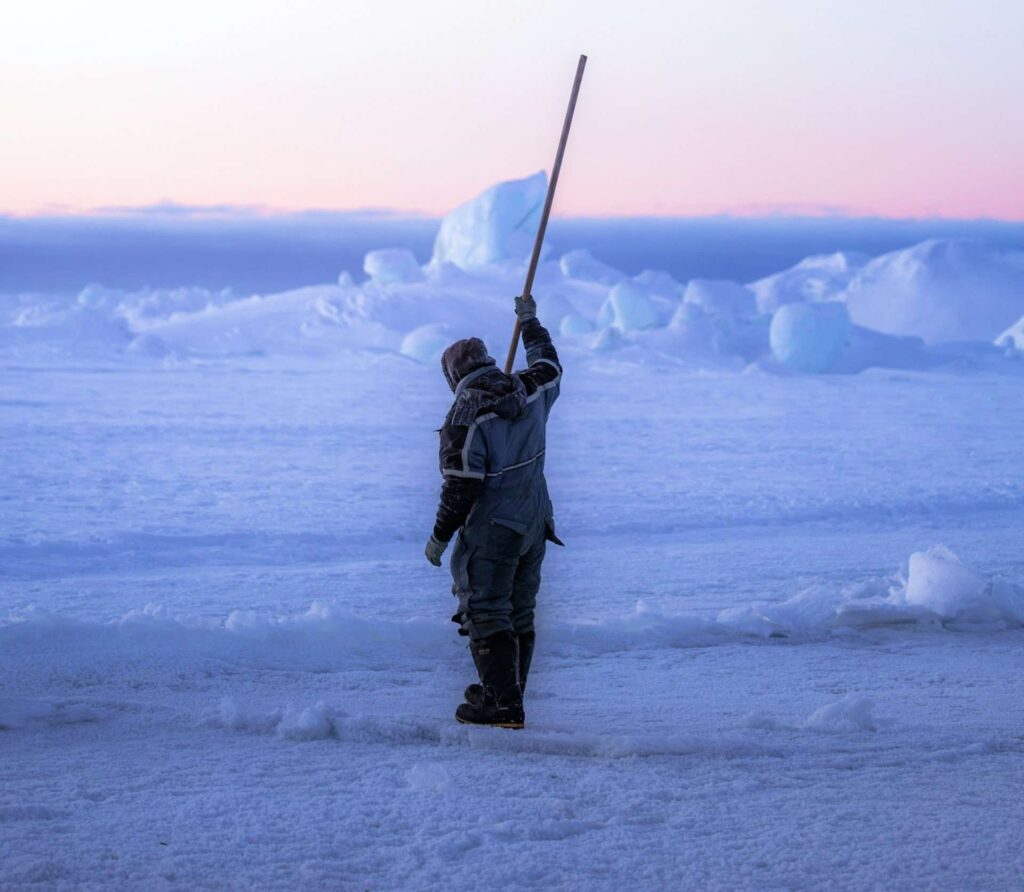
For generations, many Greenlandic fishermen worked directly on the ice floe. They drilled through the ice, often more than a meter thick, and lowered their lines into the icy waters to catch halibut and cod.
That world began to change in the 1990s. Since then, the extent of Arctic sea ice has continued to shrink. According to data from the National Snow and Ice Data Center, summer ice has decreased by more than 40 percent since the 1980s.
For many fishers, the solution has been to switch to boats. A change that allows them to cover larger areas but introduces new costs and an environmental paradox: more fuel, more emissions, more pressure on marine ecosystems.
More boats, more fish … maybe
Fishing is Greenland’s economic mainstay. It is worth up to 95 percent of the island’s exports and supports thousands of families. Ports and processing factories are the vital center of almost every town. But the shift toward increasingly motorized fishing raises serious questions. If all fishermen leave the ice floe and move offshore, fishing effort could grow rapidly.
According to marine biologist Boris Worm of Dalhousie University, it is a pattern already seen in many other parts of the world: as technology increases catch capacity, the risk of overfishing increases. One of the most obvious signs is the reduction in average fish size, a phenomenon already observed for halibut near Greenland’s coast.
Paradoxically, warming may also temporarily increase some fish populations: rain and melting ice bring more nutrients into the sea, feeding plankton. But this does not mean stability: ecosystems become more unpredictable and species change behavior or distribution area.
Deeper fish, more uncertain fishermen
The change is already visible in the daily routes of fishermen. As temperatures rise, many fish seek colder waters and move to greater depths.
The result is increasing uncertainty: a day at sea can yield significant gains or nothing at all. A variability that makes it difficult to plan work and investments.
And in Greenland, alternatives are limited. Tourism is growing but remains marginal compared to fishing. For a population of just over 50,000, the sea continues to be the main economic and cultural resource. But ice fishing, a practice that for decades defined the identity of many communities, is in danger of becoming a memory.