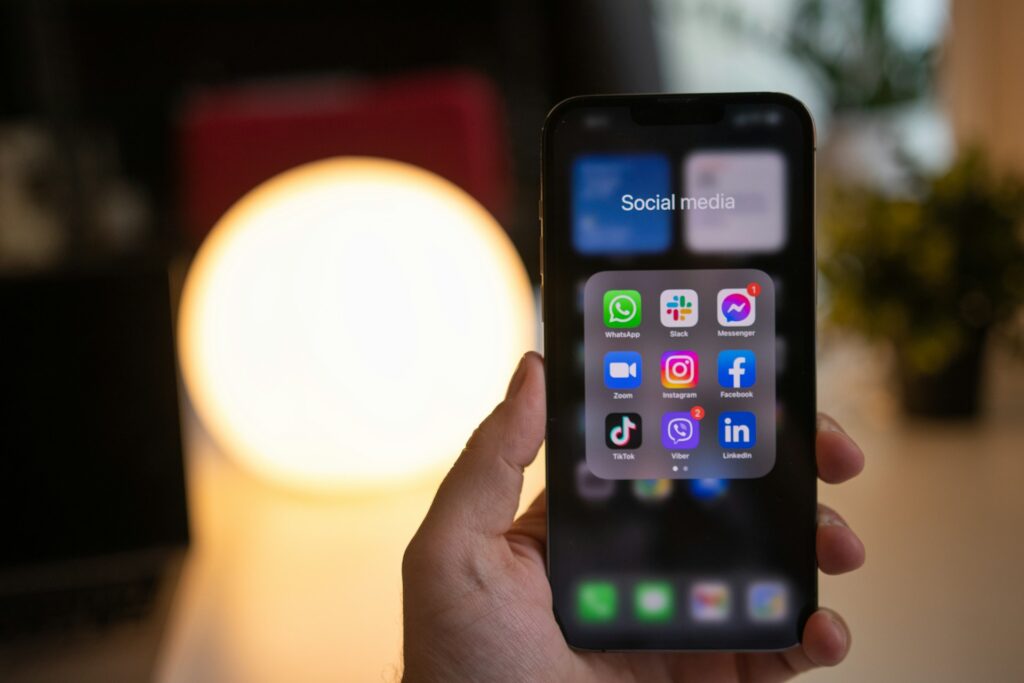
Opening a social network today often means entering a crowded square of strangers. Viral videos, recommended posts, content from creators never followed: in many cases, friends appear only occasionally, as occasional guests.
This is a profound change. Platforms that were born to maintain, and restore, personal relationships are gradually becoming something else: content distribution systems governed by algorithms that select what we will see on the screen.
The feed we no longer control
Those who have been using social for many years remember a very different mechanism. In the early days, the logic was simple: content appeared in chronological order and came mostly from the people we chose to follow.
Most platforms today operate on an opposite model. Recommender systems analyze in real time what we watch, how long we focus our attention on a video or photo, which posts we comment on. From this data they build a personalized stream that mixes real contacts and suggested content.
The result is a feed that no longer reflects only our relationships but also-and often especially-the software’s predictions about what might keep us online longer.
The economic logic behind the infinite scroll
The reason for this transformation is related to the business model of social networks. The platforms are free to users, but they generate revenue through digital advertising.
The decisive variable in this context is the time spent on the screen. The longer a person stays connected, the more ads they can view.
Recommendation algorithms are therefore designed to maximize engagement, that is, the likelihood that a piece of content will be watched, commented on, or shared. Academic studies have shown that emotionally strong or controversial posts tend to produce more interactions and thus receive more visibility in algorithmic platforms.
No longer social media but algorithmic media
This evolution has led some scholars to propose a new definition: ‘algorithmic media.’ Platforms do not merely host conversations between users, but perform a function similar to that of a publisher, deciding which content to highlight and which to relegate to the back of the information stream.
Every second automated systems examine huge amounts of data to determine what to show millions of people. According to the Pew Research Center, a growing share of users are receiving news precisely through this suggested content, often from sources they have never followed directly.
A change that also affects the public debate
If algorithms determine the visibility of content, their role is no longer just technical. They influence what goes viral, the discussions that emerge, and even the topics that dominate online debate.
Social networks remain places for relationships, but their architecture is now increasingly similar to that of a large content distribution system.
And this is where the question arises: if platforms select what we see with engagement and advertising logics, how much is left of the original idea of a network built primarily to keep people in touch?