The Italian Parliament has given the final green light to the downlisting of the wolf. With the Senate’s vote on the European delegation law, after passage in the House, the species goes from “strictly protected” to “protected,” implementing the European guideline that allows member countries more flexible management of populations. A choice that reopens a heated confrontation between politics, the scientific community and environmental associations.
According to Legambiente, this is a decision taken too hastily and without adequate scientific support. “The final go-ahead that came from the Senate, after that of the House, to the European delegation law containing also the transposition of the downlisting of the wolf represents in our opinion a serious mistake. Lowering the level of protection of this species will not go to solve the ongoing social conflicts,” says Stefano Raimondi, national biodiversity manager of Legambiente.
The association stresses that the measure risks undermining the achievements of recent decades in conserving the species and opening a dangerous precedent for other protected species. Raimondi also notes that the idea of using selective culling to reduce conflicts with livestock activities is not supported by solid evidence on its real effectiveness.
A return borne out of conservation
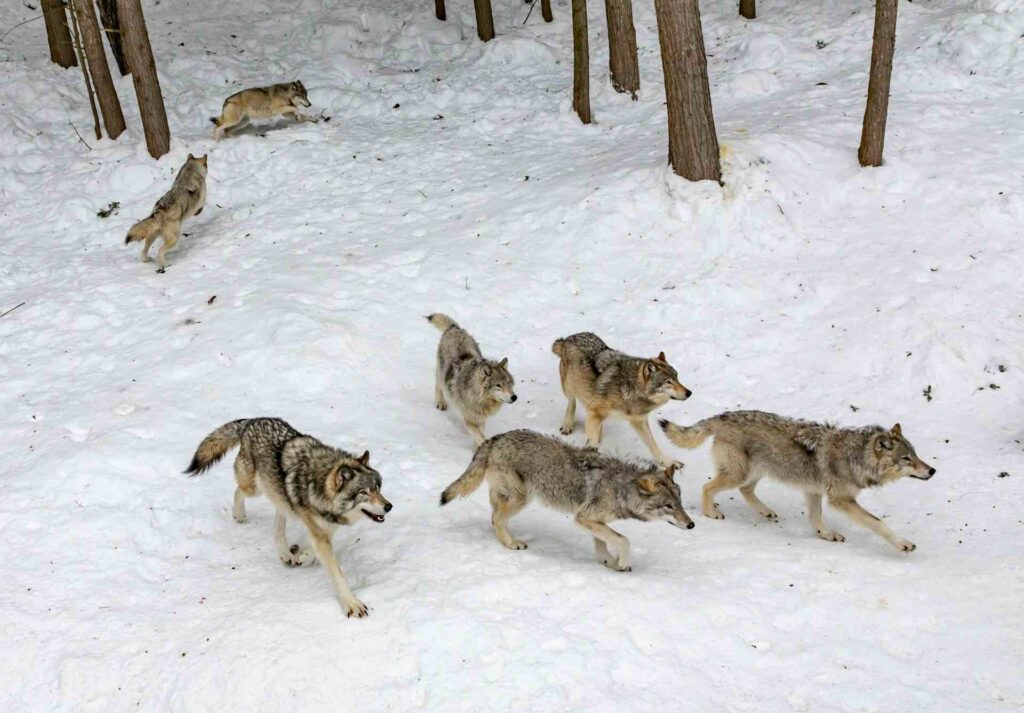
Over the past fifty years, the wolf has gone from being a species on the verge of extinction to a stable presence in many European areas. In Italy, too, the population has gradually recovered, returning to occupy territories from which it had disappeared. This recovery is considered one of the most significant achievements of biodiversity protection policies.
It is precisely the predator’s return, however, that has rekindled tensions in rural and mountain areas, especially over attacks on livestock. For some local realities, downlisting represents a tool to better manage conflict situations; for conservationists and researchers, however, the risk is that a political shortcut will be chosen without addressing the real causes of the problem.
“The real issue is management.”
For the scientific community, it is dangerous to move without a shared strategy. “When it comes to biodiversity protection and the protection of a species as important as the wolf, decisions should be made as part of a long-term strategy, supported by comprehensive data and integrated plans,” comments Valeria Salvatori, researcher and manager of the EU Life Wild Wolf Project. “The final vote cast by the Senate Chamber should now be associated with a structured plan, which has been missing for more than 15 years in Italy. The issue of wolf protection is very serious and complex, as well as coexistence with human activities, but in order not to lose the valuable work done in recent decades, thanks to which the wolf from a nearly extinct species has returned to a popular our Peninsula we need to keep three cornerstones firm: continue to move within the perimeter and in compliance with EU legislation, invest more in monitoring programs and with transparency share the results, strengthen the commitment in the evaluation of the effectiveness of withdrawals for the solution of critical situations. It is important that the decision taken by Parliament be accompanied by technical measures that ensure the resolution of existing complexes such as that of confidant specimens or predation, and not just represent a political decision taken on an emotional wave.”
The measures that are still missing
These predation prevention measures, Valeria Salvatori points out, consist of electrified fencing and guard dogs, considered among the most effective solutions. But also a rigorous monitoring campaign of the health status of wolf populations. Today, on the other hand, there is no up-to-date official database on wolf deaths, which are often linked to poaching, and adequate policies to counter the phenomenon of hybridization with dogs have not yet been implemented.
That is why it is important that regulatory change does not simply result in a loosening of protections. Without a shared strategy, the risk is to further fuel social conflict without solving problems on the ground.
Thus, the real challenge remains the coexistence between human activities and large carnivores. A complex issue that requires long-term policies, solid scientific data and a prevention system capable of accompanying the return of one of Europe’s iconic wildlife species.