We open the refrigerator and, almost without thinking, discard that bag of salad that has now become a mushy heap. Within seconds the “problem” ends up in the bin. But if that transparent bag could talk, it would tell us a story of waste that goes far beyond the two euros left at the supermarket checkout. It would tell us about gallons of drinking water used for irrigation, soil consumed, exhaust fumes for transportation, and human toil that we have just decided to declare useless.
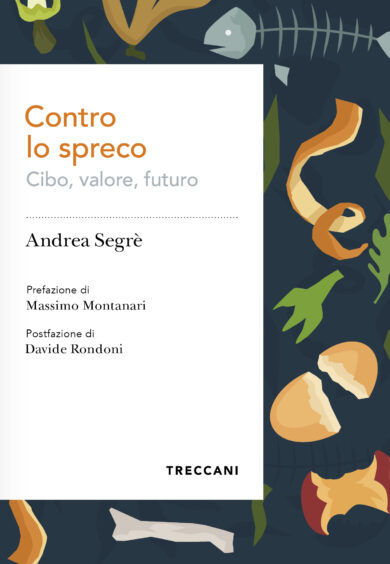
Andrea Segrè, the agroeconomist who has made the fight against waste a civic mission, is back in bookstores with“Against Waste. Food, Value, Future” (Treccani), a book that points the finger at a development model that has become “worn out and anachronistic.”
The real enemy is the illusion that food is an infinite and worthless commodity. When we buy three products for the price of two, our brains register a bargain. In reality, we are just shifting the cost elsewhere: on the environment or on the rights of those who work the land. Segrè challenges us to get out of the bubble of homo oeconomicus to rediscover homoreciprocans, that is, the man aware that each of his choices at the table has a specific weight on the rest of the world.
Waste, in this view, is a sign that we have lost our compass. If the value of food were measured in respect for nature and the time it takes to produce it, rather than in a few euros, that bag of salad would not end up in the bin so lightly.
From Francis of Assisi to the digital age: the return to “measure”
As Italy celebrates its cuisine as a UNESCO heritage site and commemorates 800 years since the death of St. Francis, Segrè’s essay launches a bridge between past and future. The saint of Assisi preached care, not misery. He preached the idea that nothing really belongs to us and that everything should be shared intelligently.
Today, in a world where natural resources are under siege and the population continues to grow, this vision is an economic necessity. The wealth of the future will not be abundance (which often results in unnecessary accumulation), but the ability to manage limitation. “Care is not altruism, it is strategic investment,” the author writes. It means that not wasting is the smartest move we can make to ensure stability for our social well-being.
A daily political act
Segrè’s book functions as a “toolbox” for those who want to inhabit the Planet with a new awareness. Choosing what to put in the cart, weighing purchases based on real needs, and learning to read labels are gestures of domestic economy and, at the same time, political acts. The good news is that the solution is literally in our hands, whenever we decide not to throw away the future on a whim of the palate.