Not all the plastic that ends up in the sea can be seen. Some of it sinks, settles on the seabed, disappears from the radar – media and operational – but continues to fragment and contaminate. It is on this deeper level that the ambition of SeaClear2.0, the European project that attempts to intervene where little or nothing has been done so far, mainly due to technical and economic limitations: recovering waste tens of meters below the surface of the Mediterranean Sea.
Where the waste really ends up
Those who work in the field have long known this: when plastic sinks, it changes state. Bottles, nets, fragments become smaller and smaller particles over time, until they turn into microplastics that enter biological cycles. At that point, recovering them is virtually impossible. Intercepting the waste before this transformation is therefore a race against time. And that is where technology comes in.
An unmanned team
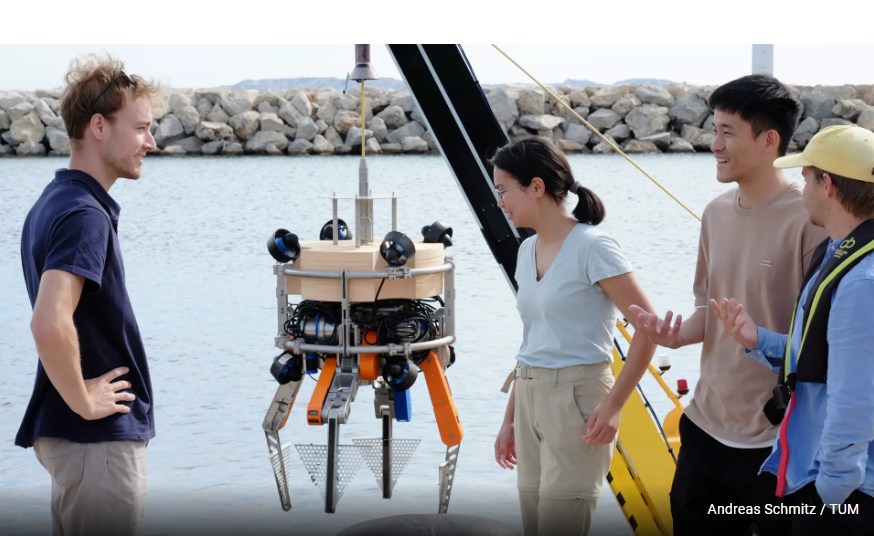
SeaClear2.0 is a coordinated technology system. On the surface , autonomous boats operate , mapping the most polluted areas. From above, drones detect trouble spots. Below, robotic vehicles move across the seabed, recognize waste and collect it.
It is an example of applied engineering: algorithms trained to distinguish a piece of debris from a marine organism, mechanical grippers that grab heavy objects, suction systems for smaller ones. All without exposing divers to complex and dangerous operations. Tires, metal structures, boat debris have already been recovered during testing. Material that, without intervention, would remain in the deep for decades.
The Mediterranean node
The Mediterranean, by conformation and anthropogenic pressure, is a perfect trap for garbage. Currents hold them in, densely inhabited coastlines feed them. Intervening here means tackling one of the most critical spots on the planet. But it also means testing replicable solutions elsewhere.
It is not enough to collect
However, there is one aspect that distinguishes this project from many similar initiatives: the idea that recovery alone is not enough. Alongside the robotic component, SeaClear2.0 works on the direct involvement of citizens and local communities. Digital applications to report litter, educational activities, workshops: different tools, same goal. To make visible a problem that, by its nature, tends to disappear from view.
The results are there, although the system is not yet final. Researchers openly speak of an optimization phase, necessary to make operations faster, adaptable and sustainable on a large scale. Time, however, is a deciding factor. Every year new tons of plastic reach the sea.