More than 80,000 signatures collected in just four months and delivered to Brussels: it is a political signal knocking strongly again at the doors of the European Commission. Bringing it is Humane World for Animals Europe, which is calling for a total ban on fur farming and the sale of related products in the Union. It is an appeal that adds to the broader appeal of the European Citizens’ Initiative“Fur Free Europe,” which is capable of exceeding 1.5 million signatures.
The Commission will have to decide by the end of the month whether to go the ban route or simply introduce minimum animal welfare standards. A technical choice only on the surface: at stake is an increasingly contested production model.
Cages, stress and science
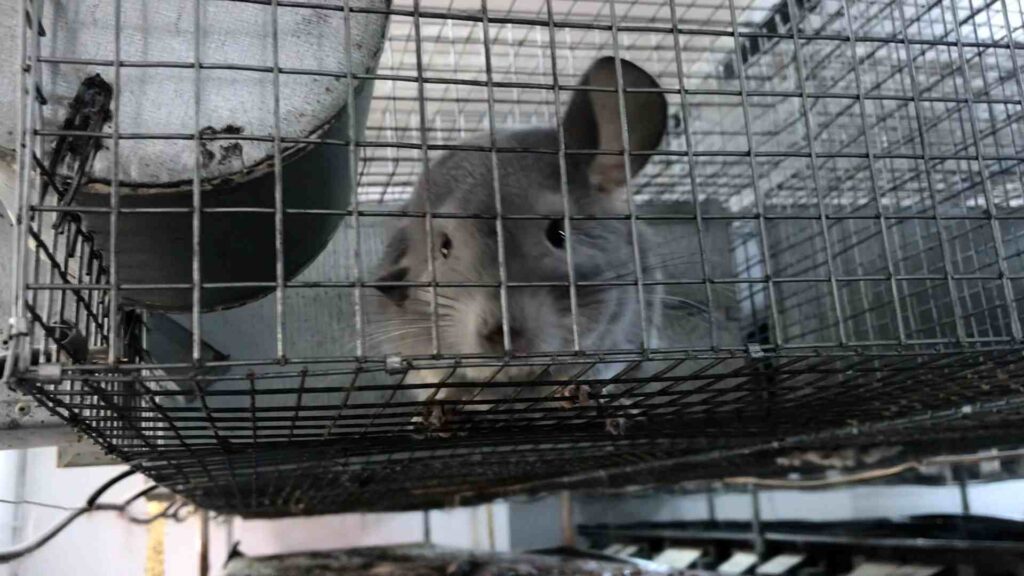
In July 2025, the European Food Safety Authority explained what associations and veterinarians have been denouncing for years: mink, fox, raccoon dog, and chinchilla farms are unable to provide adequate living conditions.
Reduced spaces, lack of stimulation, inability to express natural behaviors-the result is a picture of chronic stress, injury and health problems. This system appears incompatible with animal welfare.
A shrinking industry
The political record is equally clear: 18 member states have already banned fur farming, while others have introduced restrictions. Yet the industry is still not marginal: some 6 million animals continue to live on nearly 1,200 farms, mostly in countries such as Finland, Poland, Spain and Greece.
The paradox is obvious. On the one hand, the number of governments leaving the industry is growing, while on the other hand, pockets of production persist that keep an increasingly fragile market alive.
An ethical question
The issue concerns animal suffering but also our health. Fur farms have repeatedly been associated with health risks: during the COVID-19 pandemic, hundreds of facilities tested positive, leading to the culling of millions of mink. More recently, avian flu has also affected dozens of European farms.
Then there is the environmental chapter. The carbon footprint of mink fur is among the highest in the textile sector: dozens of times higher than materials such as cotton or polyester. A figure that weighs in a Europe committed to reducing emissions and promoting sustainable supply chains.
Fashion has already chosen
While politics debates, the market has moved more quickly. More than 1,600 brands and retailers have abandoned fur, and major international Fashion Weeks have excluded it from the runways. Even major fashion magazines have adopted fur-free editorial lines. More sustainable alternatives are becoming more competitive, further reducing the commercial space for traditional fur.
The decision that is missing
The overall picture is one of a sector in decline, but not yet archived. This is why the European Commission’s choice assumes decisive value: introducing a ban would mean aligning legislation with a reality that is already changing; limiting oneself to minimum standards would instead risk prolonging a transition that, in fact, has already begun. The 80,000 signatures handed in today indicate a direction. More importantly, they make it harder to ignore.