When Israeli patrol boats surrounded and blocked the Global Sumud Flotilla in international waters, the goal was not just to stop a shipment of aid, but to send a message of absolute impunity. The opening of a file by the Rome Public Prosecutor’s Office with very heavy charges, ranging from kidnapping to torture, shows that the handling of the 428 detainees has crossed the boundaries of international legality. Faced with this scenario, Italian institutions had to react with a toughness never seen before: President Sergio Mattarella branded as “low” the level touched by the Israeli Security Minister for the uncivilized treatment inflicted on the volunteers, while Prime Minister Giorgia Meloni spoke of a red line now crossed, ordering the immediate summoning of the Tel Aviv ambassador.
The propaganda of force
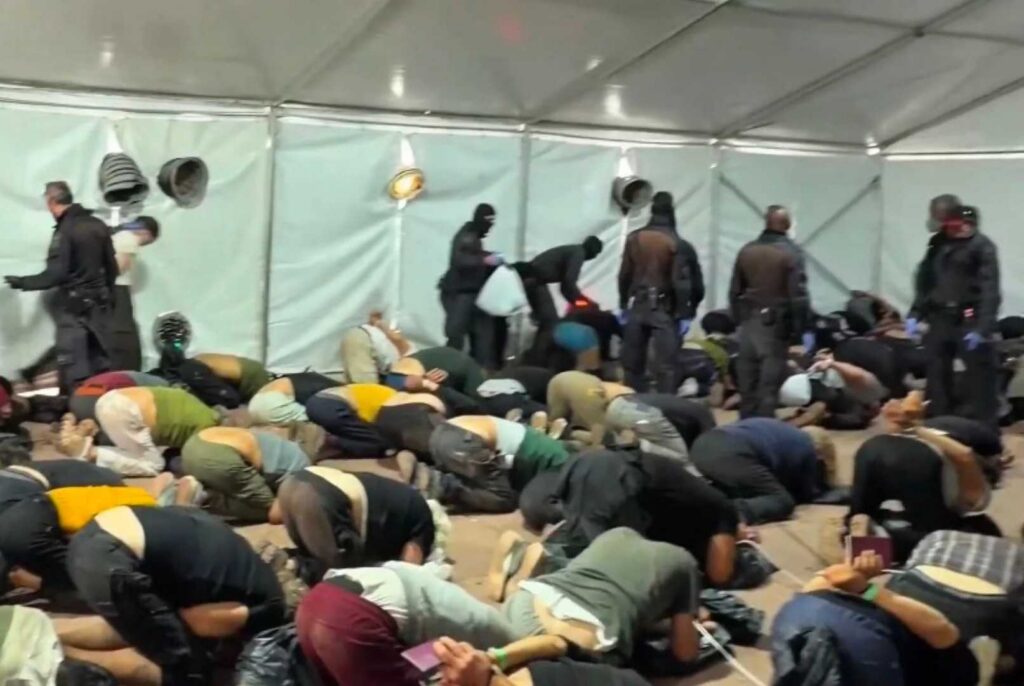
The images released by National Security Minister Itamar Ben-Gvir produced a political shock that was difficult to contain. Activists kneeling, hands tied, heads forcibly lowered, as the minister strolls smiling among the detained as if inside an election scene, taunting and insulting them. Reports tell of 428 activists detained after the Global Sumud Flotilla ships boarded in international waters and transferred to the port of Ashdod. The human rights lawyers’ association Adalah, which had access to Ashdod port, called the behavior “a criminal policy of abuse and humiliation.” According to the association, Israeli forces inflicted physical violence – tasers, rubber bullets, suspected rib fractures – and sexual harassment on activists; at least three people were hospitalized.
Rome prosecutors opened a file for torture, kidnapping, damage and robbery. According to reports gathered by magistrates, the boats were allegedly intercepted “in international waters,” in the SAR zone where Egypt is tasked with coordinating rescues, without hostility from the crews.
The political crux is here: Israel no longer merely forces the limits of international law. It does so openly, turning the exception into a political message.
The words of Europe
The diplomatic reaction this time was sharper than usual. France, Belgium, the Netherlands, Canada and Italy summoned Israeli ambassadors. EU High Representative Kaja Kallas called the treatment of the activists “degrading and unacceptable,” adding that Ben-Gvir’s conduct was “unworthy of anyone holding public office in a democracy.”
However, Italian oppositions, such as Nicola Fratoianni, are calling for “something concrete.” Riccardo Ricciardi, group leader in Montecitorio of the 5 Star Movement, speaks of sanctions and the need to stop trade agreements with Israel.
Impunity as a system
For months the Netanyahu government has been acting within a framework of substantial international impunity. And what has occurred undermines the very principle of international legality. If a government can board ships in international waters, detain foreign activists, publicly humiliate foreign nationals and members of parliament from other countries and then get away with a few diplomatic notes, then the law disappears.
The feeling today is that something is finally beginning to change even in Western chancelleries. The distancing from Ben-Gvir, even within Israel, shows this. But words are soon forgotten, actions remain. And what has happened demands a concrete response, a fundamental change in relations with a state that flouts the law.