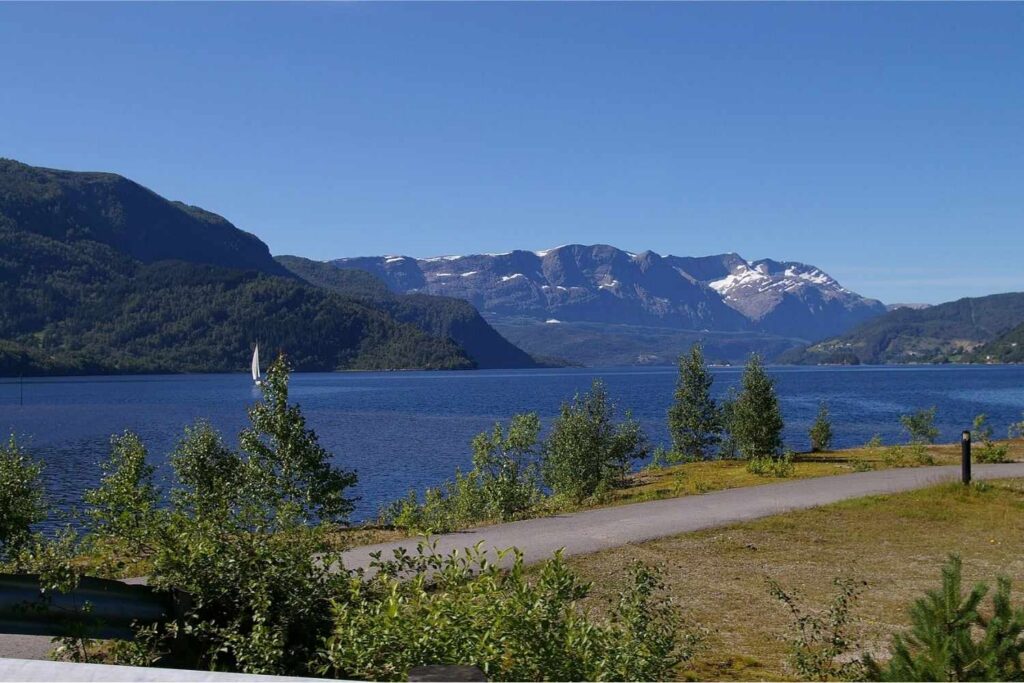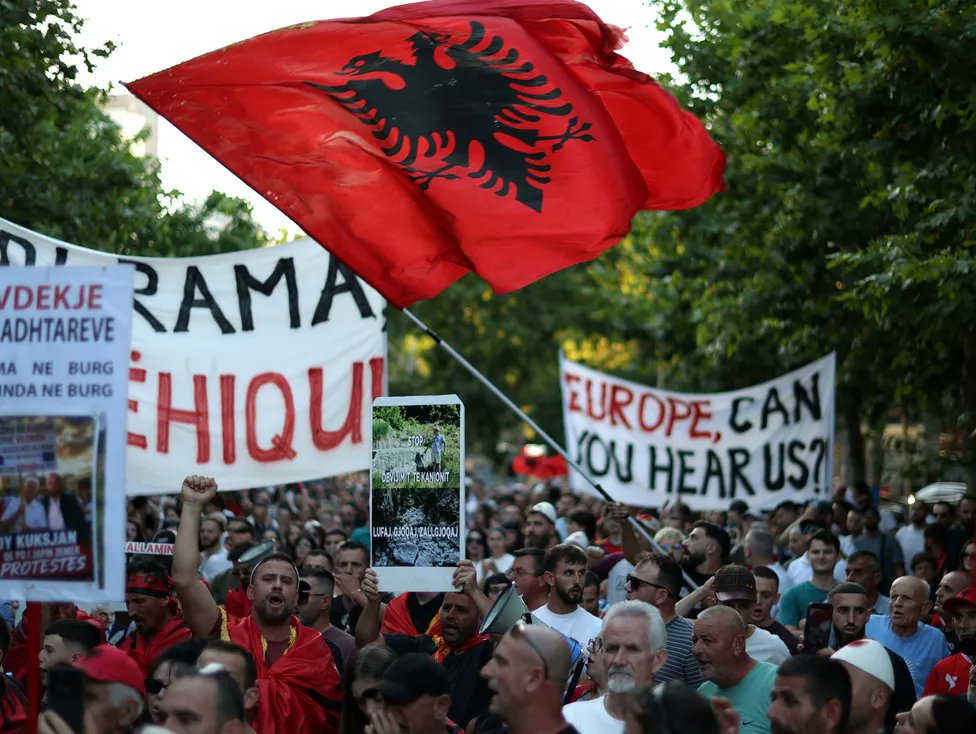
In Albania, the protest against a planned luxury resort on the Zvernec coast—adjacent to the Vjosa-Narta protected landscape , a wetland crucial for migratory bird routes and the survival of protected marine species—has entered its most contentious phase. What for weeks was dubbedthe “Flamingo Revolution”—named after the birds that inhabit the precious and fragile wetland threatened by the project—is now a movement that goes beyond environmental concerns.
The project, linked to Jared Kushner, son-in-law of U.S. President Donald Trump, has become a point of contention between the government and protesters. According to activists, the construction project would endanger an ecosystem on the southern coast. The government, on the other hand, presents it as a strategic investment in high-end tourism.
Clashes in front of Parliament
Tensions erupted on Thursday, July 2, in front of the Parliament building in Tirana, where clashes between police and protesters have taken place in recent days. Authorities reported that officers were injured and that arrests were made, while videos of police charges and the use of batons are circulating on social media.
During the protests, objects were thrown at the police, including rocks, eggs, and metal barriers. In response, the police used tear gas and water cannons to disperse the crowd and reinforced security measures around Parliament with metal fences.
The protest is spreading to the political arena
What began as an environmental protest has gradually evolved into a movement against the entire political establishment. Protesters are now calling for the resignation of Prime Minister Edi Rama and opposition leader Sali Berisha, the formation of a technocratic government, electoral reforms, and regulations on investments in protected areas.
Protesta e bukur e qytetarisë, atdhedashurisë, pastërtisë, ia ka lënë vendin tanimë filmit të vjetër të konfliktit, sherrit, dhunës, ku thonjtë e politikës së dështimit dhe zemërimit po dalin në pah me pisllëkun e tyre karakteristik🤡🤡🤡
— Edi Rama (@ediramaal) July 2, 2026
Why 🇦🇱 protesters reject the political opposition, DP:
— Tirana Report (@Tirana_Report) June 20, 2026
~81-year-old leader at the helm since '90.
~Ex-President/PM from past governments ranked among Europe's most corrupt.
~Aims to replace ruling party loyalists with its own across all sectors.
~Same oligarchic agenda.
🦩 https://t.co/3FDcEDwnPN pic.twitter.com/akImjGdjy0
The government rejects the demands and accuses the protest of turning violent. Rama commented on the clashes on X in a sarcastic tone, describing the initial phase of the mobilization as a “beautiful protest of citizenship, patriotism, and purity” that later degenerated into “conflict, discord, and violence,” accompanying the message with clown emojis.
A rift that remains unresolved
The authorities claim to have made regulatory changes to address some of the concerns raised, without, however, altering the overall structure of the project. The protesters, on the other hand, consider these concessions insufficient and vow to continue their protests.
The “Flamingo Revolution” thus remains caught between two irreconcilable perspectives: on the one hand, the promise of economic development linked to international tourism; on the other, the defense of a natural area and the demand for greater transparency in public decision-making. In the midst of it all, a square that has continued to fill up for over a month, and political tension that shows no sign of abating.