Those born this year are entering a world full of possibilities, but they will have to face an unprecedented climate legacy. The impact of global warming on our children’s lives is becoming increasingly evident in their daily lives: they will spend their formative years in a state of emergency, marked by droughts, heat waves, and extreme weather events.
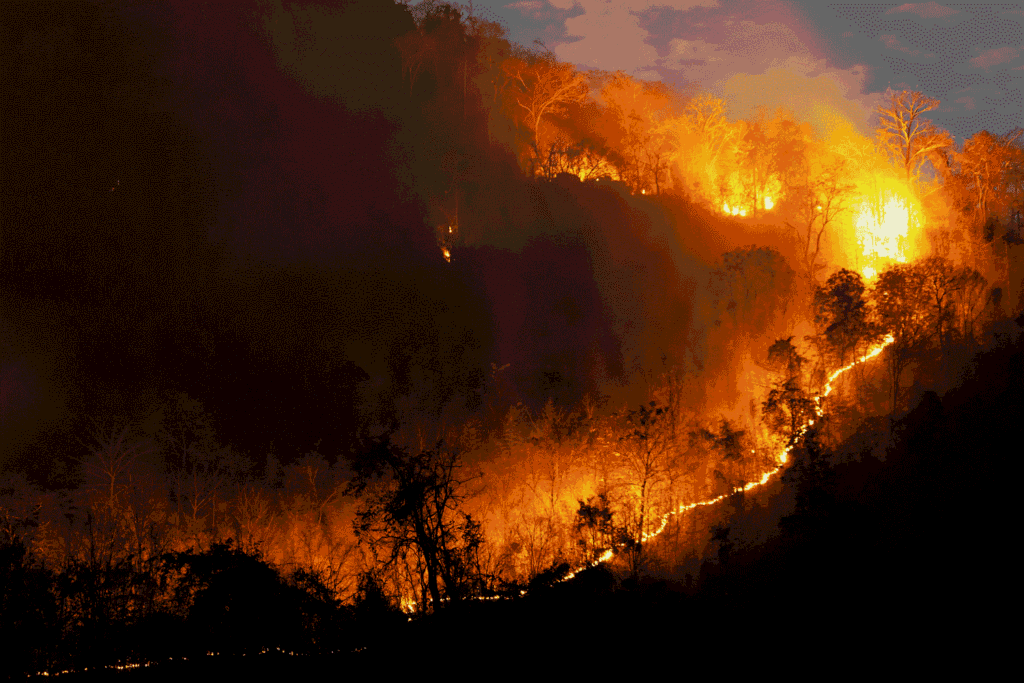
This interpretation is supported by a peer-reviewed study conducted by the Vrije Universiteit Brussel. The researchers did not limit themselves to estimating the rise in temperatures; they also calculated how much of a child’s life —born today—will be spent exposed to weather conditions conducive to wildfires, namely those in which scorching heat, dry ground, and wind create the perfect conditions for emergencies, especially in the summer.
The Generation Gap: What the Data Shows
The data paint a stark contrast between different eras. If we continue on our current path—which is leading the planet toward a 2.6-degree temperature increase by the end of the century— a baby born in 2025 will spend, on average, 84% more time exposed to days with a high risk of wildfires than someone born in 1950.
Experts are keen to emphasize a key point: this gap is not due to the fact that life expectancy has increased today compared to the past. In fact, for 86%, this increased risk is directly—and exclusively—linked to the climate changes triggered by human activity in recent decades.
Italy and the Mediterranean: The Highest Price to Pay
This phenomenon closely affects the Mediterranean basin, a hotspot that has always been vulnerable to heat waves but has now become a powder keg. For an Italian born in the mid-20th century, the total duration of a lifetime amounts to about three and a half years spent under potential wildfire alerts. For those born today, that estimate rises to the staggering figure of more than seven and a half years.
Very similar projections paint a similar picture for our neighbors: Spain and France are approaching seven and a half years, while Greece is nearing 7.2 years. In Portugal, where the risk is set to rise from two weeks per year during the 1950–1970 period to over one month per year by the end of the century, the issue has already reached the courts following lawsuits filed by young people alleging climate inaction.
This dynamic raises a profound ethical question between generations: those born today find themselves having to deal with—and suffer the consequences of—industrial and energy decisions over which they’ve never had a say. It is the main driving force behind youth movements around the world calling on governments to take action that can no longer be postponed.
A Future Yet to Be Written
The central point of the study, however, is not about an unchangeable scenario or a definitive verdict. The room for improvement we still have is concrete and quantifiable. Every single tenth of a degree of warming avoided directly translates into fewer days of danger for those growing up today.
Achieving the goals set forth in international agreements—limiting the rise in temperatures to 1.5 degrees—would give European children back more than a year of peace of mind, with benefits in Southern Europe and Italy that would exceed the two years of exposure avoided.
The path to changing course is feasible. The falling costs of renewable technologies, such as solar and wind power, make the energy transition both possible and economically advantageous. Combined with more careful and planned management of ecosystems, this shift provides the tools needed to extinguish the fuse and ensure a safer environment for those taking their first steps on the planet today.