The Mediterranean is one of the busiest waterways on the planet. In these waters, where large ships and large marine mammals share the same space, an Italian technology is taking shape that is designed to reduce one of the most immediate risks to whales and dolphins: being struck by the keel of a cargo ship.
The problem can be summed up in two numbers. The Mediterranean covers less than 1% of the world’s ocean surface, yet it alone accounts for about 30% of global merchant traffic. At any given moment, nearly 2,000 large-tonnage ships are passing through it, for a total of nearly 200,000 vessels per year. And the flow shows no signs of slowing down: according to research institutes, maritime traffic has grown by about 50% over the past decade, with forecasts of further increases. More ships, traveling faster, in the very same corridors where cetaceans congregate.
The leading cause of death
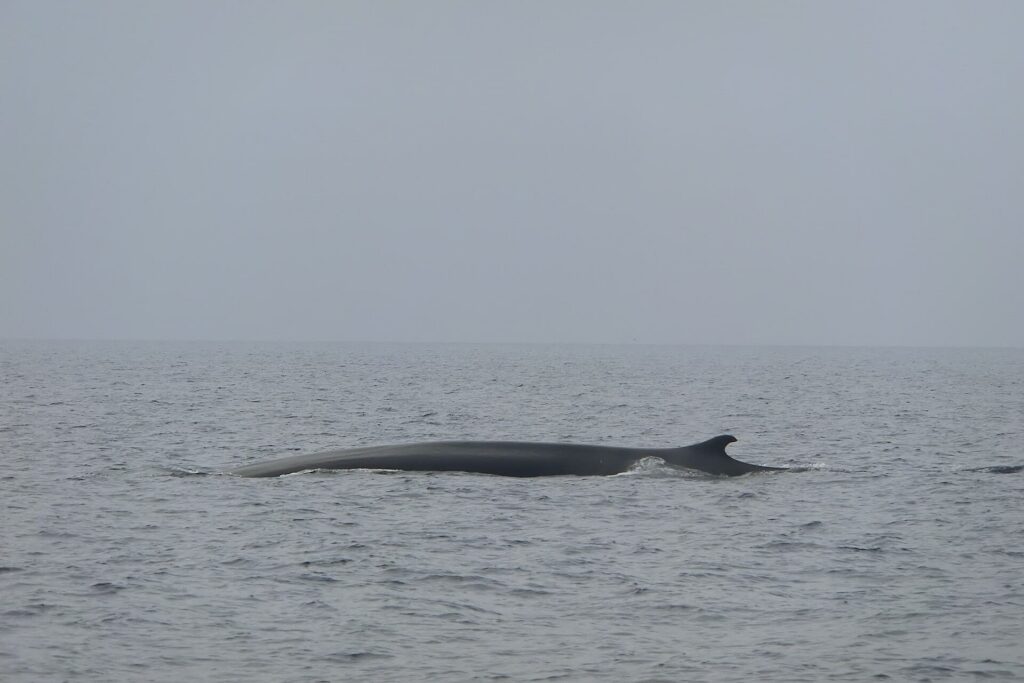
For large cetaceans in the Mediterranean, collisions with boats are now the leading cause of unnatural death. The most critical area is the Pelagos Sanctuary, the protected zone spanning Italy, France, and the Principality of Monaco: here, according to the WWF, the risk of collision is more than three times higher than in the rest of the basin, and up to forty fin whales lose their lives each year. Experts estimate about 3,500 “near-collisions” per year—close encounters in which a vessel and an animal brush past each other. The species that pay the highest price are those that swim slowly near the surface, such as the fin whale and the sperm whale, both of which are listed as threatened on the IUCN Red List. The Mediterranean sperm whale population, which is genetically isolated from the Atlantic population and therefore more vulnerable, numbers fewer than 2,500 adult individuals and is declining.
Eyes and Ears Underwater
It is against this backdrop that the new development emerges: WAILS, a platform developed by the TimelapseLab group, a company that has built its expertise in the remote monitoring of construction sites and infrastructure. The idea is to deploy high-resolution cameras, hydrophones capable of detecting the calls of marine mammals, environmental sensors, and artificial intelligence algorithms beneath the water’s surface. When the system detects the presence of a cetacean, it cross-references the various data sources, verifies their reliability, and sends a real-time alert to the crew, thereby reducing both the risk of collision and that of false alarms. At the end of operations, it generates automatic reports with coordinates and routes, a valuable resource for researchers and conservation organizations as well. The first tests were conducted on Lake Garda.
Not Just Technology
Technology, however, is only part of the solution. In 2023, following a proposal by Italy, France, Monaco, and Spain, the IMO—the United Nations agency for maritime traffic—established a particularly sensitive marine area in the northwestern Mediterranean, recommending that ships over 300 metric tons slow down to 10–13 knots in areas frequented by cetaceans. Reducing speed, rerouting vessels, and “spotting” the animals in time are complementary measures. Because in a sea that is home to an extremely high proportion of marine biodiversity and, at the same time, accounts for a massive share of global trade, the coexistence of ships and whales remains one of the main challenges to be addressed.