Five micrograms per cubic meter. This is the limit that the World Health Organization set in 2021 for the annual average concentration of PM2.5—fine particulate matter with a diameter of up to 2.5 micrometers, so tiny that it can penetrate deep into the lungs. A value that remains a distant goal in many areas, but one that—if met—would radically change the health outcomes in countries in the Global South: approximately 9.4 million fewer deaths each year. These calculations come from researchers at the University of Cambridge, in a study authored by A. Navaratnam and colleagues (corresponding author Haneen Khreis) and published on November 10 in the journal Environment International.
Where Air Quality Is Deteriorating
The analysis focuses on 136 low- and middle-income countries, where urban expansion and traffic have worsened air quality. On average, the annual concentration of PM2.5 in these countries is 30.44 µg/m³, more than six times the recommended limit. By cross-referencing data on pollutants, population, and health with the scientific literature, the authors used a computer model to estimate what would change if concentrations fell to WHO levels. In 2021, the PM2.5 limit was halved, dropping from 10 to 5 µg/m³.
Alongside fine particulate matter is nitrogen dioxide, the gas produced by the combustion of fossil fuels in vehicle engines and industrial plants. For this pollutant, the limit has been lowered from 40 to 10 µg/m³ as an annual average: meeting this limit would prevent approximately 1.1 million deaths per year.
Intermediate targets matter, too
Since the WHO limits are ambitious, the researchers also evaluated the less stringent interim targets set out in the same guidelines. Reducing PM2.5 levels to below 15 µg/m³ would still save approximately 6.6 million lives per year, while keeping nitrogen dioxide levels below 20 µg/m³ would save 435,000 lives.
In addition to the deaths prevented, there are also health benefits. With cleaner air, there would be 7.3 million fewer cases of coronary heart disease each year, 2.8 million fewer new cases of chronic obstructive pulmonary disease (COPD), 2.3 million fewer strokes, and 1.1 million fewer cases of dementia.
The Economic Impact
By meeting the PM2.5 threshold, healthcare systems would save $11.8 billion annually in direct medical costs for coronary heart disease, $8.6 billion for dementia, and $5.9 billion for strokes. Added to these are the productivity gains associated with a healthier workforce: $17.9 billion per year due to avoided strokes and $18.1 billion due to avoided cases of COPD.
These figures challenge the notion that anti-smog policies are merely a cost: reducing pollution is an investment that pays off twice—in human lives and in economic resources.
The Crux of the Po Valley
The study focuses on low- and middle-income countries, but the gap between current levels and WHO targets is also a pressing concern for Europe. According to the European Environment Agency, compliance with the guidelines in 2023 would have prevented approximately 182,000 deaths in the EU linked to PM2.5 and 34,000 linked to nitrogen dioxide. Italy bears the heaviest toll: 43,083 deaths attributable to fine particulate matter—nearly a quarter of the European total—and 9,064 to nitrogen dioxide.
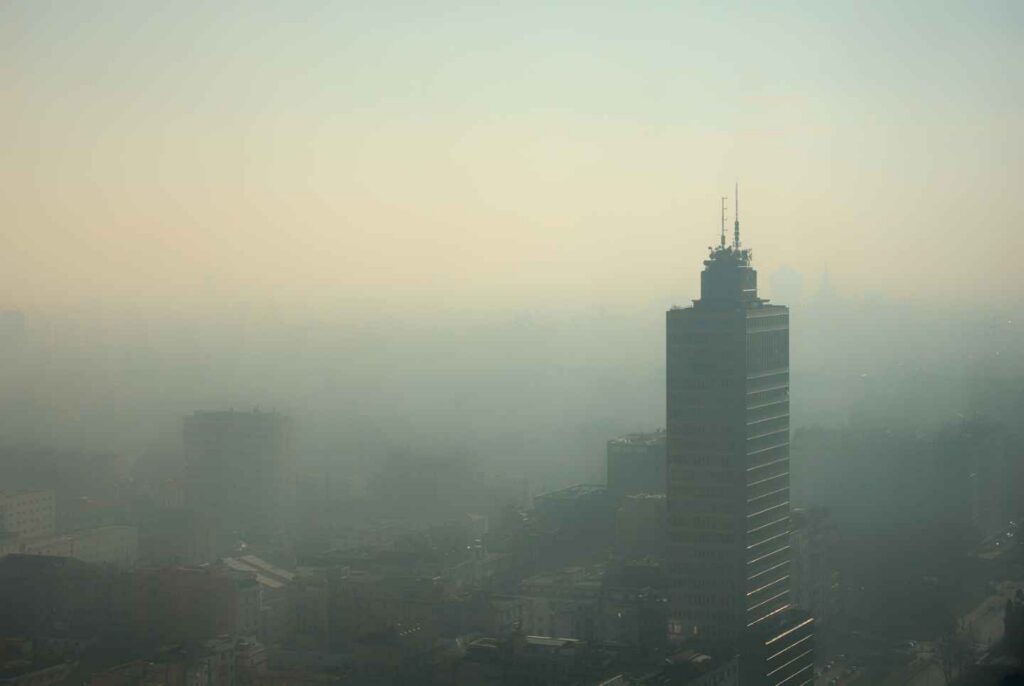
The heart of the problem is the Po Valley, where the topography and climate contribute to the accumulation of pollutants. In 2025, Milan recorded an annual average PM2.5 level of 22 µg/m³, while Turin and Padua recorded 20 µg/m³—four times the WHO threshold. Starting in 2030, the new European directive will lower the legal limit from 25 to 10 µg/m³, with the possibility of exemptions until 2040 for the most critical areas, such as Northern Italy. The decree implementing this directive was definitively approved by the Council of Ministers on November 5.