The wings seem motionless, but the thorax vibrates up to three hundred times per second. Clinging to a flower, a buzzing bumblebee is making one of the most intense and time-consuming efforts of its life. Measuring this is a study published in May 2026 in the scientific journal Royal Society.
The buzz that releases pollen
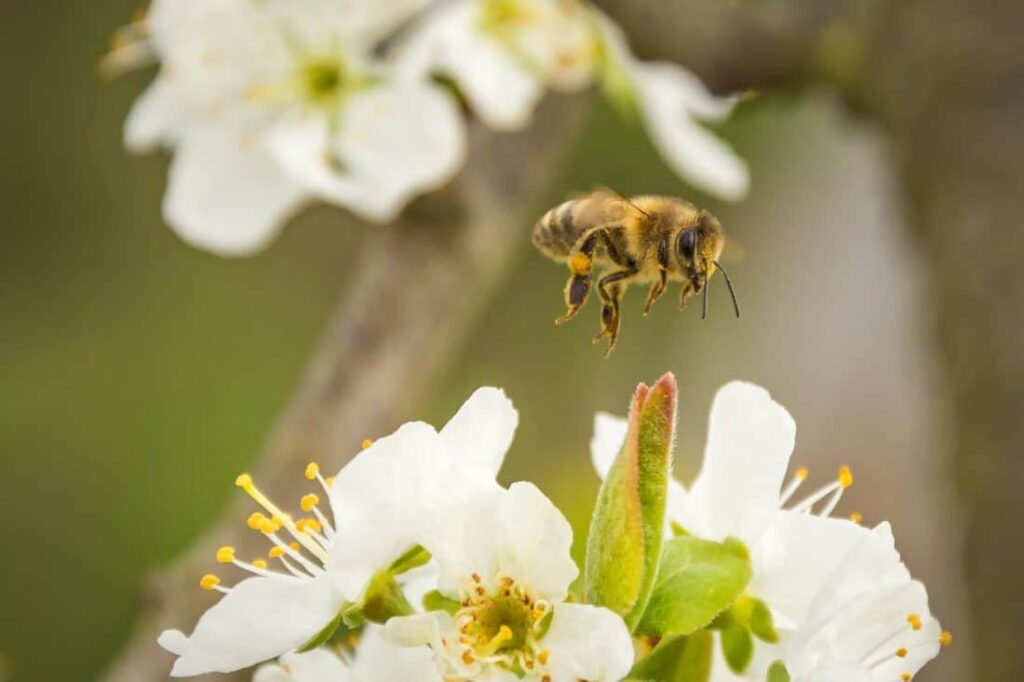
That buzzing is a technique called“floral sonication,” or buzz pollination: some species of bees vibrate their bodies to release pollen from flowers that hold it in closed anthers (the small sacs where pollen is formed and stored). This strategy is used by more than five hundred species and is also essential for common crops such as tomatoes, eggplants and blueberries.
Until now, no one had accurately quantified the energetic cost of this behavior. Researchers Natacha Rossi, Mario Vallejo-Marín and Elizabeth Nicholls, from the Universities of Sussex and Uppsala, succeeded by observing the behavior of Bombus terrestris, the common bumblebee also found in Italian gardens.
Scholars analyzed 260 sonication events and more than two hundred takeoffs, measuring vibrations and oxygen consumption in real time. The most surprising result is that a single floral buzz costs almost as much as taking flight. In both cases the bee spends about 0.10 joules: an absolute minimum, but huge for an insect of only a few grams.
During sonication, the bumblebee’s metabolism reaches levels more than thirty times higher than during resting. Flight consumes slightly more energy per second, but the buzzing lasts longer-the energy balance eventually equalizes. And since a bee can repeat the operation dozens of times in the same outing, the overall cost becomes significant.
Energy, behavior and climate
The study also shows another aspect that is often overlooked. After releasing the pollen, the bumblebee must clean up its body and accumulate the granules in “baskets” on its hind legs before it can leave again. This is extra work that further increases energy expenditure.
According to the researchers, this could influence foraging strategies. Many plants that require sonication offer only pollen and not nectar: to recover energy, bees could alternate these visits with stops on sugar-rich flowers.
Another interesting fact concerns the weight of the insect. It is not so much the size of the bee that matters, but the body mass at the time of flight: a bumblebee already loaded with pollen and nectar consumes more with each buzz and take-off.
Understanding these mechanisms is also important in light of climate change. Indeed, droughts and rising temperatures reduce the quantity and quality of available nectar. In ecosystems with fewer resources, each floral visit becomes more energy-intensive. This could change the behavior of pollinators and, consequently, the balance of crops and ecosystems on which a major part of our food supply also depends.