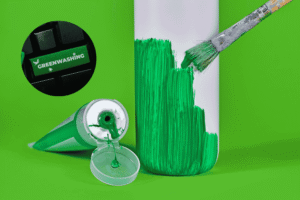
More than one in two environmental claims in the European Union does not stand up to scrutiny. According to an analysis by the European Commission , 53.3% of the claims examined were found to be vague, misleading, or unfounded, while 40% lacked adequate supporting evidence. Added to this are approximately 230 sustainability labels, with widely varying levels of transparency and verification. To bring order to this landscape, the regulations introduced into the Consumer Code by Legislative Decree 30/2026—which transposes European Directive 2024/825 on greenwashing—will take effect on September 27.
What’s Changing
As of that date, terms such as “green,” “eco-friendly,” or “climate-friendly” can no longer be used in a generic sense unless the company can demonstrate the environmental excellence to which they refer. And a product will no longer be able to claim a neutral, reduced, or positive climate impact by relying on emissions offsetting.
“Communicating a company’s environmental performance requires precise information that clearly shows what has actually been measured, reduced, or verified,” explains Daniele Pernigotti, director of Carbon Footprint Italy and chair of CEN/TC 467, the European technical committee for standardization on climate change. “For companies, environmental reporting becomes an issue that integrates marketing, compliance, and data quality.”
Best Practices Become Law
In fact, these guidelines have been in place for some time: as early as 1999, ISO 14021 advised against vague terms such as “environmentally friendly” or “nature’s friend.” The difference is that these best practices are now becoming law. “For nearly thirty years, technical standards have guided businesses on how to communicate effectively about environmental issues. Now, some of those guidelines are becoming part of consumer law,” notes Pernigotti.
There will also be stricter rules regarding sustainability labels. Any sustainability label that has not been established by a public authority or is not based on a certification system with transparent requirements and audits conducted by an independent third party will be considered misleading in all cases. “Every label must be based on a transparent system, with clearly defined requirements and independent oversight,” Pernigotti emphasizes. “We expect this to be reflected very soon in the experience of all consumers.”
According to the director of Carbon Footprint Italy, companies will increasingly seek external verification. “The presence of 20 verification bodies already accredited by Accredia in the field of carbon footprints confirms that there is already a significant ecosystem of companies active in this area.”
Carbon Footprint Italy
Carbon Footprint Italy, launched in 2018, is the Italian program dedicated to communicating the results of the quantification and reduction of greenhouse gas emissions from products and organizations. It provides for registrations for product carbon footprints in accordance with ISO 14067, for organizational carbon footprints in accordance with ISO 14064-1, and for Carbon Reduction, which is accessible only with a verification statement issued by an independent and accredited third party. Today, it includes about forty companies and over 140 registered products and has become Carbon Footprint Europe to operate consistently across all countries where the directive applies. It is also one of the promoters of the Carbon Footprint International Alliance and, in 2024, signed a mutual recognition agreement with the South Korean IPEF program.