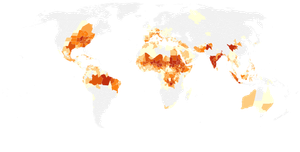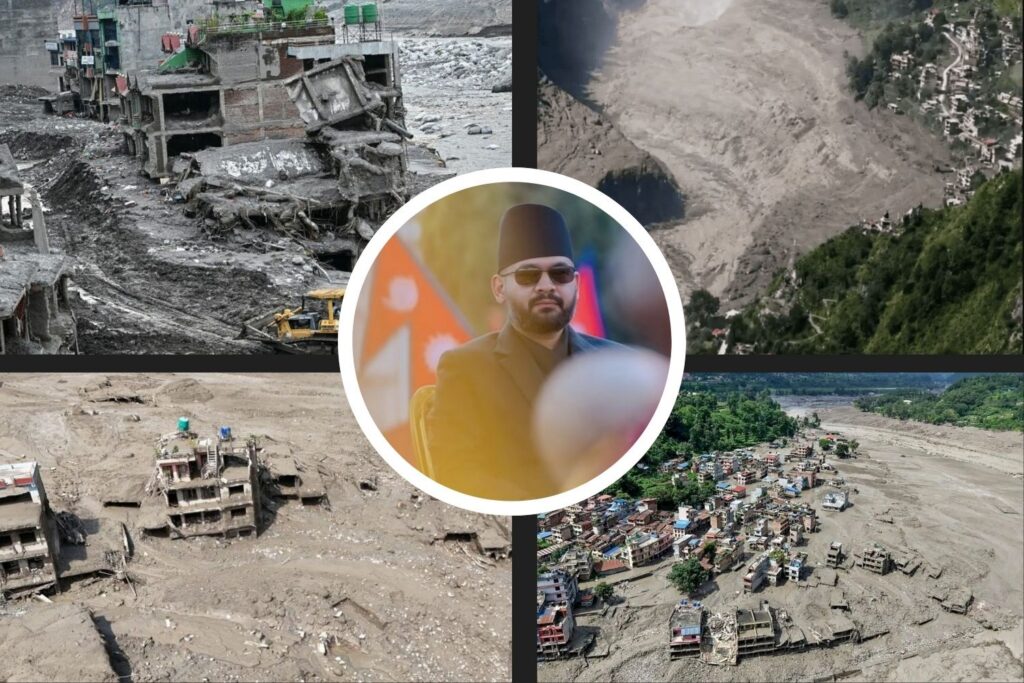
Nepal accounts for less than 0.1% of global greenhouse gas emissions, yet it is among the countries most vulnerable to the effects of climate change. It was this imbalance that Prime Minister Balendra Shah highlighted on Thursday, September 24, at the UN General Assembly, calling for international support for reconstruction following the floods at the end of August. Kathmandu wants grants, not new loans, to prevent the cost of the disaster from turning into more debt.
Nepal PM Balendra Shah called for grant-based support, not loans, to help his country recover from deadly floods and landslides triggered by a glacier collapse https://t.co/RCCCgu91Wi pic.twitter.com/VzZ1CtzNHV
— Reuters (@Reuters) September 25, 2026
An account worth 10% of GDP
The flood has claimed at least 1,450 lives, and weeks later, more than 6,000 people are still missing. Search and rescue operations are still underway. According to a preliminary estimate presented by Shah, the financial needs for recovery and reconstruction amount to approximately 10% of Nepal’s gross domestic product.
The disaster occurred on August 26, when a glacier collapse in the border area between Nepal and China triggered landslides and a massive flood wave along the valleys. Roads, bridges, schools, homes, businesses, and energy infrastructure were damaged or destroyed. The World Bank has already made up to $170 million in emergency funding available to support the disaster response and the start of the restoration of infrastructure and essential services.
“We didn’t create this crisis”
In his address to the UN, Shah directly linked Nepal’s situation to the growing climate instability in the Himalayas. The country, the prime minister noted, produces less than 0.1% of global greenhouse gas emissions, yet it must contend with retreating glaciers, unstable mountain slopes, and increasingly unpredictable rivers. “We did not create this crisis. Yet we are paying a huge price for it,” Shah said, emphasizing that every major disaster risks wiping out years of development. For Nepal, he explained, a climate-related disaster therefore also becomes a development issue: it destroys infrastructure and livelihoods and forces a country with limited resources to allocate new funds for reconstruction.
Hence the call for financial support. According to the prime minister, a vulnerable country should not be forced to increase its debt to repair the damage caused by extreme weather events. Shah therefore called for international support in the form of grants—that is, resources that do not have to be repaid—rather than relying solely on new loans. He also described current international mechanisms for financing loss and damage as insufficient and called for faster procedures to access funds.
Nepal, India, and China Unite on Climate Risk
However, Nepal’s request is not limited to reconstruction. Shah proposed to the UN a regional mechanism for climate resilience in the Himalayas involving Nepal, India, and China. The goal is to coordinate disaster prevention in an area where natural phenomena do not respect national borders. The proposal includes sharing satellite data, monitoring glacial lakes, strengthening early-warning systems, and improving coordination of response efforts when an emergency affects multiple territories.
This issue is particularly relevant in the wake of the August flood: the event originated in the Himalayan region on the border between Nepal and China, and the floodwaters then flowed downstream, affecting parts of India as well. For Shah, the disaster demonstrates that climate change cannot be addressed solely at the national level.
The issue raised by Nepal at the UN is therefore twofold. On the one hand, there is the question of the resources needed to rebuild without adding new debt to a country that has contributed very little to global emissions. On the other hand, there is the need to prepare for events that, in an increasingly unstable Himalayan region, can cross borders. For Kathmandu, the solution therefore lies both in grants to repair the damage already sustained and in regional cooperation capable of reducing future damage.