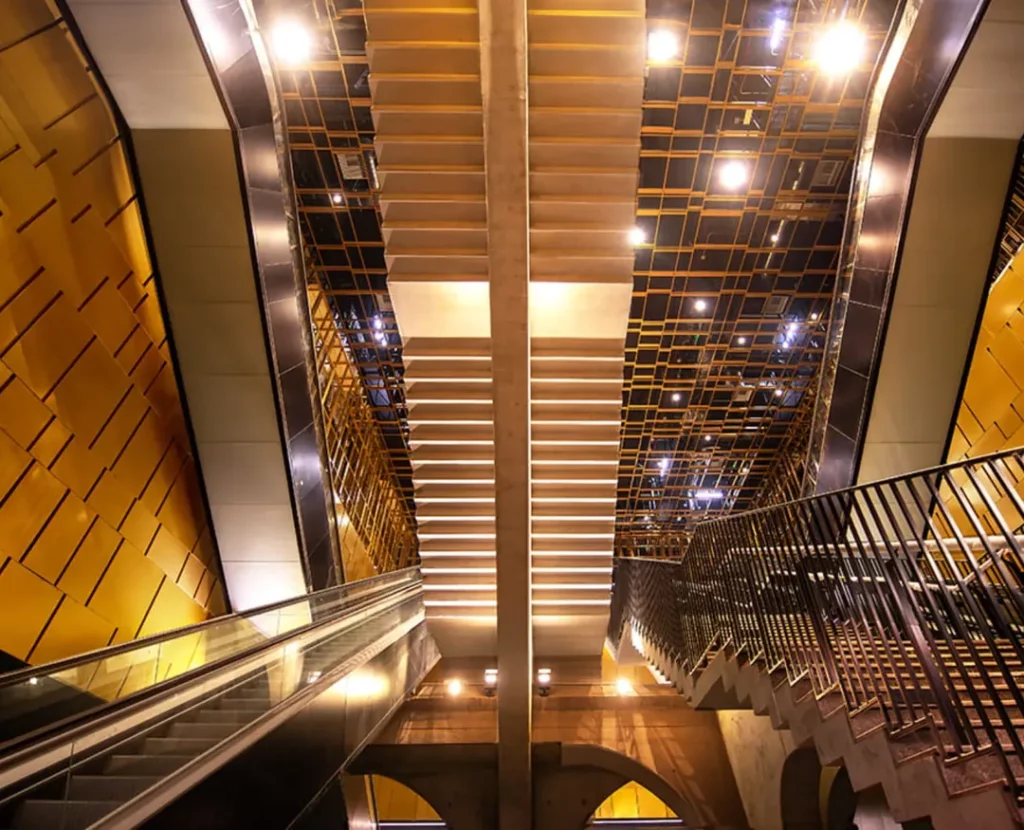
Rome is in the running for one of the world’s most prestigious architecture and design awards. The Colosseo-Fori Imperiali station on Line C, which opened on December 16, has been selected for the 2026 Prix Versailles, the international award established in 2015 and hosted by UNESCO in Paris, which each year recognizes works that successfully combine function, beauty, and cultural value. It was precisely the station’s architectural quality and archaeological significance—now recognized worldwide—that impressed the jury.
This isn’t just any station: it’s the first museum station in the capital’s subway system, a transportation hub that both preserves and displays the artifacts unearthed during excavations. Descending to the tracks means traversing the layers of the ancient city, on a journey that intertwines the wait for the train with history that has resurfaced just a few steps from the Flavian Amphitheater.
How the Contest Works
The station is competing in the Passenger Stations category and aims to be included in the 2026 World’s Most Beautiful Station List, which features the world’s most beautiful stations opened between January 1, 2025, and June 30, 2026. The process consists of two stages. The selection committee, which has already nominated the Rome station, will choose eight finalists, whose names will be announced on September 28. From there, the decision will pass to an international jury, which will award three prizes: the Prix Versailles itself, the special prize for interiors, and the special prize for exteriors. The winners will be announced on December 10.
Modernity and Memory on the Same Track
Eugenio Patanè, the councilor for mobility, makes no secret of his surprise and satisfaction: “This proves that it is possible to build a subway in the heart of the historic city center.” For Rome, the nomination is a sign that a modern project can coexist with the archaeological heritage rather than sacrificing it.
Line C has long been known primarily for its delays and the complexity of excavating beneath one of the world’s most fragile historic centers, where every construction site intersects with twenty centuries of archaeological layers. The case of the Colosseo station turns that narrative on its head: the difficulties become a defining feature, and what elsewhere would be an obstacle here becomes part of the story. International recognition, if it comes, will also serve this purpose: to demonstrate that in the capital, the present and the past can travel on the same track.