The plastics of greatest concern now are the ones you can’t see, such as the microscopic fragments that end up in agricultural fields, mineral water, fish and the air we breathe. Microplastics have become the permanent residue of disposable society: impossible to collect once dispersed, small enough to get in anywhere.
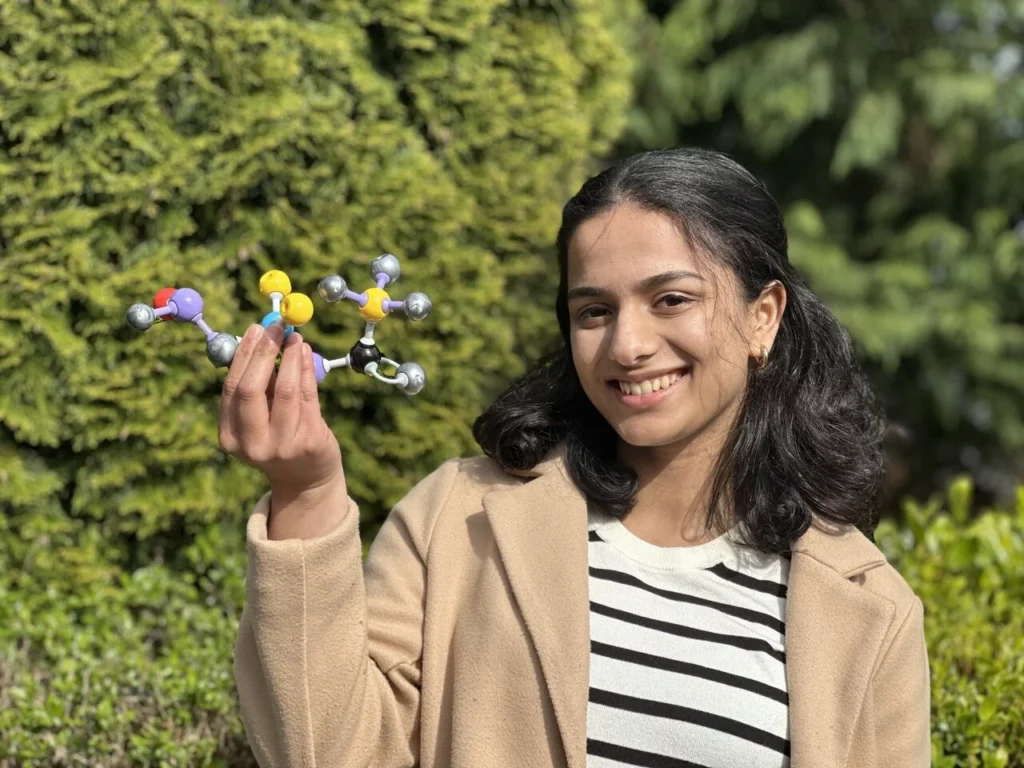
It is within this blind spot of environmental emergency that the Eco Purge, the project with which 18-year-old Irish student Arya Satheesh won the European section of the Earth Prize 2026. The material developed by the student is not only a biodegradable plastic of plant origin: it is designed to degrade by releasing enzymes capable of accelerating the breakdown of microplastics already present in the surrounding environment.
“We realized that microplastics were everywhere, but getting rid of them was a whole other story,” Satheesh explained, retracing his early projects on water quality monitoring. That’s where the work changed direction: not just looking for an alternative to traditional plastics, but also trying to intervene in what remains after years of environmental dispersion.
The problem that you can’t see
Microplastics are fragments smaller than five millimeters generated by the degradation of plastic materials. In recent years they have been found almost everywhere: in alpine glaciers, deep sea sediments, fish, honey, even the human placenta. Some European studies cited by the Earth Foundation speak of possible correlations with cellular inflammation, DNA damage and biological changes yet to be investigated.
How Eco Purge Works
The prototype developed by the student uses a biodegradable plant matrix within which biodegradative enzymes are incorporated. During normal use of the material, these enzymes remain stable and inactive. However, when the bioplastic begins to decompose in soil, water or compost, they are gradually released into the surrounding environment.
The idea is that these enzymes can continue to act even after the degradation of the main material, promoting the breakdown of the microplastics already present. This is the aspect that distinguishes Eco Purge from many other bioplastics: not only reducing the production of new plastic residues, but also helping to limit those that have accumulated over time.
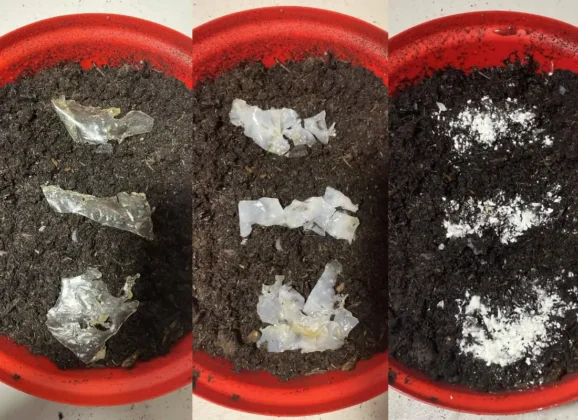
Biodegradable plastics already represent a major step forward from conventional plastics, especially in applications such as compostable packaging and bags. Satheesh’s project, however, tries to add another level of intervention by integrating an enzymatic degradation mechanism into the material itself.
Eco Purge is still in the experimental stage, but the project has already involved researchers fromUniversity College Dublin,Atlantic Technological University and the BiOrbic Bioeconomy Research Centre dedicated to the bioeconomy. The $12,500 Earth Prize award will now be used to develop concrete applications, starting with compostable packaging and bags.
It is not certain that the solution will work immediately on a large scale. It is not yet clear, for example, what the actual effectiveness of the enzymes would be in very different environments or what the industrial costs of the process might be. But the interesting point is that the project tries to transform the very concept of biodegradable plastic into a system designed to actively intervene in existing pollution.
Ecology beyond slogans
In recent years, research on bioplastics has focused primarily on reducing the environmental impact of single-use materials and their ability to degrade faster than traditional plastics. Eco Purge fits into this strand, but also introduces a complementary approach: using enzymes and biological processes to address the problem of microplastics already dispersed in the environment.
According to the Earth Foundation, which organizes the award created during the 2019 climate mobilizations, more than 21 thousand students from 169 countries participated in the various editions of the competition. Numbers that tell an often ignored fact: a substantial part of environmental innovation is coming outside traditional circuits.