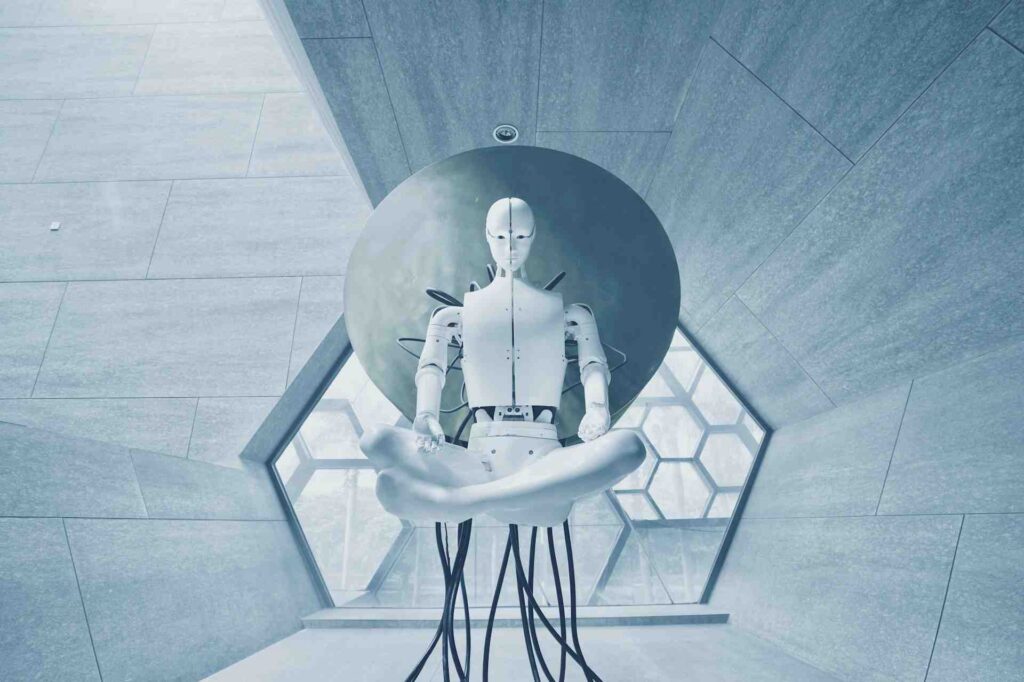
Imagine a humanoid robot that comes to a halt in the middle of the street. It’s standing still on the sidewalk, not responding to commands, and has just bumped into something. Anyone approaching it finds themselves face-to-face with an anthropomorphic machine about which they know nothing: who owns it, who is legally responsible for it, or who to call to shut it down or remove it. There’s no license plate. There’s no visible serial number. There are no documents.
This scenario isn’t science fiction—it’s the immediate future. In 2025 alone, more than 18,000 humanoid robots were manufactured and shipped worldwide, representing a 508% increase over the previous year. IDC forecasts indicate that by 2030 these numbers will skyrocket, with humanoids set to enter factories, warehouses, hospitals, offices, and homes. And until a few weeks ago, no one had yet solved a problem as simple as it is urgent: how do you identify a robot?
An ID card for the car
The answer came from Padua. EZ Lab, a company founded in 2014 that specializes in digital solutions for supply chain traceability, has developed the DRP (Robot Digital Passport), which is poised to become the world’s first comprehensive digital identification system for humanoid robots. This is not a lab prototype: it is a tool that has already been presented in New York and at VivaTech in Paris, Europe’s leading technology trade show.
The concept is simple, but the architecture is complex. Each humanoid robot is assigned a digital identity that can be accessed with a single click: owner, maintenance history, current operational status, and support contacts. If the robot malfunctions, behaves abnormally, or is involved in an accident, anyone can access the necessary information in a matter of seconds to know what to do and who to contact. Just like a license plate, a tax ID number, or a medical record.
The regulatory gap that no one has yet filled
The most surprising thing about the DRP isn’t the technology itself. It’s the fact that it’s necessary. In 2026, as robots begin to appear in airport hallways and logistics warehouses, there is still no mandatory standard requiring them to be identified, their owners to be registered, or defining who is legally liable in the event of an accident. Europe has enacted legislation on data, privacy, and artificial intelligence. But when it comes to physical robots moving among people, and the civil and operational liability of their owners, there remains a significant regulatory gap.
EZ Lab chose not to wait for the law to be enacted. It developed a tool that anticipates what is in all likelihood an inevitable regulation, building on its already established expertise: the Digital Product Passport, the traceability system that the European Union is making mandatory for entire categories of products—textiles, batteries, construction materials, and furniture—under the ESPR (Ecodesign for Sustainable Products Regulation) on ecodesign, which took effect in July 2024.
The DPP Studio platform, which forms the basis of the digital robot passport, is already being used by companies in the fashion, cosmetics, footwear, and industrial manufacturing sectors to create and manage the digital identities of their products. The shift toward humanoids isn’t a change in business focus: it’s a logical extension of the same idea, applied to objects that move, interact, and can cause harm.
Blockchain, AI, and Mechanical Medical History
Under the hood of the DRP are blockchain and artificial intelligence. Blockchain ensures the immutability and verifiability of data: once recorded, the robot’s identity cannot be altered or falsified. AI, on the other hand, manages the dynamic aspects: the operational status updated in real time, compliance with current regulations, and automatic suggestions regarding maintenance and necessary interventions.
The term EZ Lab uses to describe the robot’s technical history is revealing: “mechanical history.” It is the same term used in medicine to refer to a patient’s clinical history. This is no coincidence: it signals the ambition to build a tool that does more than simply record a serial number, but keeps track of the machine’s entire operational life—including breakdowns, repairs, software updates, and any malfunctions. A medical record, in fact, not just a label.
Italian Record
There’s something unusual about this story for those accustomed to reading about technological innovation: this time, the world record is Italian—the idea comes from Italy’s manufacturing heartland in the Northeast, not from a Silicon Valley startup or a lab in Seoul. EZ Lab is a company that has built its expertise on supply chain traceability for traditional “Made in Italy” sectors—fashion, food, and furniture—and has then applied that same logic to a completely new problem.
This journey tells a broader story: the European requirement to provide products with a digital identity—the ESPR regulation—is creating an ecosystem of skills that can be applied in unexpected ways. Those who have learned how to create a digital passport for a shoe or a sofa already have the tools to create one for a robot. The leap is not technological—it is conceptual.