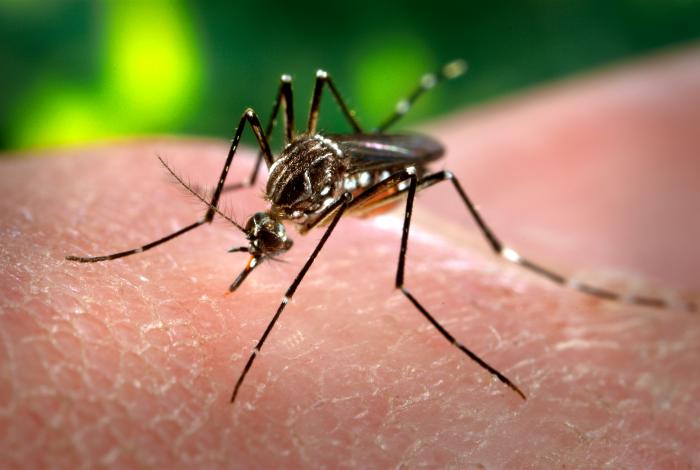
There’s a story that, until just a few years ago, would have sounded like science fiction: a tropical mosquito laying eggs and reproducing at London’s latitude. It really happened. In early September, British health authorities confirmed that they had found larvae and adult Aedes aegypti —the yellow fever mosquito, a vector for dengue, chikungunya, and Zika—in some homes in the eastern part of the capital. This had never happened before in the United Kingdom. Experts assure us that the immediate risk to the public remains very low: there have been no confirmed cases of infection, and the insects are unlikely to survive the winter. But the message is clear.
The changing map
That discovery is the most advanced manifestation of a phenomenon affecting all of Europe. The tiger mosquito (Aedes albopictus)—the cousinof A. aegypti thatis best adapted to temperate climates—is now permanently established in sixteen countries and nearly four hundred regions; ten years ago, it was present in just over one hundred. Viruses also travel with the insect. In 2025, the continent recorded the highest number of local chikungunya outbreaks ever documented, including the first indigenous case in Alsace, in northeastern France—an area that until recently seemed to be spared.
The Italian Front
You don’t have to look across the Channel to see that something has changed. The tiger mosquito arrived in Italy in the 1990s and now occupies much of the peninsula, spreading northward and to higher elevations: it is the species capable of triggering local transmission of dengue and chikungunya, as demonstrated by the French record in 2025.
On another front, there is West Nile fever—though transmitted by a different mosquito—for which Italy is the hardest-hit country in Europe this year: more than 400 confirmed cases since the start of the season, as part of a surge that the European health agency has recorded in a dozen countries, from Greece to Spain.
Why is this happening?
Climate change is the main driver behind this spread. Milder winters allow eggs and adult mosquitoes to survive where the cold once wiped them out; long, sweltering summers extend the period during which mosquitoes bite and viruses circulate—in some areas, up to four to six months. Added to this are international travel, which imports pathogens from endemic countries, and the cities themselves, where flowerpots, storm drains, and standing water provide ideal breeding grounds for egg-laying. It is this combination that the European Centre for Disease Prevention and Control has dubbed the “new normal”: longer and more intense transmission seasons.
Risk and Defenses
It is important to note that while local transmission of dengue and chikungunya in Italy remains sporadic and limited, the outbreaks in recent years show that the risk is no longer merely theoretical. Moreover, it is the trend that is cause for concern, which is why prevention is key. On the one hand, there’s public health surveillance, with traps that intercept invasive species and targeted efforts to destroy larvae; on the other, small daily actions, which are more valuable than one might think: emptying plant saucers, covering trash cans, and not leaving standing water on balconies and terraces. Because the battle is no longer confined to the tropics.